Problem-solving·7 min read
How Long Does Water Damage Restoration Take?
Extraction is hours. Drying is days. Rebuild is weeks. Here is what actually determines each number, and where schedules slip.
Read the guide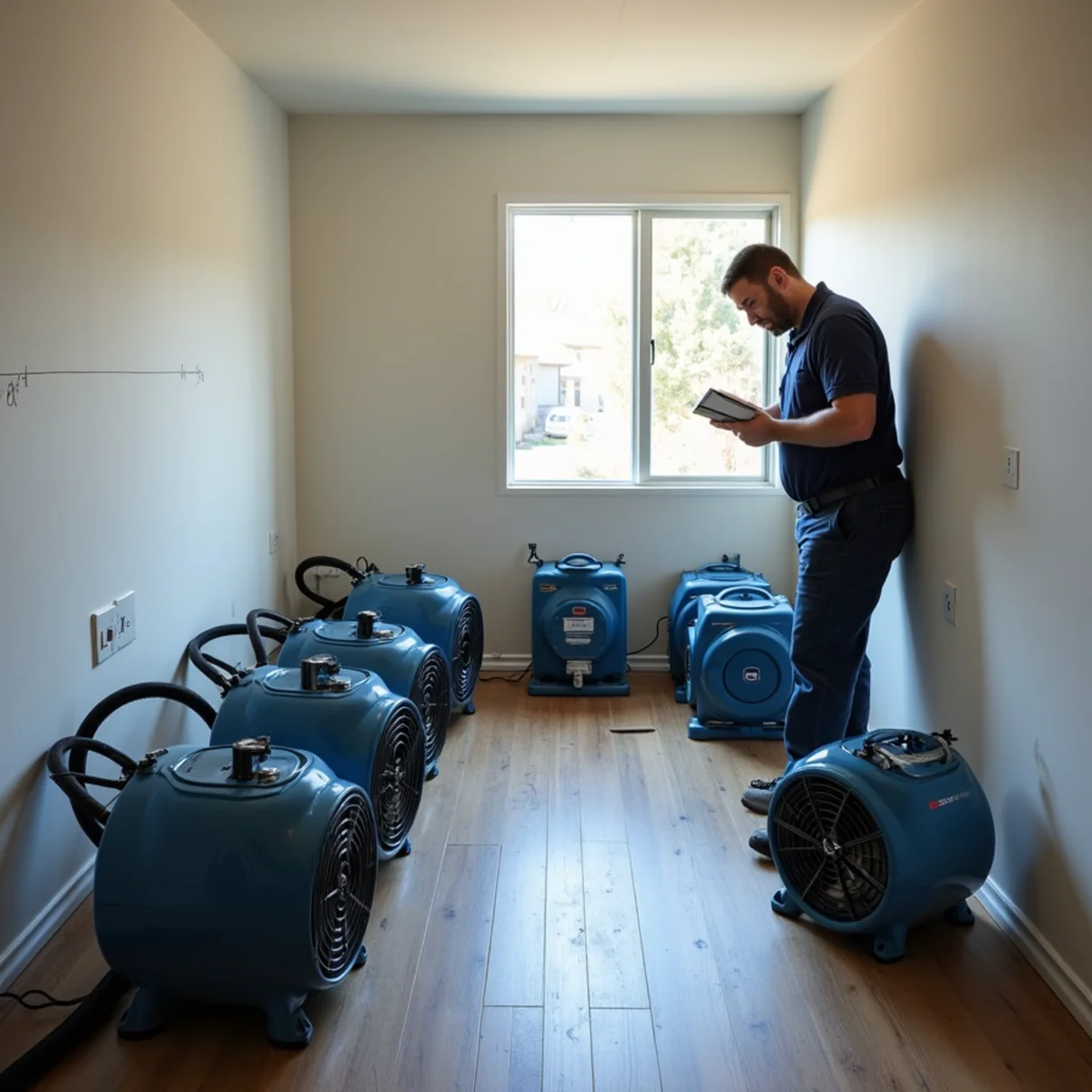
Restoration service · Redwood City, CA
Drying a building is engineering, not guesswork. You are moving water out of materials into the air, and then out of the air, at a controlled rate. Get the balance wrong and you either dry too slowly — which invites mold — or too fast, which cups hardwood and cracks trim.
Answered by a person, 24/7 — crews on site within 60 minutes in Redwood City.
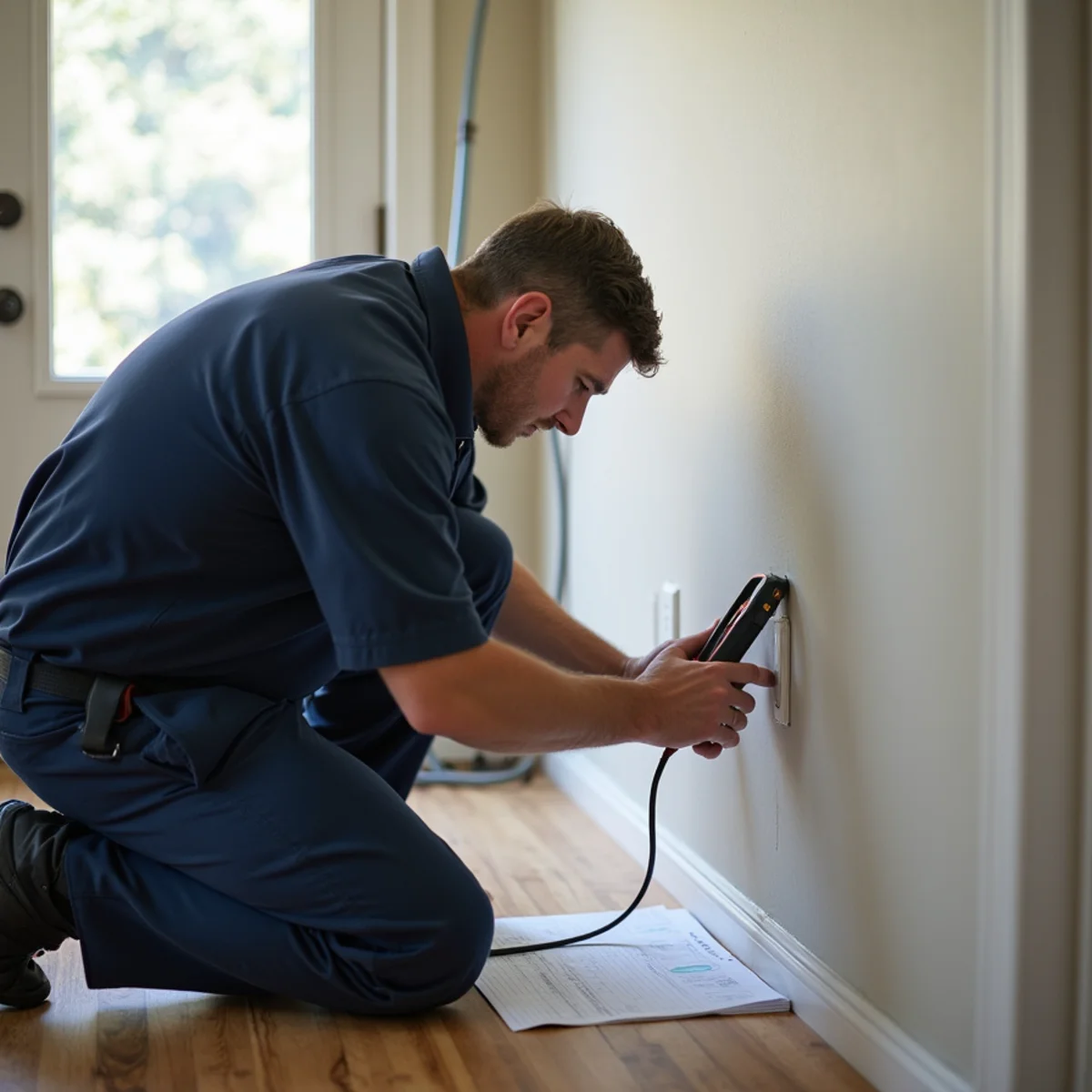
The part most homeowners never see is the arithmetic. How many air movers for this square footage, what dehumidification capacity for this class of loss, what temperature and humidity to hold, and which cavities need direct injection rather than surface airflow.
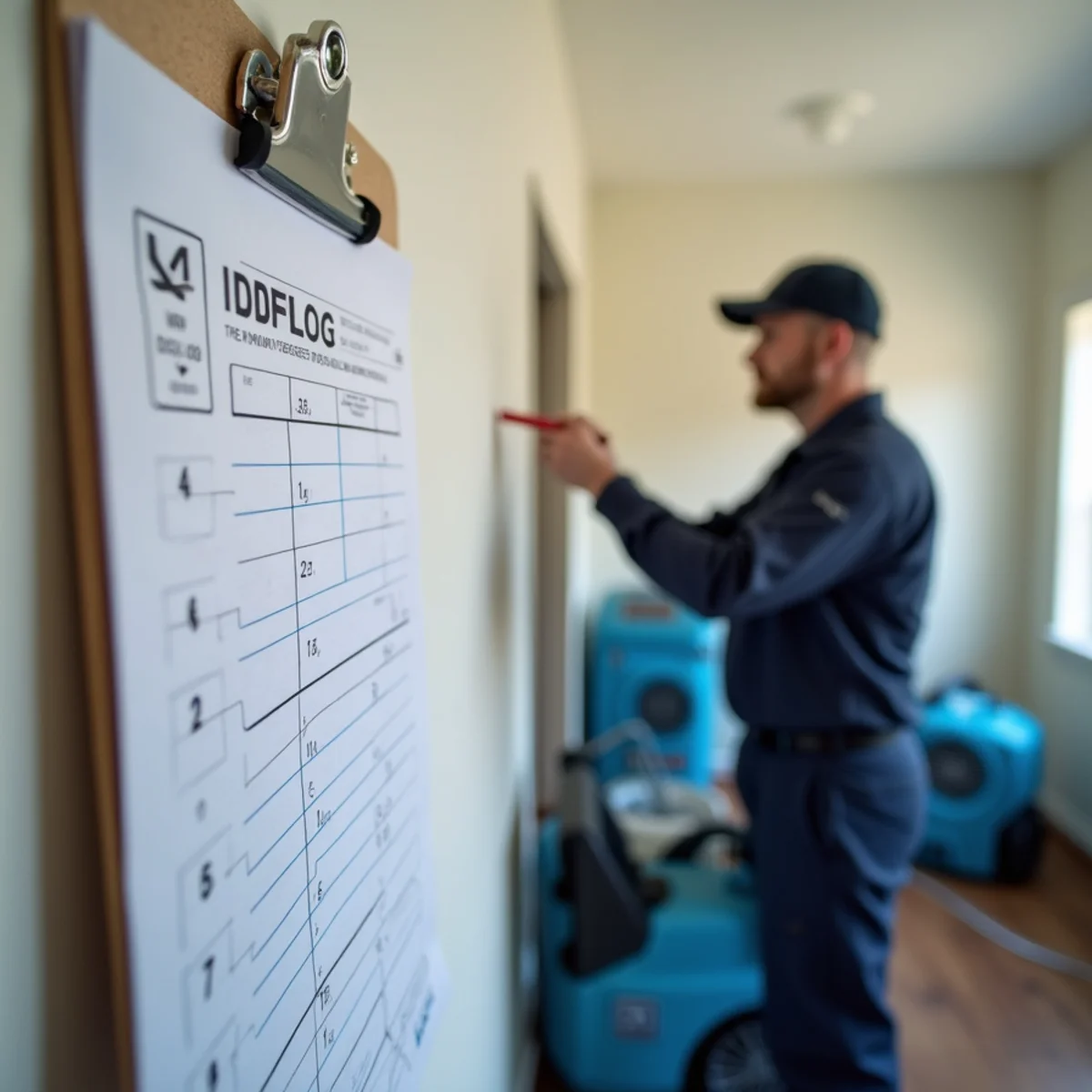
We do that math, log it, and prove it. Daily readings at marked locations, equipment placement recorded, and a documented dry standard taken from an unaffected part of your own building. That log is what tells you the job is finished and what tells your adjuster the work was real.
Extraction is done but materials are still wet
This is the normal state of every water loss after the standing water is gone. The assembly holds moisture that only dehumidification removes.
A wall or floor that "feels dry" after a leak
Surface feel is meaningless. Drywall can read at surface-dry while the bottom plate and insulation behind it are saturated.
Another company pulled equipment early
Fans removed on day three because the schedule said so rather than because readings said so. We re-survey and finish the job properly.
A concrete slab that will not dry
Slabs release moisture slowly and need dedicated drying and verification before flooring goes back down.
You need documentation for a claim
Carriers want daily moisture logs and equipment records. Drying without documentation is very hard to get paid for.
High humidity after a loss
If the air in the affected area stays above roughly 60% relative humidity, the building is not drying — it is just circulating moisture.
Our process
Step 1
Establish the dry standard
We take control readings from the same materials in an unaffected part of the building. That becomes the target — your building rather than a generic number.
Step 2
Classify the loss and size the equipment
Affected square footage, materials involved and how much of the assembly is wet determine air mover count and dehumidification capacity. Under-equipping is the most common cause of a failed dry-out.
Step 3
Set airflow and dehumidification
Air movers positioned to sweep across wet surfaces at a low angle, not blast at them. LGR dehumidifiers set to hold the room in the range where materials release moisture fastest.
Step 4
Open the closed assemblies
Cavity injection, drilled weep holes, baseboard removal, floor mat systems for hardwood, and ducted systems into wall cavities and under-floor voids where surface airflow cannot reach.
Step 5
Monitor daily and adjust
Same marked locations every visit. Readings that plateau mean the plan needs to change — more capacity, different placement or a cavity that needs opening. Plateaus get addressed, not waited out.
Step 6
Verify and demobilise
Equipment comes out when readings hold at dry standard across all affected materials, not on a calendar date. You get the complete log with the final report.
24/7 Emergency Response
Tell us what you are seeing and we will tell you honestly whether it needs a crew, and what it is likely to involve. Emergency dispatch is answered 24/7.
550 Allerton St, Redwood City, CA 94063 · Emergency dispatch answered 24/7, including holidays
A fan moves air. It does not remove water. Air movers accelerate evaporation from wet surfaces, which loads the room air with moisture — and if nothing removes that moisture, you have simply relocated the water from the floor into the air, where it condenses on the next cool surface it finds. Often that is inside a wall cavity or a closet on an exterior wall.
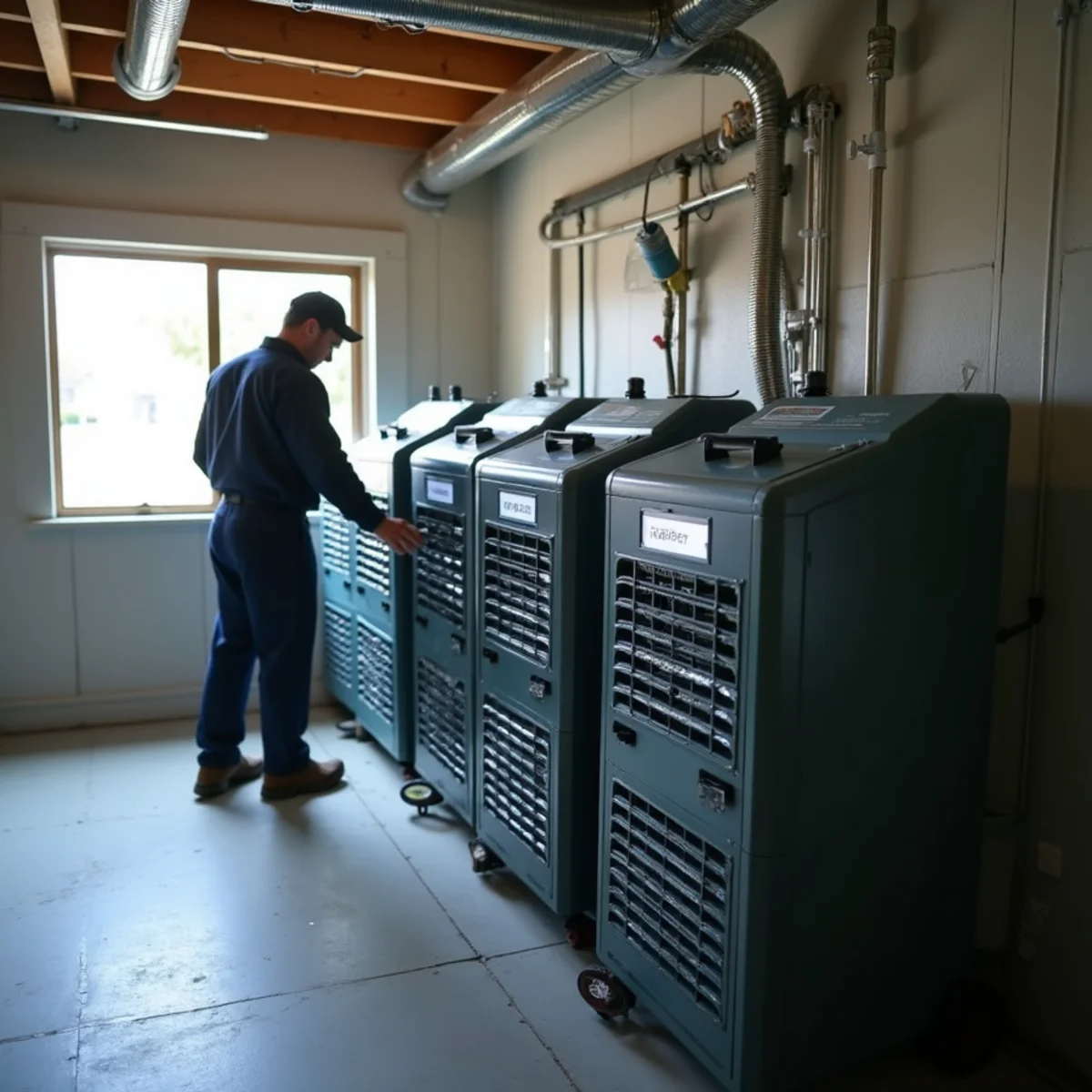
Dehumidification is what actually removes water from the building. Low-grain refrigerant units are the professional standard because they keep working in the conditions that matter: cool temperatures and low humidity levels, where a conventional refrigerant dehumidifier loses capacity or ices up and stalls.
That distinction matters more here than in a hot climate. Peninsula winter losses happen at 50 to 60 degrees with high outdoor humidity, and marine layer mornings push moisture back into an open building. LGR equipment holds performance in exactly those conditions, which is why we use it rather than the rental-store units a homeowner can pick up.
This is also the single clearest reason to be sceptical of a DIY dry-out with box fans. Without dehumidification you are not drying the structure. You are running a very effective mold humidifier.
The most valuable drying work is the kind that saves an expensive assembly. Three systems do most of that work.
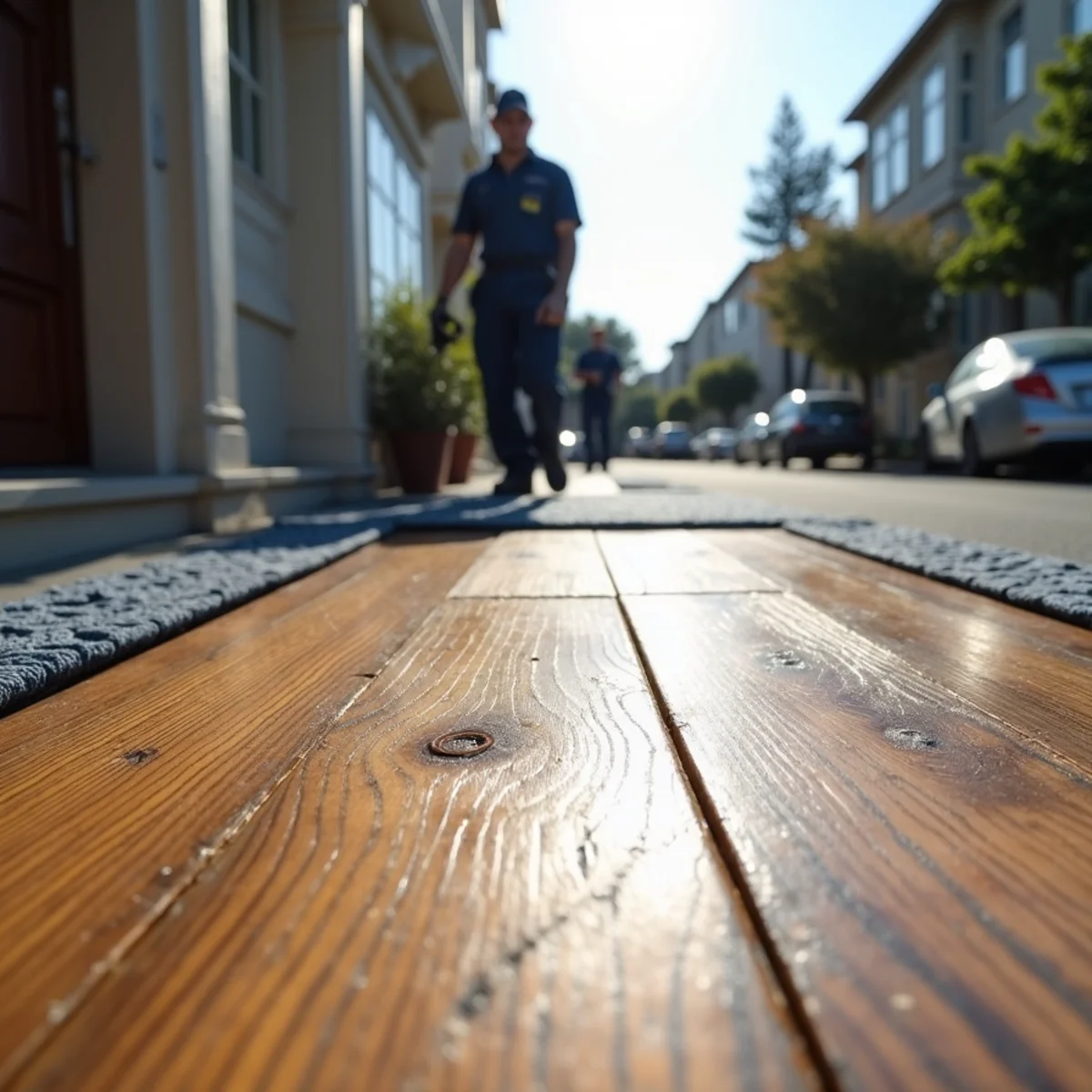
Hardwood floor mat systems — Sealed mats over the floor pull water up through the boards under negative pressure. For a solid hardwood floor caught quickly, this is frequently the difference between drying and a full replacement at $10–$15 per square foot.
Wall cavity injection — Dry air ducted directly into the cavity through discreet ports at the base of the wall, so insulation and framing dry without removing the drywall face.
Under-floor and crawl space ducting — Ducted dry air into the void below a subfloor or into a crawl space, which dries the assembly from the side the water is actually on.
Desiccant dehumidification — For large commercial losses and very low target humidity, desiccant units pull moisture where refrigerant systems cannot reach the required grain depression.
Heat drying — Controlled heat raises material temperature to speed vapour pressure differential. Effective, and easy to overdo — which is how trim splits and hardwood crowns.
Ask any restoration company for a sample moisture log before you hire them. A real one has all of this: the date and time of each visit, the technician, marked reading locations that stay consistent day to day, the material at each point, the reading, the dry standard for comparison, plus room temperature and relative humidity, and equipment in place with its position.
What you should not accept is a single "dry" checkbox at the end, readings without locations, or locations that change between visits so no trend can be seen. Those are the reports that get claims denied and disputes lost.
We hand over the whole log with the final invoice. If the numbers ever plateau or move the wrong way, you will see it on the log — along with what we changed in response.
Honest pricing
We publish ranges rather than hiding them behind a form. Mitigation runs $3 – $7.50 per square foot depending on water category, and most complete jobs land between $1,384 and $6,387. You get an itemised written estimate after inspection — never a firm number before anyone has checked for hidden moisture.
Why us for this
Restoration gets bought in a hurry, usually from whoever answers first. These are the things worth checking before you hand anyone a key — and what we put in writing on every structural drying job.
Affected square footage, materials and how much of the assembly is wet set the air mover count and the dehumidification capacity. Under-equipping is the most common cause of a failed dry-out, and it is invisible until the floor cups.
Local losses happen at 50–60 degrees with high outdoor humidity and marine layer mornings pushing moisture back in. Low-grain refrigerant units hold performance exactly there; rental-store dehumidifiers do not.
Hardwood mat systems, wall cavity injection and under-floor ducting cost a fraction of replacing what they save — a floor mat setup against $10–$15 per square foot of new hardwood is not a close call.
Readings that stop improving mean trapped water, insufficient capacity or an unresolved source. We change the plan and record what changed, rather than leaving equipment running and billing days.
Honest pricing
Mitigation is priced per square foot by water category. Reconstruction is quoted separately, and you get an itemised written estimate after inspection rather than a number over the phone.
| Water category | Typical source | Health risk | Mitigation cost |
|---|---|---|---|
| Category 1 — clean water | Broken supply lines, sink and tub overflows, clean appliance leaks | Low risk if dried quickly | $3 – $4 / sq ft |
| Category 2 — gray water | Washing machine or dishwasher discharge, urine-only toilet overflow, sump failure | Moderate — bacteria present, can cause illness | $4 – $7 / sq ft |
| Category 3 — black water | Sewage backup, storm floodwater, toilet overflow with solids, microbial growth | High — pathogens; PPE and containment required | $7 – $7.50 / sq ft |
Insurance
We bill your carrier directly for covered work, so you are not floating the cost and waiting on reimbursement. You do not need to wait for an adjuster before emergency mitigation starts — policies expect you to take reasonable steps to limit the damage.
Sudden and accidental damage — a burst supply line, a failed water heater, an appliance hose — is covered by most California policies. Gradual leaks and deferred maintenance often are not, rising water from outside needs separate flood insurance, and sewer backup usually needs its own endorsement.
Nobody can promise what your carrier will decide. What we can promise is that the loss is documented well enough for that decision to be made on the facts.
California coverage explainedStructural Drying in Redwood City? A person answers 24/7 and gives you shut-off instructions while the crew is on the way.
+1 (201) 277-9344Problem-solving·7 min read
Extraction is hours. Drying is days. Rebuild is weeks. Here is what actually determines each number, and where schedules slip.
Read the guideProblem-solving·7 min read
Often yes — if it goes on a mat system within about 24 hours. Here is how to read the damage and what the honest odds are.
Read the guideReviewed by Water Damage Redwood City — checked by our IICRC-certified project managers.
Last reviewed
Where we provide this service
We cover Redwood City and the surrounding Peninsula. Local conditions change the plan — bayfill slabs dry slowly, hillside runoff is contaminated, and pre-1960 housing hides leaks under concrete — so pick your area for specifics.
FAQ
Typically 3 to 5 days for framing and drywall in a standard loss. Concrete slabs, solid hardwood and plaster run longer — often 7 to 10 days. Cool, humid Peninsula winter conditions add time. We verify with daily readings and pull equipment when materials hold at dry standard, never on a fixed schedule.
For a very small clean-water spill on hard flooring, maybe. For anything structural, no — the limiting factor is dehumidification capacity, not airflow. Fans without adequate dehumidification move water from your floor into your air and then into cool cavities where it condenses. Rental units also lose capacity in the cool, humid conditions where most local losses happen.
Because the equipment runs continuously. A typical residential dry-out with several air movers and one or two LGR dehumidifiers adds meaningful consumption for the drying period. Mention it to your adjuster — some policies address it — and please do not switch equipment off overnight, as that reliably adds days to the schedule.
That is a signal, not something to wait out. A plateau usually means trapped water in a cavity, a material that needs direct injection, insufficient capacity for the load, or an unidentified ongoing source. We change the plan — add equipment, open the assembly, or re-investigate the source — and the change is recorded on the log.
We do not rent equipment out for a homeowner-run dry-out, and the reason is not commercial. Drying is a controlled rate: too slow invites mold, too fast checks and splits trim and hardwood, and neither shows up until the damage is done. Without daily readings at consistent points against a dry standard there is no way to know which is happening — and an undocumented dry-out is also very hard to get a carrier to pay for.
24/7 Emergency Response
A person answers 24/7 and gives you shut-off and safety instructions while a crew is already on the way. Emergency mitigation is loss-limiting work your policy expects you to start immediately.
550 Allerton St, Redwood City, CA 94063 · Emergency dispatch answered 24/7, including holidays