
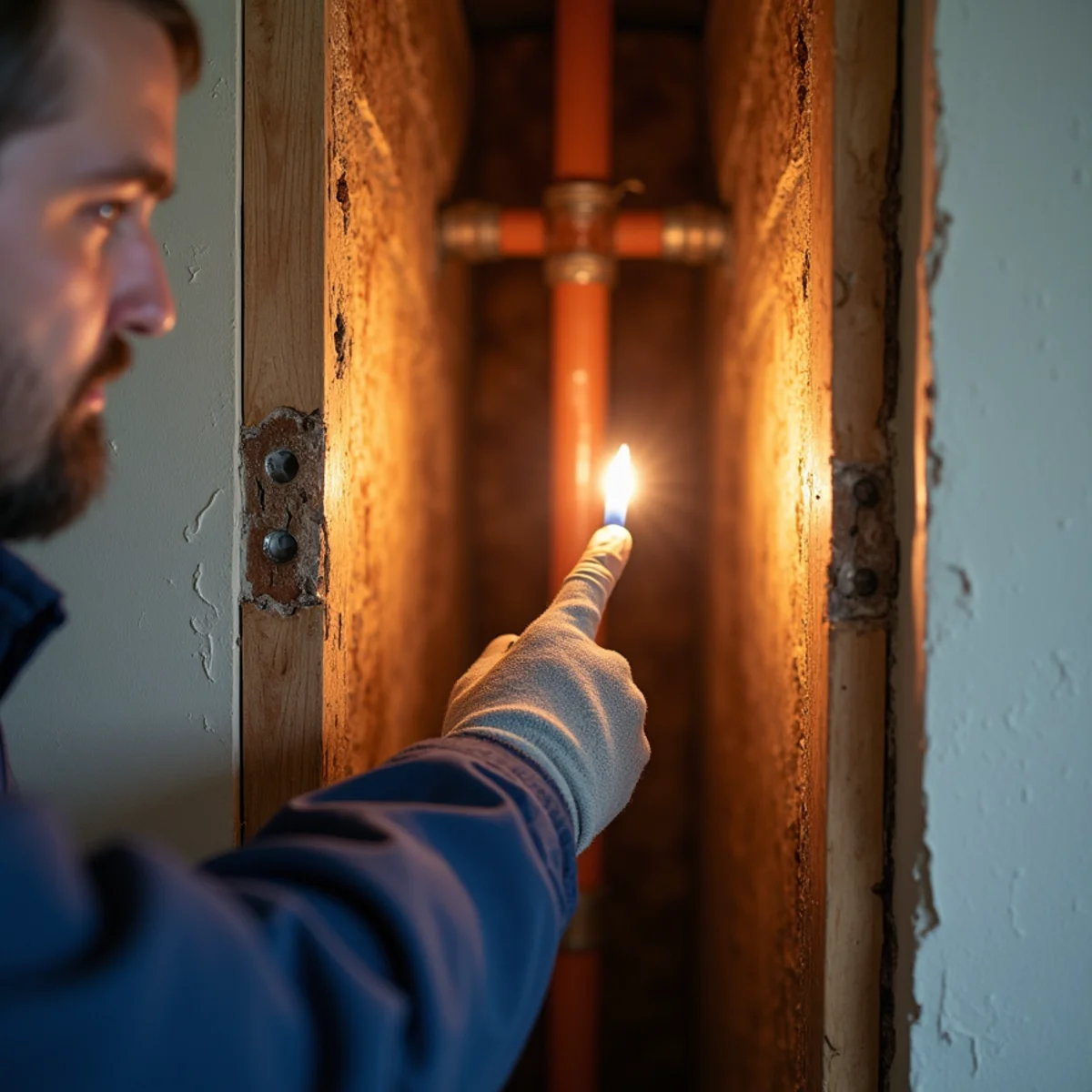
Emergency guides·8 min read
How to Handle a Burst Pipe Emergency in San Mateo County
A half-inch line under pressure moves several gallons a minute. Here is the order of operations, and what to expect once the water is off.
Read the guide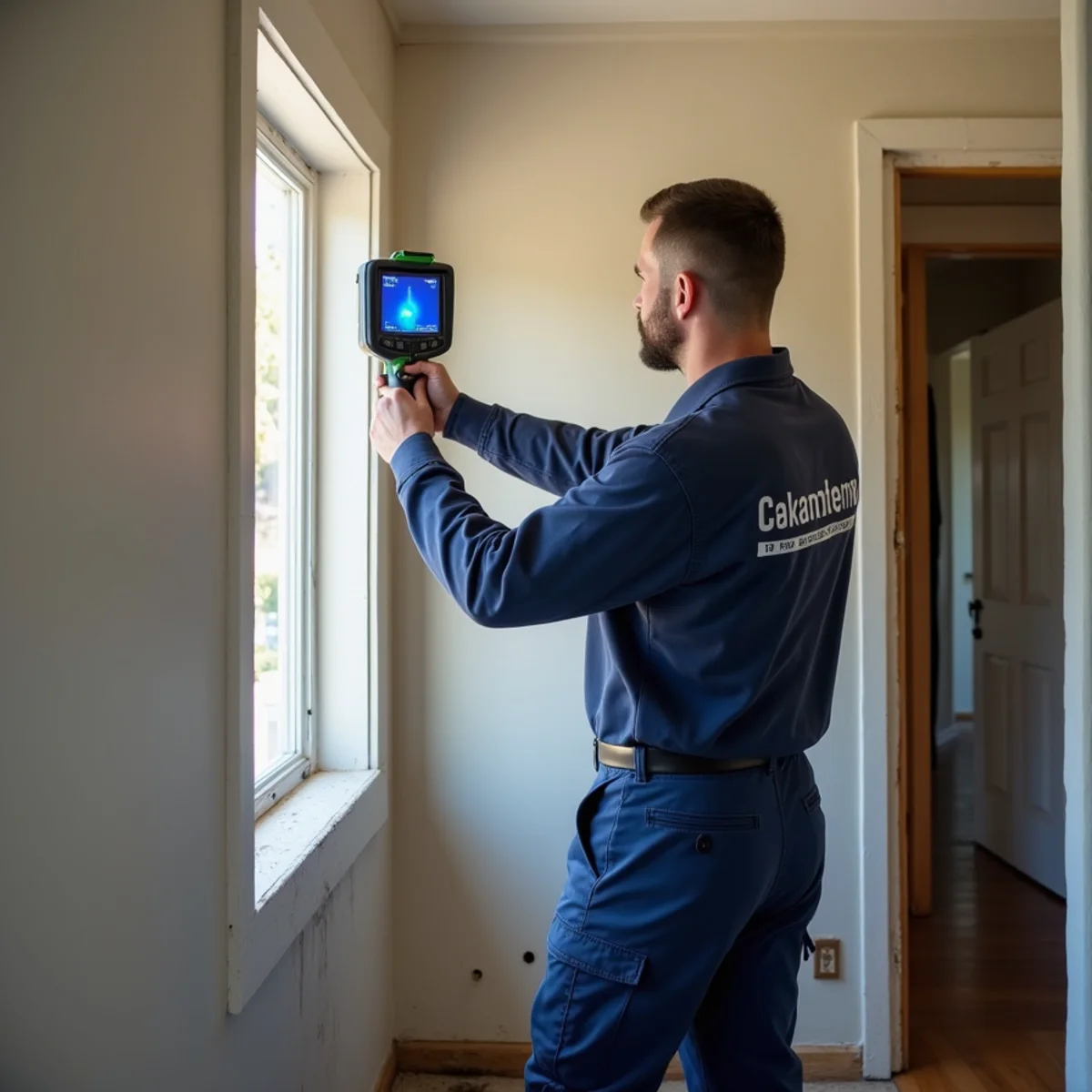
24/7 emergency service · Redwood City, CA
A half-inch supply line under pressure moves several gallons a minute. A break that lets go while you are at work in Palo Alto can put a thousand gallons into your house before anyone notices, and it does not stay in one room — it runs along the top plate, down inside wall cavities, and across the subfloor under your flooring.
Answered by a person, 24/7 — crews on site within 60 minutes in Redwood City.
Redwood City has a specific version of this problem. Much of the housing west of El Camino Real went up between the late 1940s and the mid 1960s, with galvanised steel or thin early copper supply lines. Sixty-plus years of Peninsula water chemistry later, those lines fail from the inside out — pinholes first, then a split.
We find the water, including the water you cannot see, and dry the structure with the least demolition that will actually work. Then we put the walls, floors and trim back.
A drop in water pressure
A sudden pressure loss with no work being done in the street usually means water is escaping somewhere between the meter and your fixtures.
Running water you can hear with everything off
Shut off every fixture and listen at the walls and floor. A faint continuous hiss or trickle is a live leak.
A warm spot on the floor
This is the classic slab leak signature — a hot-water line failing under the concrete. Common in the 1950s and 60s slab homes around Mount Carmel and Redwood Oaks.
A water bill that jumped with no change in usage
A pinhole leak can run for months before it surfaces. The bill is often the first real evidence.
Stained or bulging drywall low on a wall
Water inside a cavity wicks up the drywall paper. Staining near the base with a soft, spongy feel means the cavity is wet.
Cracks appearing in flooring or walls
A long-running slab leak can undermine and move a foundation slab, which shows up as new cracks in tile grout and drywall corners.
Our process
Step 1
Stop the water and stabilise
Main valve off, affected circuits off, standing water extracted. If the failed line is accessible we coordinate the plumbing repair immediately so the water can go back on for the rest of the house.
Step 2
Map the actual wet area
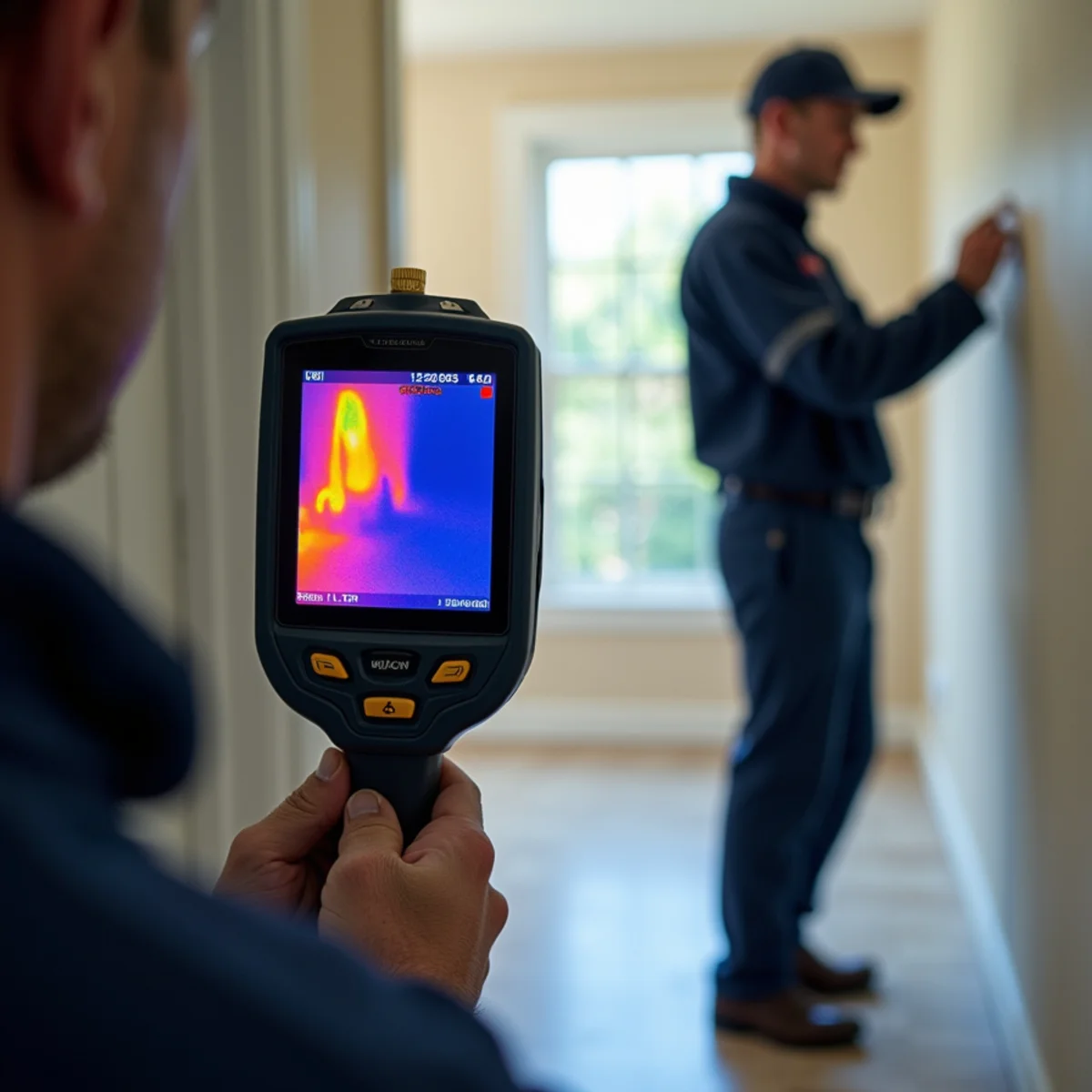
Thermal imaging plus pin and pinless meters trace where the water travelled — usually well beyond the visible damage. We mark the perimeter on the wall so you can see the real footprint.
Step 3
Targeted access, not blanket demolition
Inspection holes, baseboard removal, drilled cavity ports and a flood cut only where a cavity genuinely cannot be dried in place. The goal is fewer square feet of drywall replaced, not more.
Step 4
Cavity and structural drying
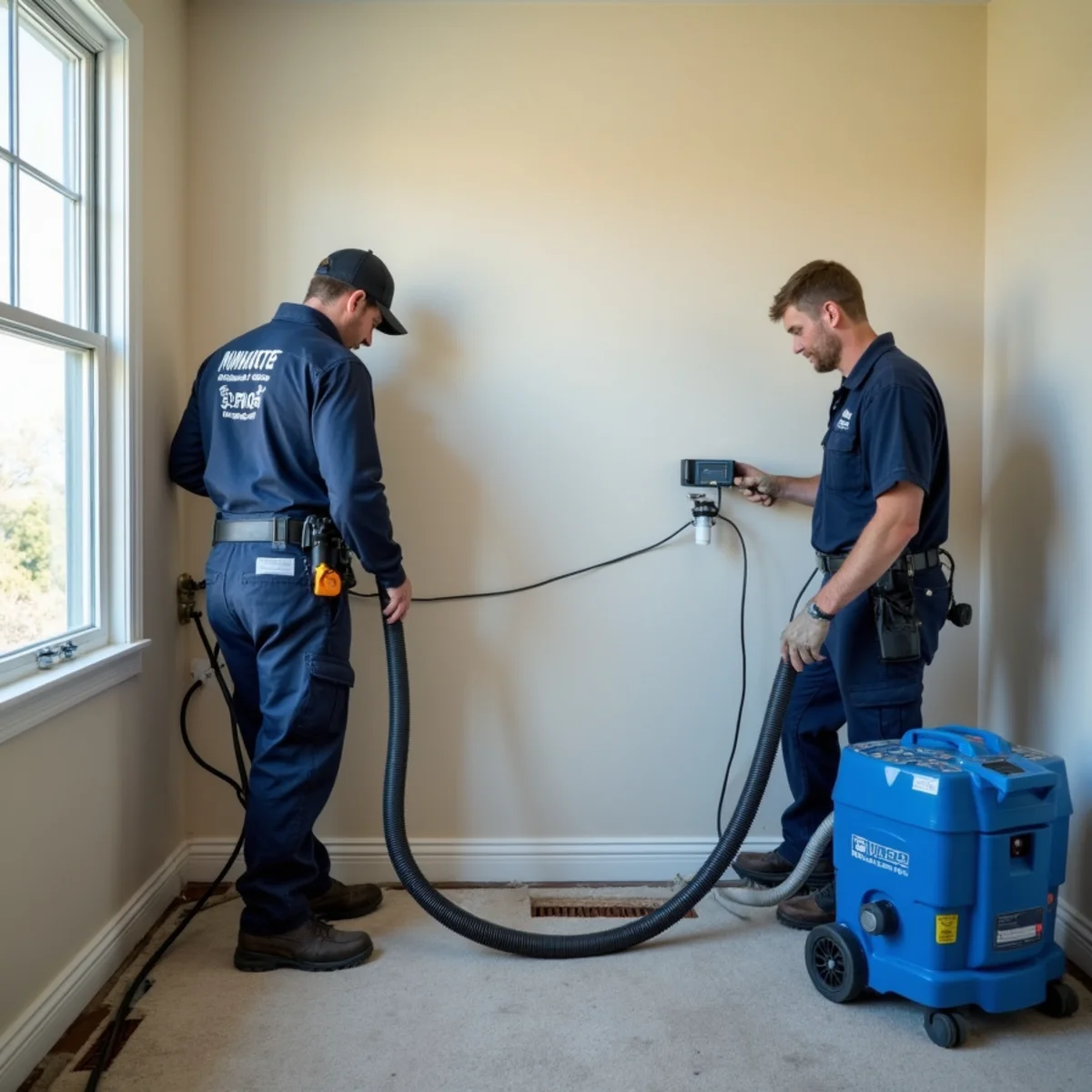
Injection drying into wall cavities, air movers on hard surfaces, LGR dehumidifiers controlling the room. Under-floor and cavity systems where a subfloor or hardwood assembly is involved.
Step 5
Verify, then repair
Daily readings at marked points until framing and finishes hit dry standard, then drywall patch, texture match, paint, baseboard and flooring. Documentation goes to your adjuster with the invoice.
24/7 Emergency Response
Tell us what you are seeing and we will tell you honestly whether it needs a crew, and what it is likely to involve. Emergency dispatch is answered 24/7.
550 Allerton St, Redwood City, CA 94063 · Emergency dispatch answered 24/7, including holidays
A slab leak is a supply line failing inside or beneath the concrete foundation. It is common here because of the era and construction method of so much of the local housing stock, and it is the hardest kind of leak for a homeowner to catch early.
The tells are subtle: a warm patch on a tile floor, water usage creeping up, a faint sound of running water, sometimes a musty smell from a closet on an exterior wall. Because the water is under concrete, it can undermine soil and travel across the slab for weeks before it shows at a baseboard.
Detection matters more than muscle. Thermal imaging finds the temperature signature of a hot-water slab leak quickly; moisture mapping shows how far the water has spread through the slab and into the framing. That is what lets us open one section of floor rather than three rooms.
Be direct with any contractor who wants to start jackhammering before they have imaged and mapped. Ask what evidence they have for the leak location, and ask to see it.
Pinhole leaks come from internal corrosion, not from anything you did. Thin-wall copper installed decades ago, water chemistry, high static pressure and stray-current issues all contribute. The failures cluster: once you have found one pinhole in a run, more are usually coming in the same run.
The restoration answer is the same either way — find the wet cavity, dry it, repair it. The plumbing answer is a real decision. Patching a single pinhole on a 60-year-old line is a short-term fix. If we are already opening walls for drying, that is often the cheapest moment in the life of the house to re-pipe the affected run, because the access is already paid for.
Check your static pressure — Anything much above 80 psi accelerates failures and stresses fixtures. A pressure regulator is cheap insurance.
Know where your main shut-off is, today — Find it, label it, and make sure it actually turns. A seized main valve turns a ten-minute loss into an hour-long one.
Replace washing-machine and icemaker supply lines — Braided stainless lines cost very little and are the single highest-value preventive swap in most homes.
Insulate exposed lines in garages and crawl spaces — Peninsula cold snaps are mild but not harmless, and unheated garage runs are where they show up.
The interior of a wall cavity is the hardest part of a burst-pipe job and the part most often skipped. Surface drywall can read dry at the surface while the back of the sheet, the bottom plate and the insulation behind it are saturated.
We drill discreet ports at the base of the cavity, inject dry air directly behind the drywall, and pull the humid air out with a dehumidifier sized for the room. Where insulation is wet, it comes out — batt insulation holds water against framing for weeks and will not dry through drywall.
You get moisture readings from inside the cavity, not just from the room, and those readings go on the daily log. That is the difference between a wall that is dry and a wall that feels dry.
Honest pricing
We publish ranges rather than hiding them behind a form. Mitigation runs $3 – $7.50 per square foot depending on water category, and most complete jobs land between $1,384 and $6,387. You get an itemised written estimate after inspection — never a firm number before anyone has checked for hidden moisture.
Why us for this
Restoration gets bought in a hurry, usually from whoever answers first. These are the things worth checking before you hand anyone a key — and what we put in writing on every burst pipes job.
Thermal imaging plus pin and pinless meters map the wet area, and the perimeter gets marked on the wall so you can see why we open what we open. Anyone reaching for a saw before taking a reading is guessing with your drywall.
Drilled ports, injection into the wall cavity and targeted flood cuts only where a cavity genuinely cannot dry. Fewer square feet of drywall replaced is the goal, which is the opposite of how replacement-first contractors are paid.
The 1945–1965 tracts here are slab-on-grade on galvanised and thin-wall copper. We locate the failure with imaging and acoustics before any concrete is opened, and we plan for the 5–10 day slab drying that follows.
If the walls are already open for drying, that is the cheapest moment in the life of the house to replace the run behind them. We will tell you when that applies and when it does not.
Honest pricing
Mitigation is priced per square foot by water category. Reconstruction is quoted separately, and you get an itemised written estimate after inspection rather than a number over the phone.
| Water category | Typical source | Health risk | Mitigation cost |
|---|---|---|---|
| Category 1 — clean water | Broken supply lines, sink and tub overflows, clean appliance leaks | Low risk if dried quickly | $3 – $4 / sq ft |
| Category 2 — gray water | Washing machine or dishwasher discharge, urine-only toilet overflow, sump failure | Moderate — bacteria present, can cause illness | $4 – $7 / sq ft |
| Category 3 — black water | Sewage backup, storm floodwater, toilet overflow with solids, microbial growth | High — pathogens; PPE and containment required | $7 – $7.50 / sq ft |
Insurance
We bill your carrier directly for covered work, so you are not floating the cost and waiting on reimbursement. You do not need to wait for an adjuster before emergency mitigation starts — policies expect you to take reasonable steps to limit the damage.
Sudden and accidental damage — a burst supply line, a failed water heater, an appliance hose — is covered by most California policies. Gradual leaks and deferred maintenance often are not, rising water from outside needs separate flood insurance, and sewer backup usually needs its own endorsement.
Nobody can promise what your carrier will decide. What we can promise is that the loss is documented well enough for that decision to be made on the facts.
California coverage explainedBurst Pipes in Redwood City? A person answers 24/7 and gives you shut-off instructions while the crew is on the way.
+1 (201) 277-9344Emergency guides·8 min read
A half-inch line under pressure moves several gallons a minute. Here is the order of operations, and what to expect once the water is off.
Read the guidePrevention·8 min read
Most of the losses we respond to were preventable for under $200 and an afternoon. Here is the list, in order of return on effort.
Read the guideReviewed by Water Damage Redwood City — checked by our IICRC-certified project managers.
Last reviewed
Where we provide this service
We cover Redwood City and the surrounding Peninsula. Local conditions change the plan — bayfill slabs dry slowly, hillside runoff is contaminated, and pre-1960 housing hides leaks under concrete — so pick your area for specifics.
FAQ
We coordinate the plumbing repair as part of the job and handle everything downstream of it — extraction, cavity drying, drywall, texture, paint, trim and flooring. Where the failure points to a wider problem, such as a house still on original galvanised lines, we will tell you plainly rather than patch one section and walk away.
Thermal imaging finds temperature differences from moving or standing water, moisture meters confirm and map the wet perimeter, and acoustic listening helps pinpoint pressurised leaks under concrete. We mark the wet area on the wall so you can see exactly why we are opening what we are opening.
Sudden and accidental pipe failure is one of the most commonly covered water losses under a California homeowners policy. Long-term seepage from a leak that was visible and ignored is often excluded, which is another reason to document and act on the first sign. We provide the photo record, moisture logs and itemised estimate carriers require, and we bill directly.
Longer than framing. Concrete releases moisture slowly, so a slab-involved loss commonly runs 5 to 10 days of drying versus 3 to 5 for a straightforward wall break. Flooring cannot go back down until slab readings are at standard, and putting it back early is how homeowners end up doing the job twice.
Probably, and this is the single most common way a small burst becomes a large one. Water that ran even briefly inside a wall cavity soaks the bottom plate, the insulation and the back of the drywall, none of which dry through a painted surface. A ten-minute moisture check settles it. If the readings are clean we will tell you, and you will have that in writing if a stain appears later.
24/7 Emergency Response
A person answers 24/7 and gives you shut-off and safety instructions while a crew is already on the way. Emergency mitigation is loss-limiting work your policy expects you to start immediately.
550 Allerton St, Redwood City, CA 94063 · Emergency dispatch answered 24/7, including holidays