Commercial·8 min read
Commercial Water Damage: Protecting Your Redwood City Business
The restoration invoice is rarely the biggest cost. The days you cannot trade are. Here is how to reduce both.
Read the guide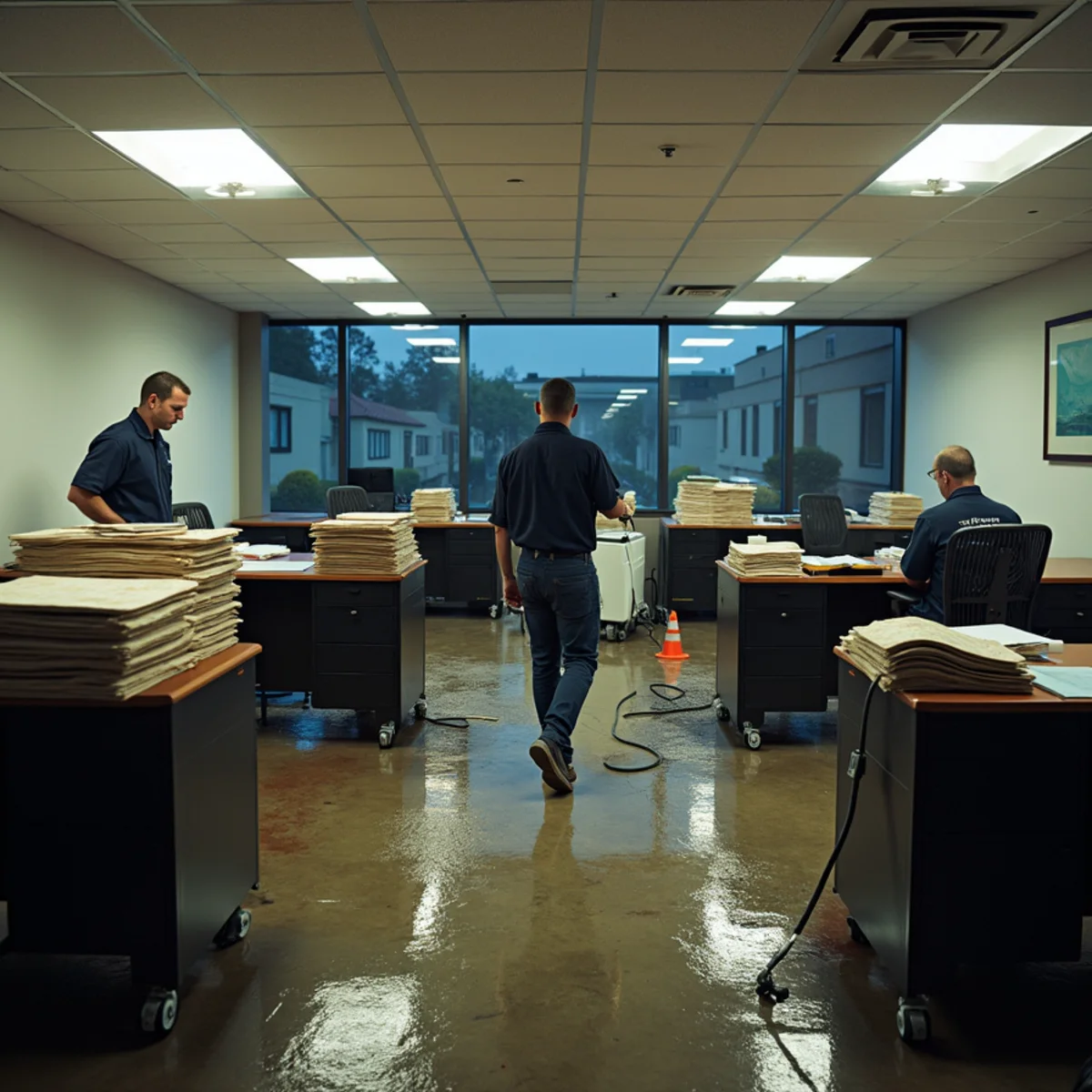
24/7 emergency service · Redwood City, CA
A commercial water loss has a second invoice nobody puts on paper: the revenue you do not earn while the space is unusable. For a restaurant on Broadway or a clinic off Veterans Boulevard, a week of closure can cost more than the restoration itself.
Answered by a person, 24/7 — crews on site within 60 minutes in Redwood City.
So the plan is different from a house. We phase the work to keep as much of the building operating as possible, run the disruptive stages after hours, and document the loss per unit or per tenant so costs land where they belong between owner, tenants and carriers.
We work across the Peninsula commercial mix: downtown Redwood City office and retail, the Seaport and Broadway industrial corridor, Redwood Shores campuses, medical and dental suites, restaurants, multi-tenant retail and HOA-managed residential buildings.
Fire sprinkler discharge
A single activated head can put 20 to 50 gallons a minute into a suite. Sprinkler water is often rusty and stagnant from sitting in the pipe for years.
Roof or HVAC failure on a flat commercial roof
Ponding water finding a seam, or a rooftop unit dumping condensate through a suspended ceiling into the space below.
Failed supply line above a tenant space
A break on an upper floor runs down through the building, affecting several tenants and the common areas between them.
Sewer or grease line backup
Restaurant and food service lines block from grease and solids, and the backup lands in a kitchen or a shared corridor.
Water heater or boiler failure in a mechanical room
Often discovered on a Monday morning after running unattended all weekend.
Storm intrusion at doors and loading bays
Ground-level entries along Veterans and in the Seaport industrial area take surface water during heavy cells.
Our process
Hour 0
Dispatch and site control
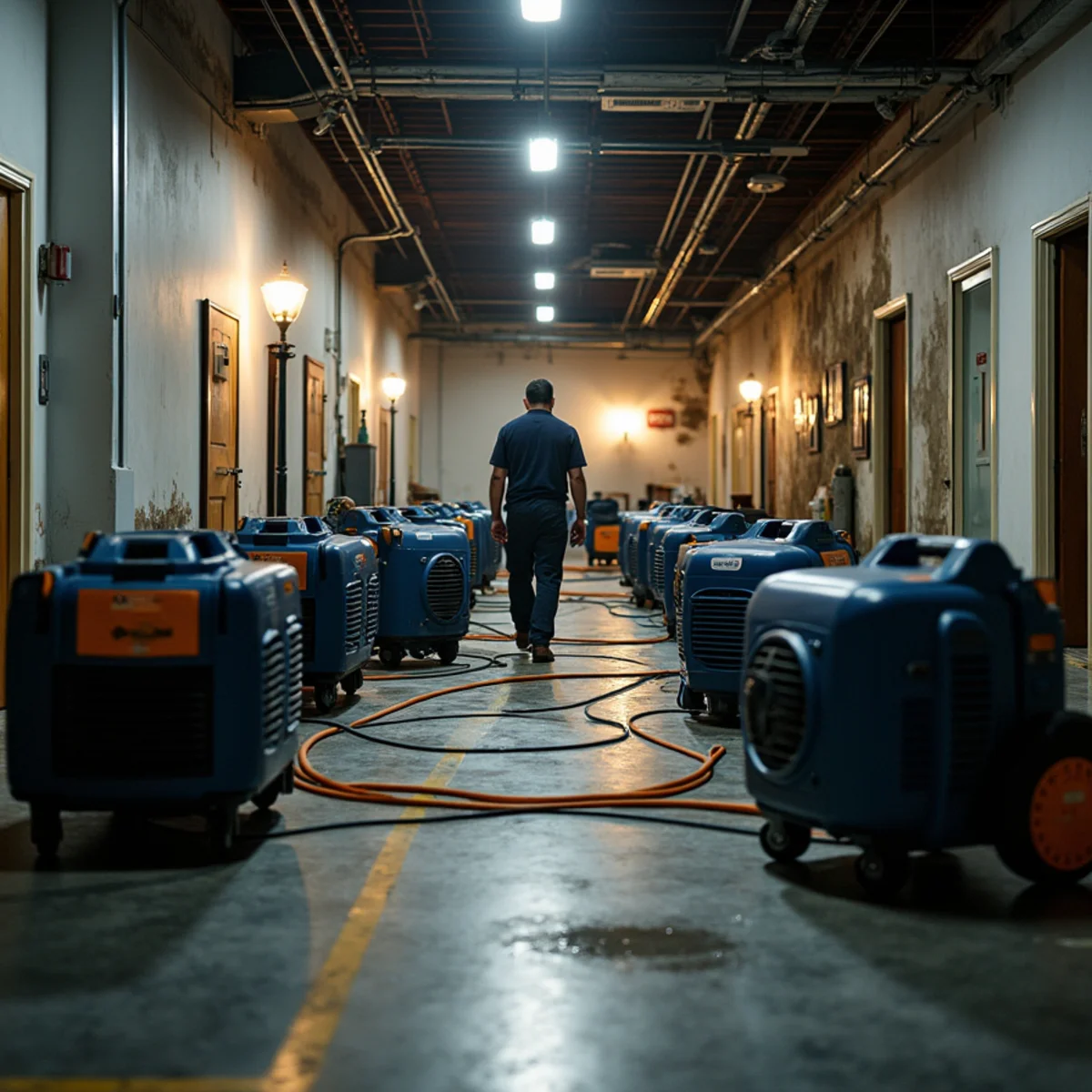
Crew on site with extraction capacity. We meet your facilities contact or property manager, establish safe zones, and protect the areas that can stay open.
Hour 1
Triage by business impact
We sequence the work around what keeps you trading — server rooms, kitchens, point-of-sale, medical equipment, records storage and inventory come first.
Day 1
Extraction and phased containment
Water out, containment up so unaffected suites keep operating, and negative air where the water was contaminated. Walkways and shared entries stay usable.
Nights
Disruptive work after hours
Demolition, equipment repositioning and noisy phases run outside business hours wherever the building allows it.
Days 2–7
Monitored drying with per-unit records
Daily readings and equipment logs kept separately for each affected unit or tenant, so cost allocation between owner, tenants and carriers is based on documentation rather than argument.
Rebuild
Reconstruction around your schedule
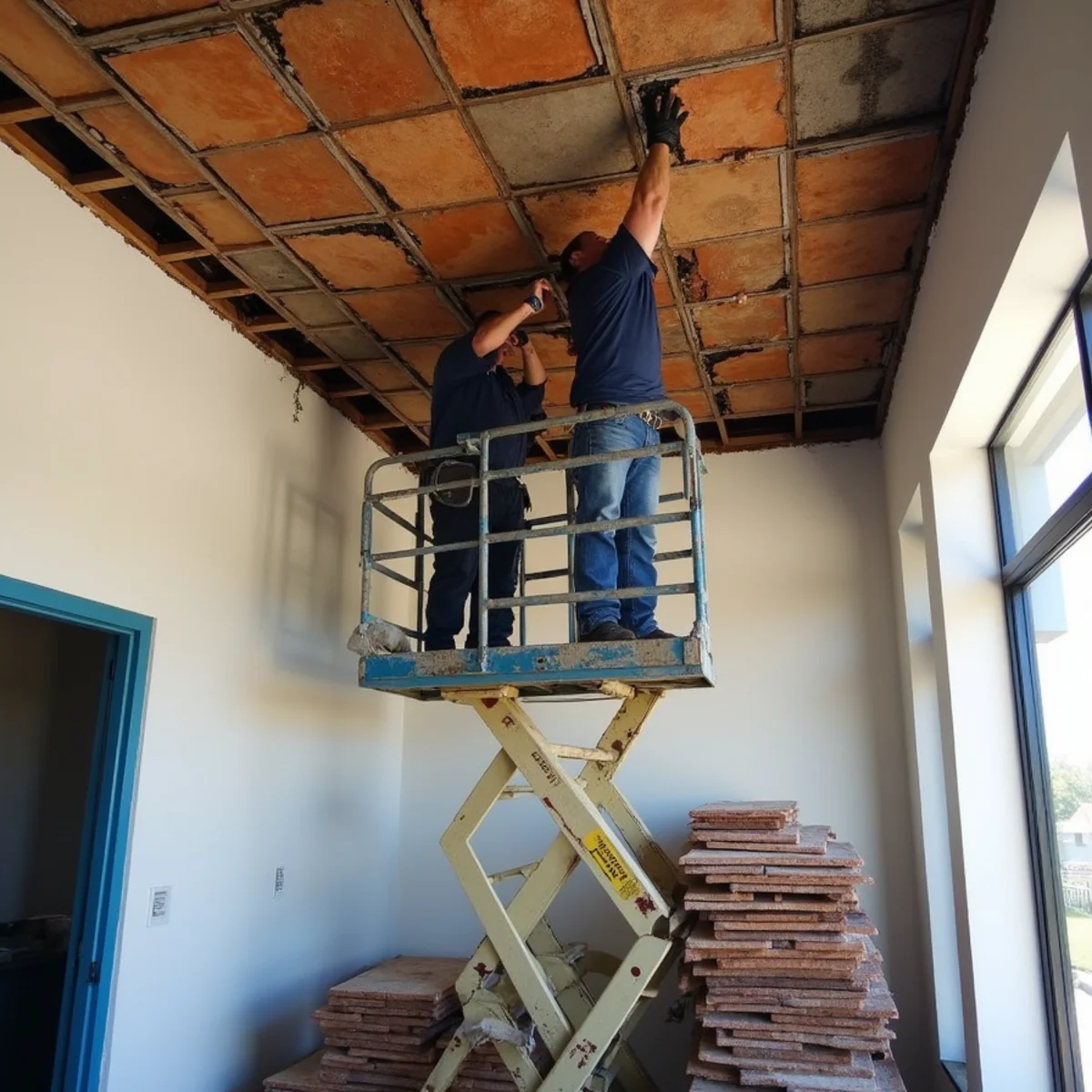
Ceiling grid and tile, drywall, commercial flooring, paint and millwork — sequenced so you reopen in stages rather than all at once at the end.
24/7 Emergency Response
Tell us what you are seeing and we will tell you honestly whether it needs a crew, and what it is likely to involve. Emergency dispatch is answered 24/7.
550 Allerton St, Redwood City, CA 94063 · Emergency dispatch answered 24/7, including holidays
Sprinkler systems save lives and buildings. They are also responsible for a large share of the commercial water losses we handle, because a single accidental activation — a forklift strike, a frozen line in an unheated warehouse, corrosion, or a contractor knocking a head — releases water continuously until someone finds the riser and closes it.
Two things make this water worse than it looks. It has been standing in steel pipe for years, so it comes out rusty, stagnant and staining. And it falls from ceiling height, which means it enters the ceiling assembly, light fixtures, cable trays and wall cavities on the way down rather than just sitting on the floor.
The response is specific: shut the zone, extract, drop and dispose of affected ceiling tile, remove wet insulation above the grid, deal with rust staining on finishes early because it sets, and get the system inspected and recharged. We coordinate with your sprinkler contractor so the building is protected again before we finish.
When water crosses a demising wall it stops being a repair and becomes an allocation question. Whose policy responds? Which portion is association responsibility versus unit owner? What does the tenant get compensated for?
None of those questions get settled by opinion. They get settled by documentation, which is why we keep records per unit from the first hour: arrival time, conditions on arrival, affected area with photos, category classification, daily moisture readings and equipment placement.
For property managers we also handle the parts that eat your day — tenant communication about access and noise, scheduling around business hours, and a single project manager who talks to you, your board and the carrier rather than sending three different people.
Per-unit photo, moisture and equipment logs for clean cost allocation.
Written arrival times and conditions for habitability and tenant records.
Containment that lets unaffected suites and units stay open.
After-hours scheduling coordinated with on-site management and access control.
One project manager for owner, board, tenants and adjuster.
The restoration decisions that cost the least are not always the ones that get you open the fastest, and for most businesses reopening is worth more. We put both options in front of you with numbers rather than deciding on your behalf.
The levers are usually the same: run more equipment for fewer days, phase the work so trading areas reopen while back-of-house is still in progress, schedule demolition overnight, and use temporary finishes to reopen a customer-facing area ahead of the permanent repair.
One more practical note: if you carry business interruption coverage, the documentation of when each area became unusable and when it was returned to service is part of that claim. We time-stamp it, because reconstructing that timeline weeks later is nearly impossible.
Honest pricing
We publish ranges rather than hiding them behind a form. Mitigation runs $3 – $7.50 per square foot depending on water category, and most complete jobs land between $1,384 and $6,387. You get an itemised written estimate after inspection — never a firm number before anyone has checked for hidden moisture.
Why us for this
Restoration gets bought in a hurry, usually from whoever answers first. These are the things worth checking before you hand anyone a key — and what we put in writing on every commercial job.
Extraction and stabilisation happen immediately; the noisy, dusty phases run after close. We quote both the phased schedule and the straight-through one so you can weigh restoration cost against lost trading days with real numbers.
Arrival times, conditions, affected areas, water category, daily readings and equipment logs kept separately for each unit or tenant. That is what lets owners, tenants, associations and carriers allocate cost on evidence instead of argument.
Servers, medical and dental equipment, refrigeration and records are protected and isolated with your own vendors in the conversation before anything is moved or powered down.
When each area became unusable and when it returned to service is recorded as we go. Reconstructing that timeline weeks later for a BI claim is close to impossible.
Honest pricing
Mitigation is priced per square foot by water category. Reconstruction is quoted separately, and you get an itemised written estimate after inspection rather than a number over the phone.
| Water category | Typical source | Health risk | Mitigation cost |
|---|---|---|---|
| Category 1 — clean water | Broken supply lines, sink and tub overflows, clean appliance leaks | Low risk if dried quickly | $3 – $4 / sq ft |
| Category 2 — gray water | Washing machine or dishwasher discharge, urine-only toilet overflow, sump failure | Moderate — bacteria present, can cause illness | $4 – $7 / sq ft |
| Category 3 — black water | Sewage backup, storm floodwater, toilet overflow with solids, microbial growth | High — pathogens; PPE and containment required | $7 – $7.50 / sq ft |
Insurance
We bill your carrier directly for covered work, so you are not floating the cost and waiting on reimbursement. You do not need to wait for an adjuster before emergency mitigation starts — policies expect you to take reasonable steps to limit the damage.
Sudden and accidental damage — a burst supply line, a failed water heater, an appliance hose — is covered by most California policies. Gradual leaks and deferred maintenance often are not, rising water from outside needs separate flood insurance, and sewer backup usually needs its own endorsement.
Nobody can promise what your carrier will decide. What we can promise is that the loss is documented well enough for that decision to be made on the facts.
California coverage explainedCommercial in Redwood City? A person answers 24/7 and gives you shut-off instructions while the crew is on the way.
+1 (201) 277-9344Commercial·8 min read
The restoration invoice is rarely the biggest cost. The days you cannot trade are. Here is how to reduce both.
Read the guideProblem-solving·7 min read
Extraction is hours. Drying is days. Rebuild is weeks. Here is what actually determines each number, and where schedules slip.
Read the guideReviewed by Water Damage Redwood City — checked by our IICRC-certified project managers.
Last reviewed
Where we provide this service
We cover Redwood City and the surrounding Peninsula. Local conditions change the plan — bayfill slabs dry slowly, hillside runoff is contaminated, and pre-1960 housing hides leaks under concrete — so pick your area for specifics.
FAQ
Yes, and for most retail, restaurant, office and clinical spaces that is what we recommend. Extraction and equipment placement happen immediately, then the noisy and dusty phases run after hours. We will quote both a phased after-hours schedule and a straight-through schedule so you can compare cost against lost trading days.
Regularly. Sprinkler water is rusty and stagnant from years in the pipe, so staining needs to be addressed early, and because it falls from ceiling height it wets the ceiling assembly, fixtures and wall cavities on the way down. We extract, remove affected ceiling tile and wet insulation, dry the assembly, and coordinate with your sprinkler contractor to get the system inspected and recharged.
Yes. Per-unit documentation is standard on every multi-tenant job: arrival time, conditions on arrival, affected area photos, water category, daily moisture readings and equipment logs. This is what allows costs to be allocated between owner, association, tenants and carriers on evidence instead of argument.
Yes. We bill commercial carriers directly, work within TPA and program requirements where a building is enrolled in one, and provide documentation in the formats adjusters and administrators expect. We also time-stamp when each area became unusable and when it returned to service, which supports a business interruption claim.
Business-critical equipment gets triaged first. We protect and isolate it, coordinate with your IT or equipment vendors before anything is moved or powered down, and prioritise drying in those rooms. We do not make judgment calls on your equipment without your vendor in the conversation.
24/7 Emergency Response
A person answers 24/7 and gives you shut-off and safety instructions while a crew is already on the way. Emergency mitigation is loss-limiting work your policy expects you to start immediately.
550 Allerton St, Redwood City, CA 94063 · Emergency dispatch answered 24/7, including holidays