Local-specific·8 min read
Redwood City's Flood Risk: Why Water Damage Is a Growing Concern
Roughly 34.5% of properties here carry measurable flood risk. The exposure is not evenly spread, and knowing your version of it matters.
Read the guide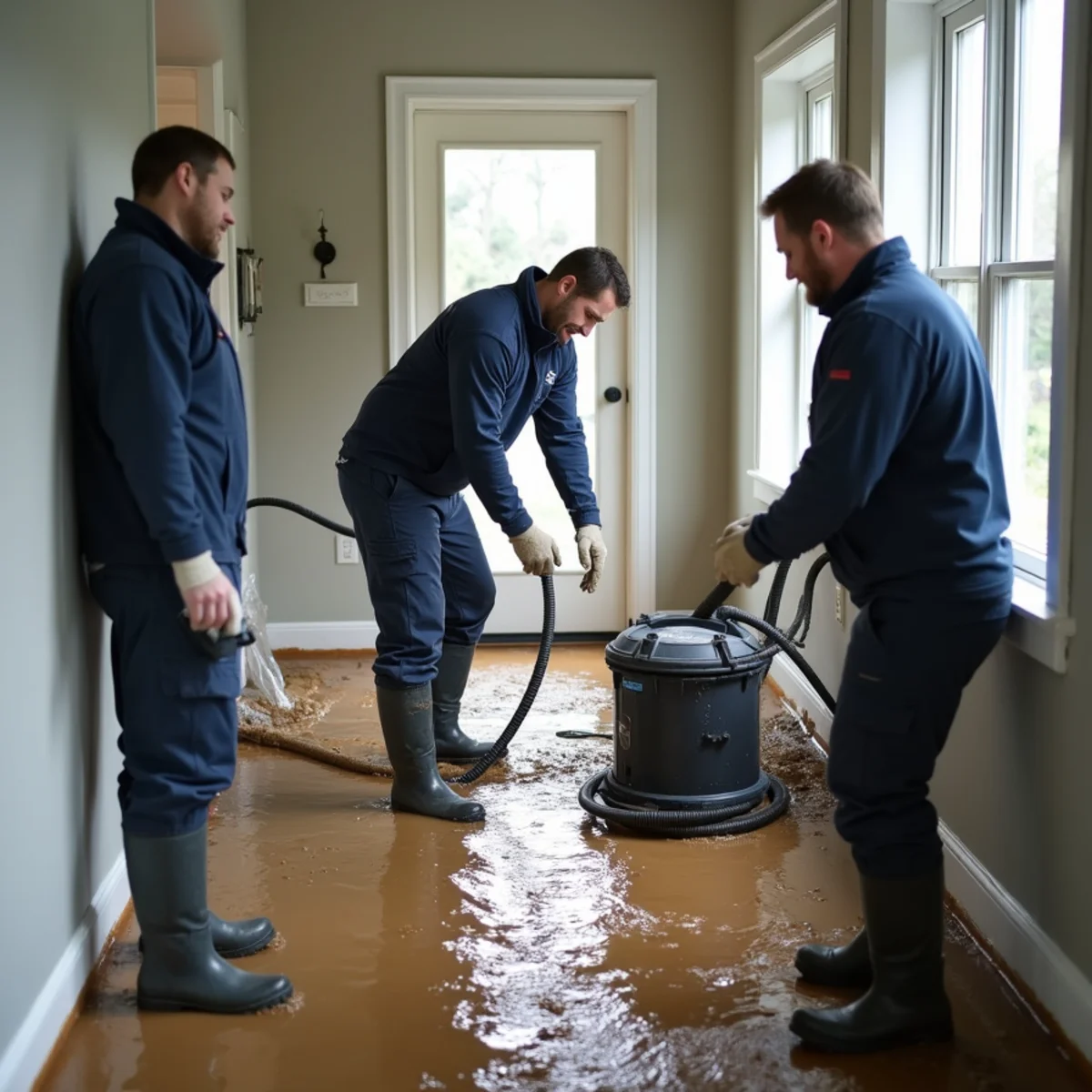
24/7 emergency service · Redwood City, CA
Flooding is not a bigger version of a burst pipe. Water that comes in from outside the building carries soil, fertiliser, road runoff and whatever the storm drain was holding. That makes it Category 3 in almost every case, and Category 3 changes the entire scope of work.
Answered by a person, 24/7 — crews on site within 60 minutes in Redwood City.
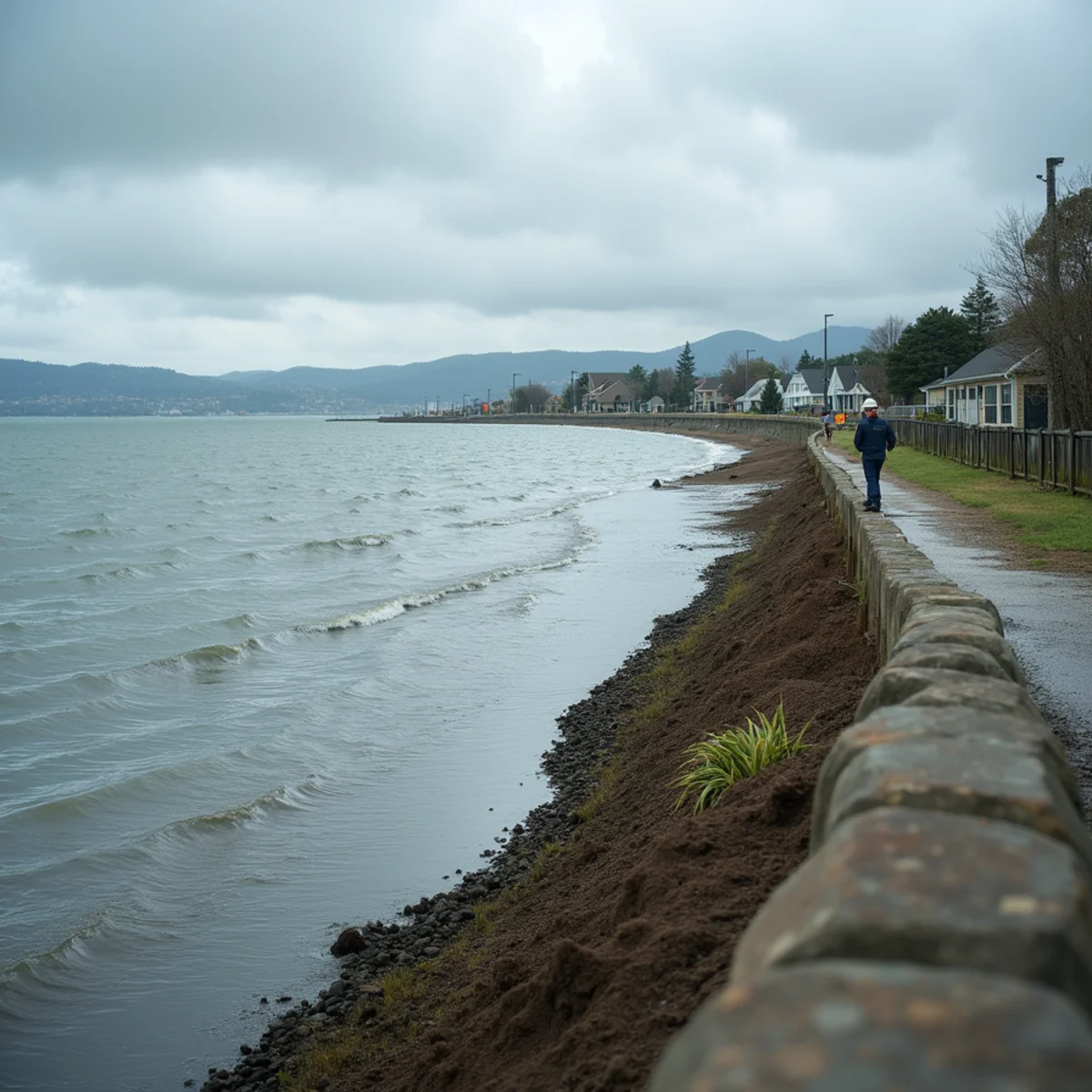
About a third of properties in Redwood City carry meaningful flood risk. The exposure is not evenly spread — Redwood Shores and anything on old bayfill sit at or near sea level behind levees, the Seaport and Bair Island corridor takes tidal push during winter storms, and the Redwood Creek branches move fast water through neighbourhoods that feel nowhere near the bay.
We handle flood losses the way they need to be handled: containment first, contaminated material out, hard surfaces cleaned and treated, then verified structural drying. Cutting corners on a flood job is how homes end up with mold inside the walls six weeks later.
Water entered from outside the building envelope
Under a door, through a foundation vent, up through a floor drain, or over a threshold. Treat it as contaminated regardless of how clean it looks.
A visible silt or debris line
The tide mark on baseboards and drywall tells us how high the water stood and how far up the wall assembly needs to be opened.
Saturated carpet, pad and subfloor
Carpet pad in a flood is not salvageable. Neither is porous material below the water line in a Category 3 event.
Wet insulation in walls or a crawl space
Batt and blown-in insulation hold water against framing indefinitely. It has to come out, not dry in place.
A crawl space holding water
Standing water under the house drives humidity up through the floor for months and rots joists and subfloor from below.
Sewer backup during the same storm
Heavy rain overwhelms lines and pushes sewage back into low fixtures. It is common in a flood event and needs the same treatment as a standalone backup.
Our process
Step 1
Safety, containment and category call
We check for energised circuits, gas appliances that were submerged and structural risk. Containment and negative air go up before demolition so contamination stays in the affected zone.
Step 2
Bulk water and sediment removal
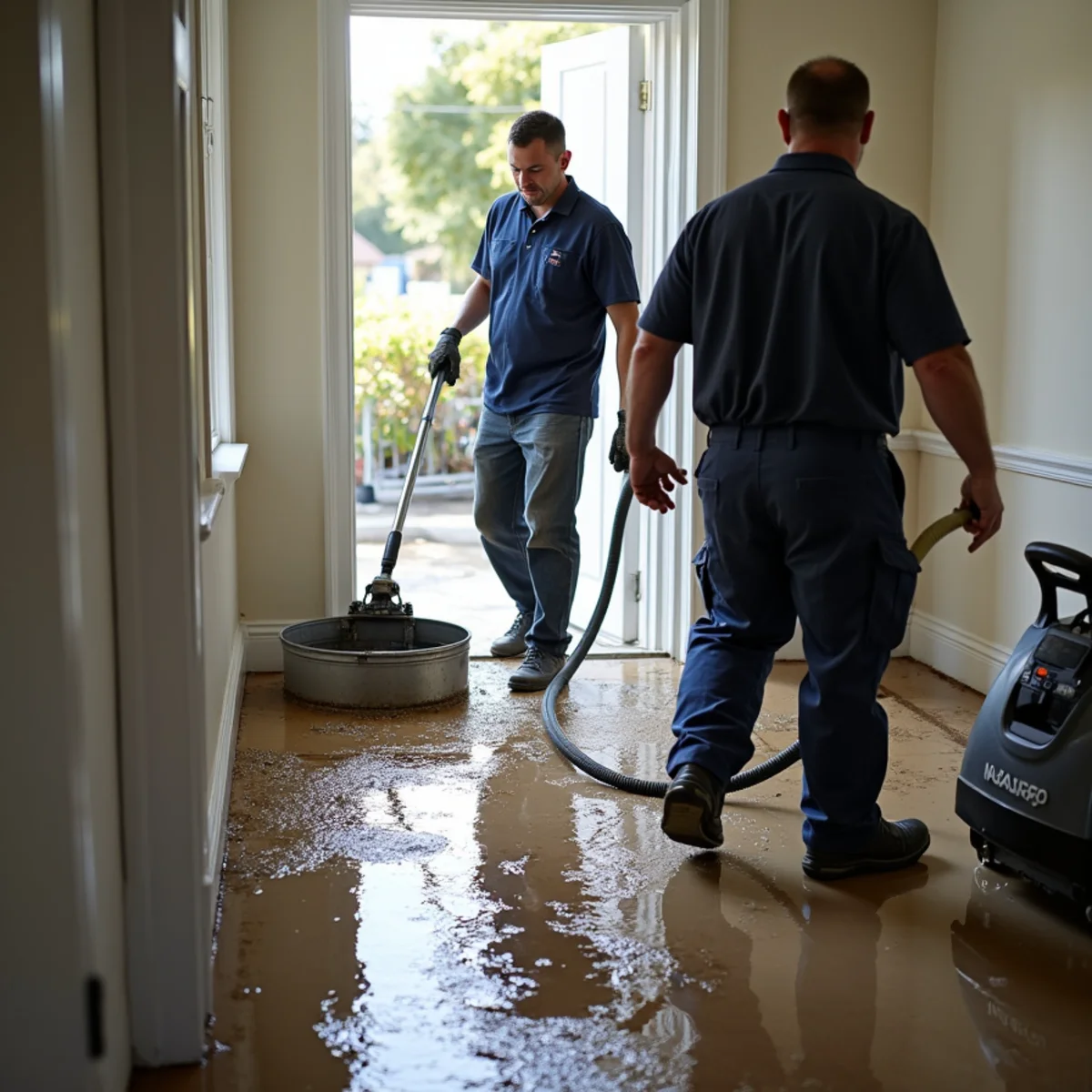
Truck-mounted extraction for volume, submersible pumps for crawl spaces and below-grade areas, then physical removal of silt and debris that extraction leaves behind.
Step 3
Removal of contaminated porous materials
Carpet and pad, drywall to a set height above the water line, wet insulation, particle-board cabinet bases and affected contents. Documented and photographed as it comes out.
Step 4
Cleaning and antimicrobial treatment
Framing, slab and salvageable hard surfaces are cleaned, then treated with antimicrobial. HEPA air scrubbers run throughout to control airborne spores and bacteria.
Step 5
Structural drying with daily verification
LGR dehumidifiers and air movers, moisture readings logged daily in marked locations. Concrete slabs and crawl spaces get extra attention — they hold water long after framing reads dry.
Step 6
Rebuild
Insulation, drywall, texture, paint, trim and flooring restored to pre-loss condition, with the moisture record attached to the invoice for your claim.

24/7 Emergency Response
Tell us what you are seeing and we will tell you honestly whether it needs a crew, and what it is likely to involve. Emergency dispatch is answered 24/7.
550 Allerton St, Redwood City, CA 94063 · Emergency dispatch answered 24/7, including holidays
Flood exposure here comes from three different directions, and the right response depends on which one hit you.
Bay and tidal flooding is the Redwood Shores, Seaport and Bair Island story. These are planned communities and industrial areas on bayfill sitting at or below sea level behind levees and tide gates. When a king tide lines up with an atmospheric river, drainage backs up because there is nowhere for it to go. Sea level rise is making that overlap more frequent.
Creek and drainage flooding follows the Redwood Creek branches and the storm drain network. Mount Carmel takes it along the creek branch at its southeast corner; low points around Woodside Road and Veterans Boulevard pond fast in a heavy cell.
Hillside runoff is the Farm Hill, Emerald Lake Hills and Edgewood-adjacent problem. Water sheets off slopes, overwhelms a driveway drain or a window well, and enters at the lowest opening. It arrives fast, carries mud, and is usually over in an hour — after it has filled a garage.
The industry classification is not bureaucratic caution. Storm and surface water picks up sewage from overwhelmed lines, lawn chemicals, petroleum from streets, and bacteria from soil. It sits in your house at room temperature, which is a functional incubator.
That is why the flood scope includes containment, HEPA filtration, PPE, and removal of porous material below the water line even when it looks salvageable. Drywall wicks contaminated water up its paper facing well above the visible line. Carpet pad becomes a bacterial sponge. Neither can be disinfected in place.
If a contractor offers to dry your flooded carpet and pad in place after storm water, get a second opinion. That decision is the single most common reason a flood job turns into a mold job.
Do not walk into standing flood water in bare feet or sandals — Contamination plus submerged hazards plus possible energised circuits. Boots, or wait for the crew.
Do not use a gas generator or pump indoors — Carbon monoxide kills people after floods every winter. Generators stay outside, well away from openings.
Do photograph the water line before anything is moved — The silt line on the wall is the single most useful piece of evidence for a flood claim.
Do check whether you have flood coverage, not just homeowners — Standard policies exclude rising water. NFIP and private flood policies have their own claim procedures and deadlines.
Do not turn the HVAC on — If ducts or the air handler took water, running the system distributes contamination through the whole house.
Honest pricing
We publish ranges rather than hiding them behind a form. Mitigation runs $3 – $7.50 per square foot depending on water category, and most complete jobs land between $1,384 and $6,387. You get an itemised written estimate after inspection — never a firm number before anyone has checked for hidden moisture.
Why us for this
Restoration gets bought in a hurry, usually from whoever answers first. These are the things worth checking before you hand anyone a key — and what we put in writing on every flood damage job.
Containment, negative air, PPE and removal of porous material below the water line are standard here, not optional extras. Drying flooded carpet and pad in place is the single most common shortcut, and it is why so many flood jobs become mold jobs.
Bay and tidal backup in Redwood Shores and the Seaport, creek flooding along the Redwood Creek branches, hillside sheet runoff in Farm Hill and Emerald Lake Hills. Three mechanisms, three different scopes.
A high water table means slab readings come down slowly. We plan a longer equipment schedule from the outset rather than pulling equipment on day three to hit a promise nobody should have made.
Rising water needs flood insurance; an interior failure does not. A single storm often produces both, so we document each entry point separately — that distinction can be the whole claim.
Honest pricing
Mitigation is priced per square foot by water category. Reconstruction is quoted separately, and you get an itemised written estimate after inspection rather than a number over the phone.
| Water category | Typical source | Health risk | Mitigation cost |
|---|---|---|---|
| Category 1 — clean water | Broken supply lines, sink and tub overflows, clean appliance leaks | Low risk if dried quickly | $3 – $4 / sq ft |
| Category 2 — gray water | Washing machine or dishwasher discharge, urine-only toilet overflow, sump failure | Moderate — bacteria present, can cause illness | $4 – $7 / sq ft |
| Category 3 — black water | Sewage backup, storm floodwater, toilet overflow with solids, microbial growth | High — pathogens; PPE and containment required | $7 – $7.50 / sq ft |
Insurance
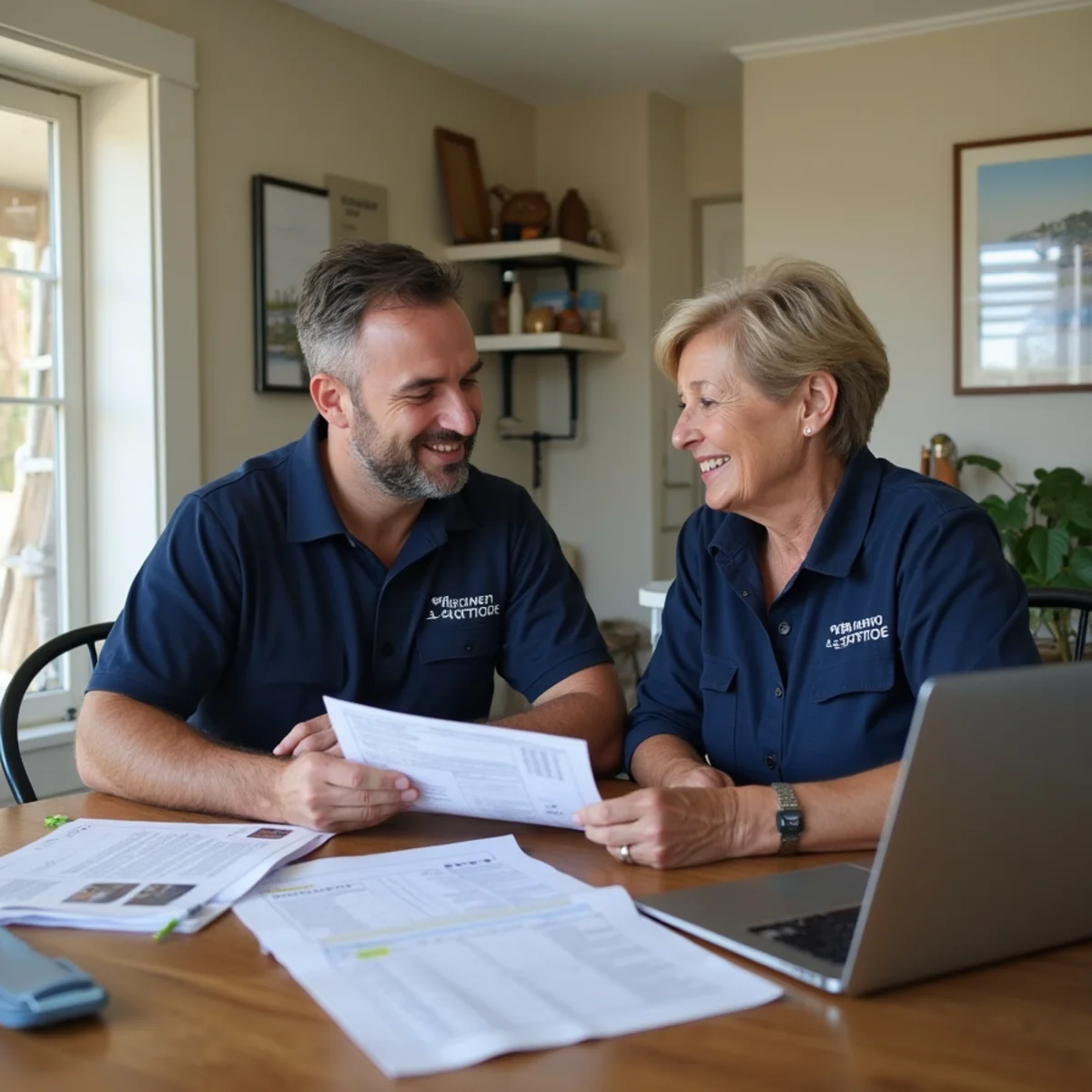
We bill your carrier directly for covered work, so you are not floating the cost and waiting on reimbursement. You do not need to wait for an adjuster before emergency mitigation starts — policies expect you to take reasonable steps to limit the damage.
Sudden and accidental damage — a burst supply line, a failed water heater, an appliance hose — is covered by most California policies. Gradual leaks and deferred maintenance often are not, rising water from outside needs separate flood insurance, and sewer backup usually needs its own endorsement.
Nobody can promise what your carrier will decide. What we can promise is that the loss is documented well enough for that decision to be made on the facts.
California coverage explainedFlood Damage in Redwood City? A person answers 24/7 and gives you shut-off instructions while the crew is on the way.
+1 (201) 277-9344Local-specific·8 min read
Roughly 34.5% of properties here carry measurable flood risk. The exposure is not evenly spread, and knowing your version of it matters.
Read the guideCost & insurance·9 min read
The answer is "usually, if it was sudden". Here is where that line actually falls, and how documentation decides the cases near it.
Read the guideReviewed by Water Damage Redwood City — checked by our IICRC-certified project managers.
Last reviewed
Where we provide this service
We cover Redwood City and the surrounding Peninsula. Local conditions change the plan — bayfill slabs dry slowly, hillside runoff is contaminated, and pre-1960 housing hides leaks under concrete — so pick your area for specifics.
FAQ
Usually not. Standard California homeowners policies exclude rising water from outside the building — that requires separate flood insurance through the NFIP or a private carrier. Water that originates inside the house, like a burst pipe or failed water heater, is a different peril and is generally covered. We document the source carefully because that distinction determines which policy responds.
Carpet pad after storm flooding cannot be saved and should not be dried in place. Carpet face fibre sometimes can be salvaged if it is cleaned and re-padded quickly, but in Category 3 water we usually recommend replacement. Solid hardwood is occasionally recoverable with specialty drying if we get to it within a day or two; engineered flooring over a slab almost never is.
Extraction and contaminated material removal typically takes one to two days. Structural drying runs 3 to 5 days for framing and longer for a slab or crawl space. Rebuild depends on how much came out — a garage and one room might be two weeks total, while a fully flooded ground floor can run six to eight weeks including reconstruction.
Yes, and they are the two most commonly neglected areas. We pump standing water, remove sediment and wet insulation, dry the space with dedicated equipment, and treat framing with antimicrobial. Leaving a wet crawl space to dry on its own is how a one-room flood becomes a whole-house humidity and mold problem.
Yes. Redwood Shores and other bayfill communities have specific issues: slab-on-grade construction that holds moisture, homes at or below sea level behind levees, high water tables that slow drying, and salt content in tidal water that affects finishes and metal. We plan for longer slab drying and verify with readings rather than assuming a schedule.
24/7 Emergency Response
A person answers 24/7 and gives you shut-off and safety instructions while a crew is already on the way. Emergency mitigation is loss-limiting work your policy expects you to start immediately.
550 Allerton St, Redwood City, CA 94063 · Emergency dispatch answered 24/7, including holidays