
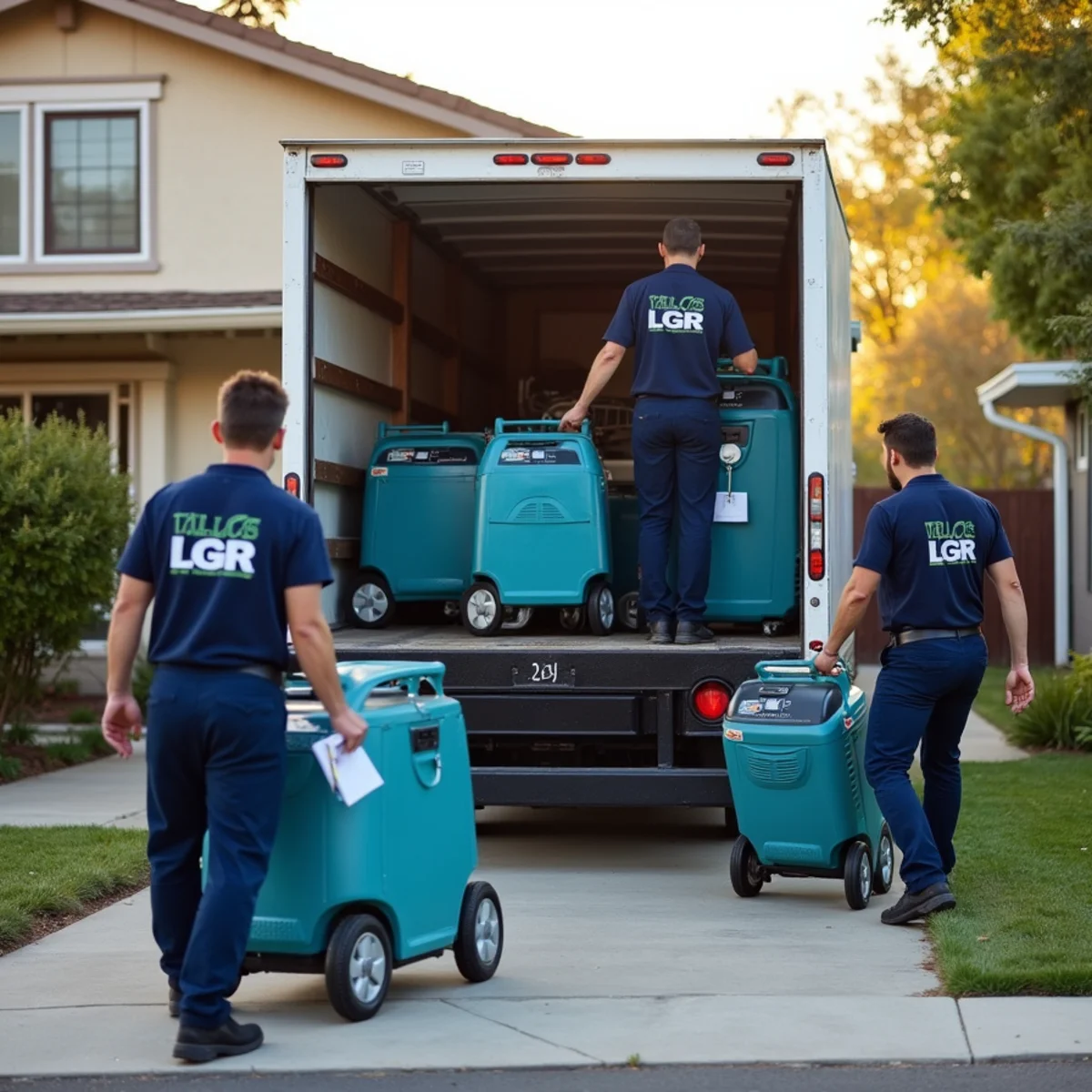
Locally owned & operated
About Water Damage Redwood City
We are a restoration company based at 550 Allerton Street, working in the city we live in. Crews are IICRC-certified, work is documented to the standard your insurance adjuster expects, and one team handles the job from the first hour of extraction to the final walkthrough.
- Based in Redwood City, not dispatched from out of state
- IICRC-certified technicians
- Licensed, bonded and insured
- Mitigation and reconstruction in house
Answered by a person, 24/7 — crews on site within 60 minutes in Redwood City.
Our approach
Restoration is bought under stress. That is exactly why the details matter.
Almost nobody chooses a restoration company calmly. You call whoever answers, at the worst moment of your month, and you make a significant financial decision in about four minutes. We built this company around that reality.
So the phone is answered by a person, at any hour, who gives you shut-off and safety instructions before the crew arrives. Estimates are itemised and written, after an inspection, never as a number over the phone. Drying is verified with daily moisture readings compared against a dry standard taken from your own building — and you get the entire log, not a checkbox at the end.
We also publish our pricing, which is unusual in this industry. Mitigation runs $3 – $7.50 per square foot depending on water category, and most complete jobs land between $1,384 and $6,387. You should not have to fill in a form to learn that.
Being local is not a slogan here — it changes the work. The crew knows which streets west of El Camino sit on 1950s slab with original galvanised lines, which addresses in Redwood Shores need longer slab drying because of the water table, which hillside neighbourhoods flood at the same driveway drain every winter, and which pre-1980 ceilings need asbestos testing before anyone cuts. That knowledge is why our estimates hold up.
18
Services offered
55
Areas served
60-minute response
Emergency response target
24/7/365
Dispatch availability
Certifications & licensing
- IICRC certification. The Institute of Inspection, Cleaning and Restoration Certification sets the industry standard for water damage restoration. Ask any company for proof for the specific technicians working on your home.
- California contractor licence. Contractors performing restoration work over $500 in California must hold a valid licence, verifiable through the Contractors State License Board.
- Insured and bonded. Certificates available on request before work begins.
What we put in writing
- Water category and damage class classification
- Affected square footage with a marked moisture perimeter
- Daily moisture readings against a dry standard
- Equipment type, count and days on site
- Itemised estimate separating mitigation from rebuild
- Photo record before, during and after
Equipment
The equipment that decides the outcome
Restoration results come down to extraction capacity, dehumidification capacity and measurement. Anything else is decoration.
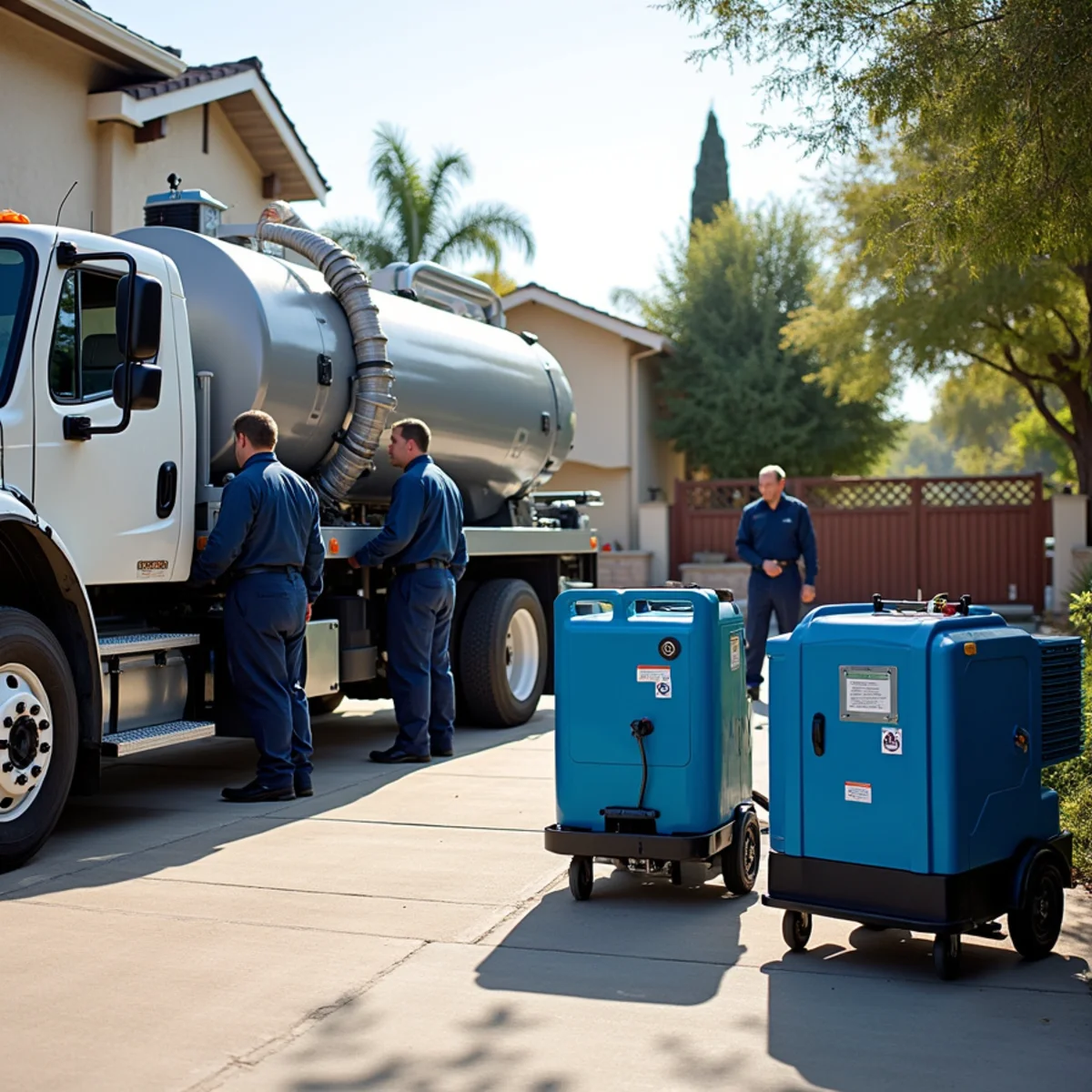
Extraction and drying equipment loaded on every emergency roll.
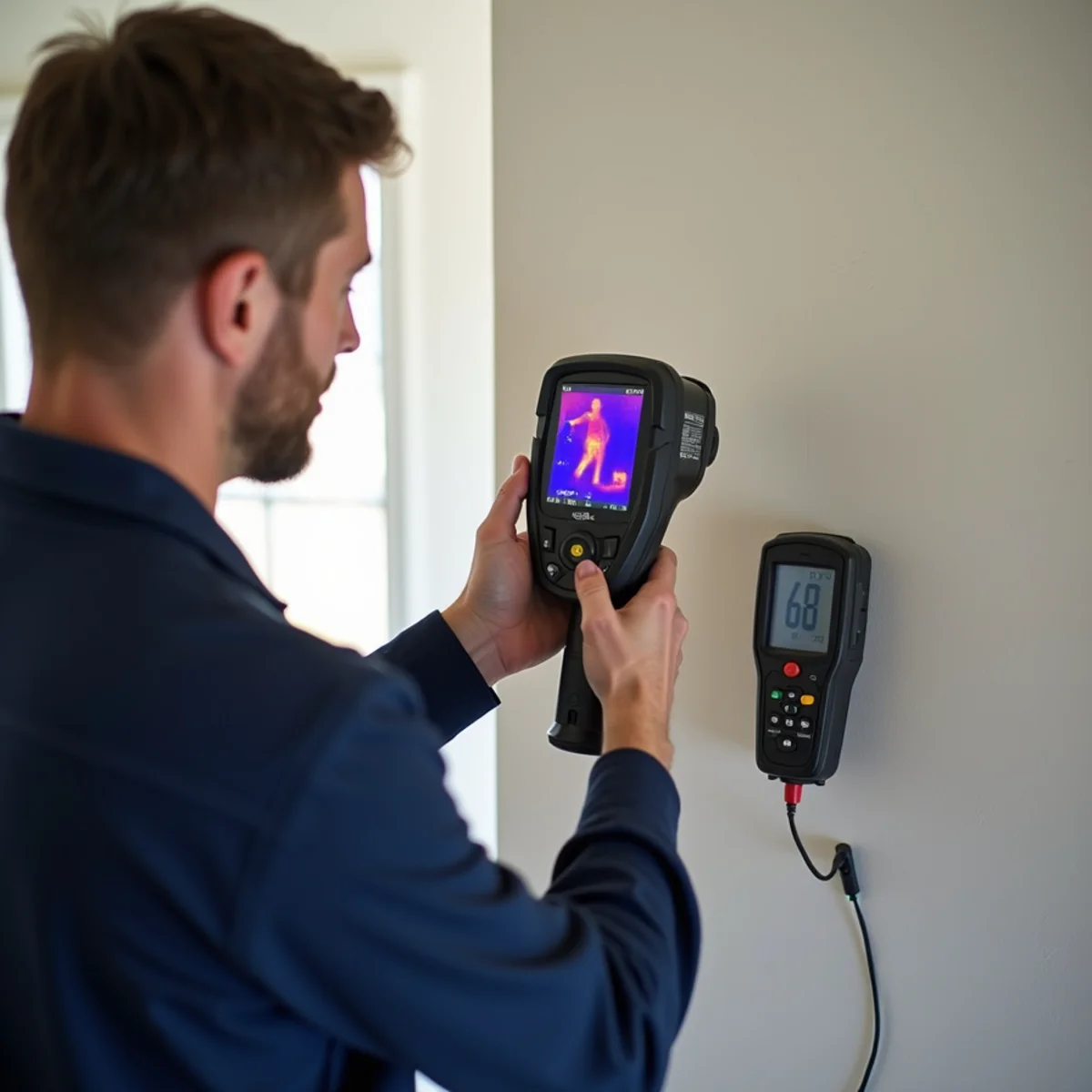
Imaging finds it; the meter proves it. Both go on the report.

You get the full moisture log — and so does your adjuster.
Truck-mounted and portable extractors
Volume extraction for large losses, portables for upper floors and tight access, and sub-surface tools that pull water out of carpet and pad rather than off the top of it.
LGR dehumidifiers and commercial air movers
Low-grain refrigerant units keep working at the cool temperatures and lower humidity of a Peninsula winter, where standard refrigerant dehumidifiers stall or ice up.
Thermal imaging and moisture meters
Imaging finds temperature anomalies; pin and pinless meters confirm and quantify them. We mark the wet perimeter on the wall so you can see why we open what we open.
HEPA air scrubbers and negative air
Containment and filtration for Category 2 and 3 losses and any job with existing microbial growth, so contamination stays inside the work zone.
Specialty drying systems
Hardwood floor mat systems, wall cavity injection and under-floor ducted drying — the equipment that saves assemblies instead of replacing them.
Moisture documentation software
Daily readings logged at marked locations with equipment records and photos, formatted the way carriers expect to receive them.
Coverage
Where we work, and how fast we get there
We publish real drive times per area rather than a blanket promise. Central bayside cities are typically inside 30 minutes; coastside and Tri-Valley take longer, and we tell you which when you call.
Redwood City
5–14 minutes across every neighbourhood, including Redwood Shores and Farm Hill.
Adjacent cities
San Carlos, Belmont, Atherton, Menlo Park and North Fair Oaks — typically 10–20 minutes.
San Mateo County
North county, the 280 corridor, hill towns and the full coastside to Pescadero.
Wider Bay Area
South Bay, East Bay and San Francisco for larger residential and commercial losses.
Reputation & credentials
How to check any restoration company — including us
Restoration is bought under stress, usually in a hurry, and often from whoever answers first. These are the things worth checking before you hand anyone a key — and what we put in writing on every job.
IICRC-certified technicians
The industry standard for water damage restoration. Ask any company for proof of certification before you sign — we hand it over without being asked.
Licensed, bonded and insured
California requires a contractor's licence for restoration work over $500. Ours is verifiable through the CSLB.
Documented moisture logs
Daily readings at marked locations, equipment logs and photo records. You get the whole file, and so does your adjuster.
Written scope before work starts
An itemised estimate after inspection — never a price over the phone before anyone has checked for hidden moisture.
Our base
Find us — and how fast we can reach you
We dispatch from 550 Allerton St in Redwood City. Call any hour — a person answers and a crew is assigned before you hang up.
Water Damage Redwood City
550 Allerton St
Redwood City, CA 94063
Open 24 hours — 7 days a week
How we work
The standards the work is measured against
Restoration has published standards, which is unusual for a trade bought in a panic. Knowing what they say is the fastest way to tell whether the crew in your house is doing the job or performing it.
The IICRC S500 standard governs water damage restoration. It defines the three water categories — clean supply water, gray water carrying some contamination, and Category 3 black water from sewage or ground intrusion — and four damage classes describing how much material is wet and how porous it is. Those two labels drive everything downstream: what gets removed, what gets dried in place, how much equipment the room needs, and what the job costs. A company that cannot state the category and class of your loss on the paperwork is not working to a standard, it is guessing.
The S520 standard covers mold remediation and is the reason we will not sell you a fogging treatment as a solution. It calls for physical removal under containment with negative air through HEPA filtration, not chemical application over a surface that stays wet. Spraying a colony and leaving the moisture source in place produces a clean-looking wall and the same problem in six weeks — which is a large share of the mold remediation calls we take as second-opinion work.
Drying itself is arithmetic rather than judgement. Air movers are specified per linear foot of affected wall and per unit of floor area; dehumidification is specified against the cubic volume and the class of loss. Materials are dried to a dry standard taken from an unaffected part of your own building, because a reading that means “dry” in a Woodside ranch on a hillside means something different in a Redwood Shores slab home on bayfill. Equipment comes out when the numbers say so. That is the whole discipline.
What we do differently
Six decisions that shape every job we run
None of these are unusual in the trade. All of them are common enough to skip that they are worth stating plainly.
One team, extraction to rebuild
We do mitigation and reconstruction in house. That is why the moisture record and the repair estimate agree with each other — and why nobody hands you a list of contractors when the fans come out.
Published pricing before you call
Per-square-foot ranges by water category, a real job range and an average, all on the site. You should know roughly what you are walking into before the phone rings, not after a crew is already parked outside.
Readings, not schedules
Equipment is pulled when materials hold at dry standard, whether that is day three or day nine. Nobody bills you for a fixed number of drying days that was decided before anyone measured anything.
Honest arrival windows
Every area page states a measured drive time rather than a marketing radius. A truthful forty minutes lets you keep working with towels and buckets; a false fifteen makes you stop and wait.
Documentation you keep
Assessment, daily logs, equipment records, photographs and verification readings are yours at the end of the job — useful for the claim now and for a buyer asking about it years later.
We tell you when to stop
An old dry stain needs paint, not a drying plan. A floor that is past saving is past saving. Saying so costs us the job and saves you the money that would have bought a delay.
Local knowledge
What working the Peninsula teaches you
Water behaves according to what a building is made of and what it sits on. Both vary sharply across this county, and the pattern repeats often enough to plan around.
The bayside flats are the defining condition. Bayfill and near-sea-level ground in Redwood Shores, Foster City and the Seaport hold a high water table under the slab, so concrete gives up moisture slowly and re-absorbs it from below. Equipment schedules there are planned longer from the outset rather than extended halfway through — the same loss that dries in four days on a hillside can take eight on fill.
The mid-century housing stock is the second. Pre-1965 slab-on-grade construction across Mount Carmel, Redwood Oaks, Woodside Plaza and San Carlos runs its supply lines under the concrete, where a pinhole leak can run for weeks before it surfaces as a warm patch of floor or an unexplained water bill. That is the single most common cause of the burst pipe calls we take from those neighbourhoods, and it is why we meter rather than assume.
Then the extremes at either end of the county. The coastside adds salt-driven corrosion of the flashing, fasteners and fixings that keep water out, so a leak there is usually a corroded detail rather than a failed material, and marine humidity keeps mould pressure on year-round. The hill towns — Woodside, Portola Valley, the parcels above 280 — run on wells and septic systems with no meter to flag a failure, take sheet runoff into garages and lower levels during winter storms, and sit far enough down private drives that equipment gets hand-carried. Our 55 area pages exist because the answer genuinely differs by address, not because the city name changes.
Reviewed by Water Damage Redwood City — checked by our IICRC-certified project managers.
Last reviewed
24/7 Emergency Response
Water spreading right now? Call us — we answer 24/7.
Every hour water sits, more of your home becomes demolition rather than drying. Tell us what happened and we will dispatch a crew while you are still on the phone.
- IICRC-certified technicians
- Licensed, bonded & insured
- Direct insurance billing
- 24/7 live answer — no phone trees
Water Damage Redwood City
550 Allerton St, Redwood City, CA 94063
Open 24 hours — 7 days a week
Get Directions