Prevention·8 min read
Peninsula Rainstorms: Preparing Your Home for Water Damage
Almost every storm call we take traces to something that would have been a cheap fix in September. Here is that list.
Read the guide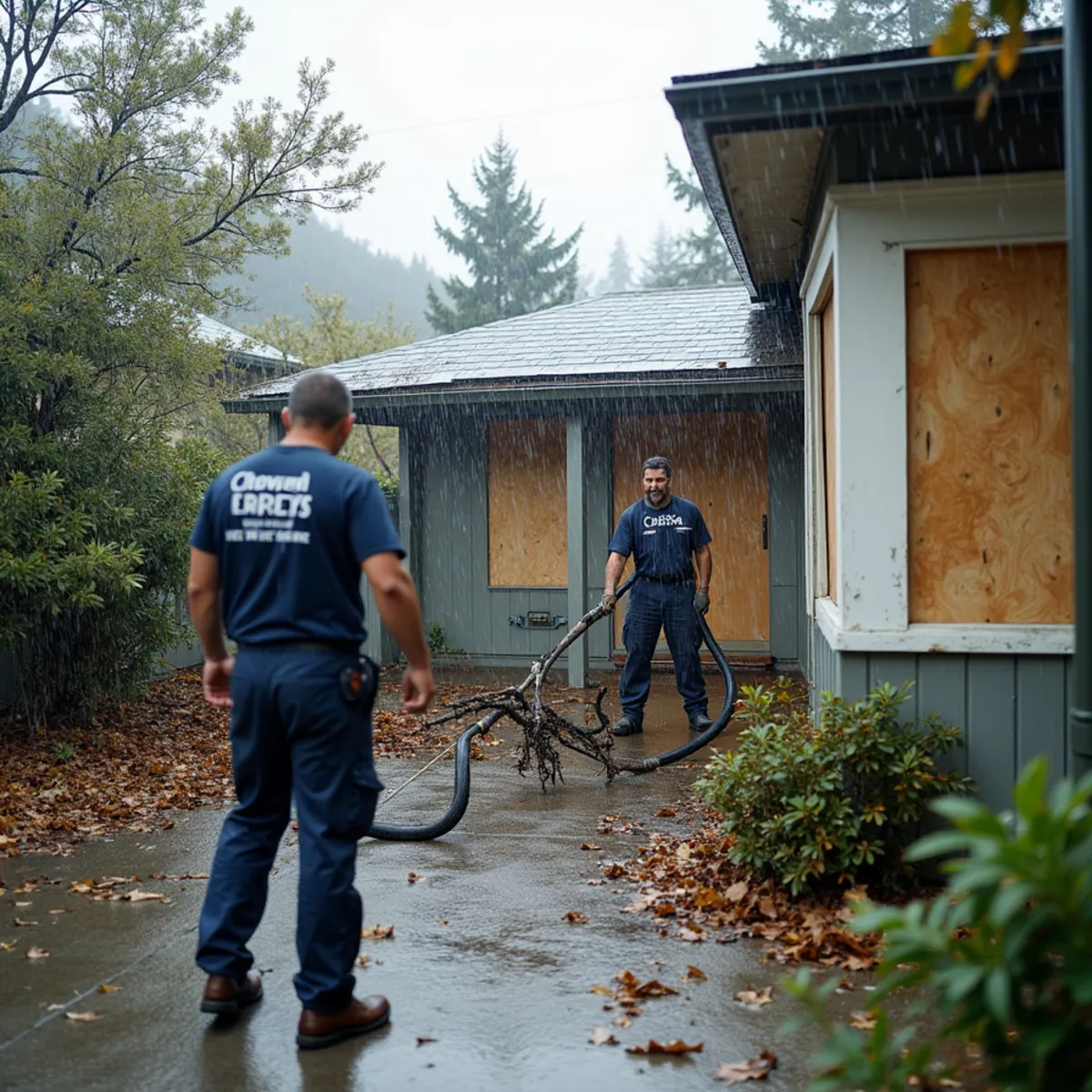
24/7 emergency service · Redwood City, CA
Peninsula storm season runs on a specific rhythm. Atmospheric rivers arrive in sequence, sometimes two or three in a week, each one dropping inches of rain with sustained wind behind it. That pattern is why storm response here is a race rather than a project — whatever is open when the next system lands will get wet again.
Answered by a person, 24/7 — crews on site within 60 minutes in Redwood City.
We prioritise accordingly. Board-up, tarping and dry-in the same day, water out immediately, then drying that continues while the weather does whatever it is going to do.
Storm losses arrive in combinations: a roof detail fails while surface water enters at a doorway while a tree limb takes out a window, all in the same night. We handle the whole envelope rather than sending you to three different contractors.
Wind-driven rain through roof, windows or siding
Water entering at flashing, window heads and wall penetrations that hold up fine in vertical rain but not with pressure behind it.
Fallen trees and branch strikes
Saturated soil plus wind takes down mature trees. Impact damage to roofs, windows and skylights needs board-up before drying.
Surface flooding at doors, garages and lightwells
Runoff overwhelming drainage. Common at low points along Woodside Road and Veterans Boulevard, and on hillside driveways above Farm Hill.
Storm surge and tidal backup near the bay
When a king tide coincides with heavy rain, drainage in Redwood Shores and the Seaport area has nowhere to discharge.
Power loss taking out sump pumps
The pump fails exactly when it is needed. Below-grade areas fill within hours of an outage during a storm.
Mud and debris flow on hillsides
Saturated slopes in Emerald Lake Hills, Woodside and the La Honda corridor move soil into garages and lower levels.
Our process
Same day
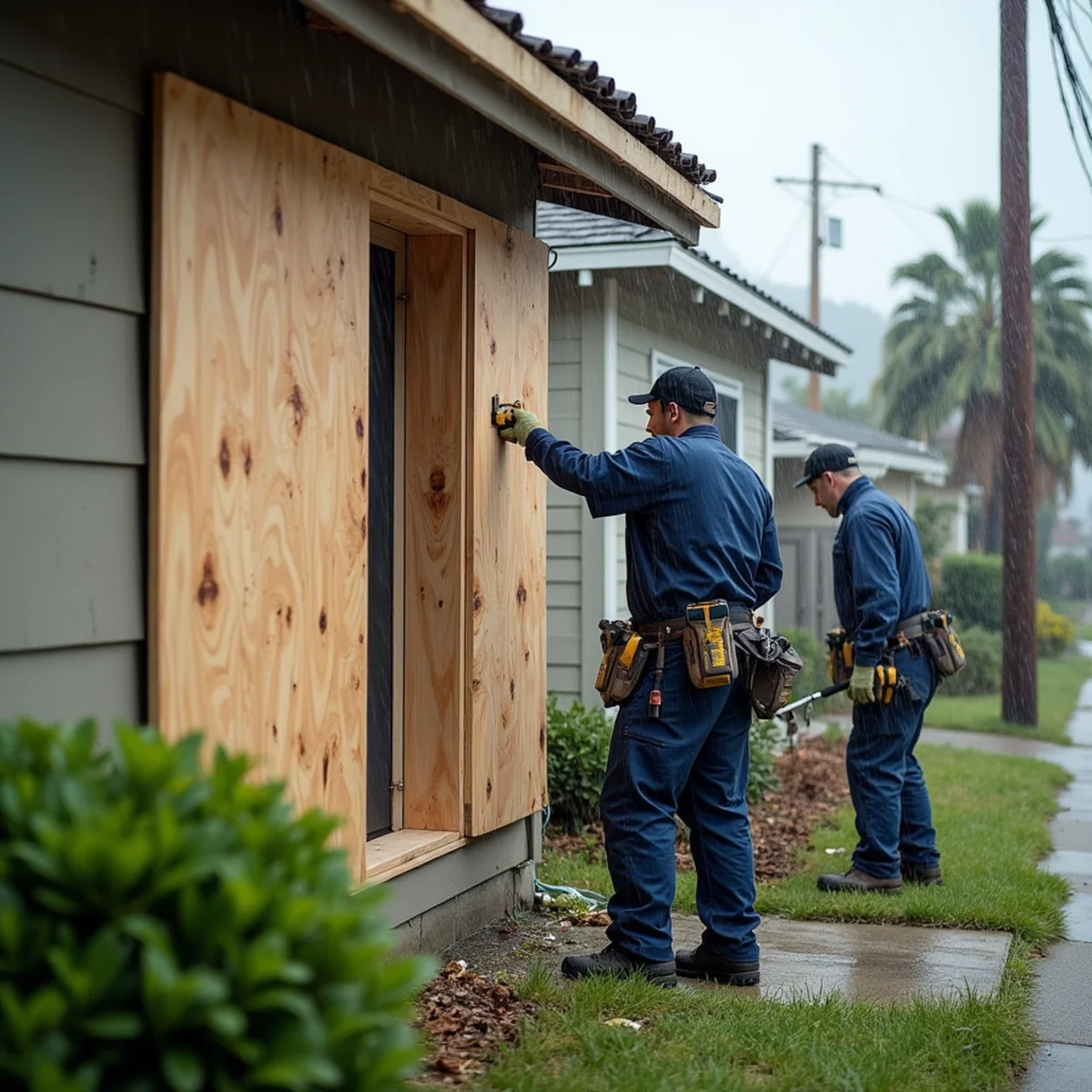
Board-up, tarping and dry-in
Openings secured, roof tarped, broken windows boarded. This happens first and fast, because the forecast rarely gives you a week.
Step 2
Extraction and debris removal
Standing water out, mud and debris removed, contaminated material bagged. Storm water is Category 3 in most cases, so containment goes up with it.
Step 3
Strip what cannot be saved
Wet insulation, carpet and pad, drywall to a documented height. Every hour this material stays is an hour it holds water against framing.
Step 4
Dry through the weather
Drying equipment running while the storm sequence continues, with the building envelope maintained so the interior keeps drying even in wet weather.
Step 5
Permanent repairs
Roofing, windows, siding, drainage correction, then interior reconstruction — insulation, drywall, texture, paint and flooring.
24/7 Emergency Response
Tell us what you are seeing and we will tell you honestly whether it needs a crew, and what it is likely to involve. Emergency dispatch is answered 24/7.
550 Allerton St, Redwood City, CA 94063 · Emergency dispatch answered 24/7, including holidays
An atmospheric river is a narrow corridor of concentrated water vapour that stalls against the coastal ranges and rains itself out over a day or two. For San Mateo County that means several inches in a short window, warm rain at surprisingly high elevations, and wind from the south-east — the direction most local roofs and window details are least prepared for.
The compounding effect is what causes the damage. The first system saturates the soil and fills the drainage network. The second arrives with nowhere for the water to go, so runoff moves across the surface instead of into the ground, hillsides start moving, and creek levels rise fast. By the third system, roofs that were merely marginal are actively leaking.
This is also why we push hard on the pre-season checklist. Almost every storm call we take traces to something that would have been a cheap fix in September: a cracked vent boot, a blocked valley, a downspout discharging at the foundation, a sump pump nobody tested, a tree limb nobody trimmed.
Storm exposure in this county is not uniform, and knowing your version of it is worth more than generic advice.
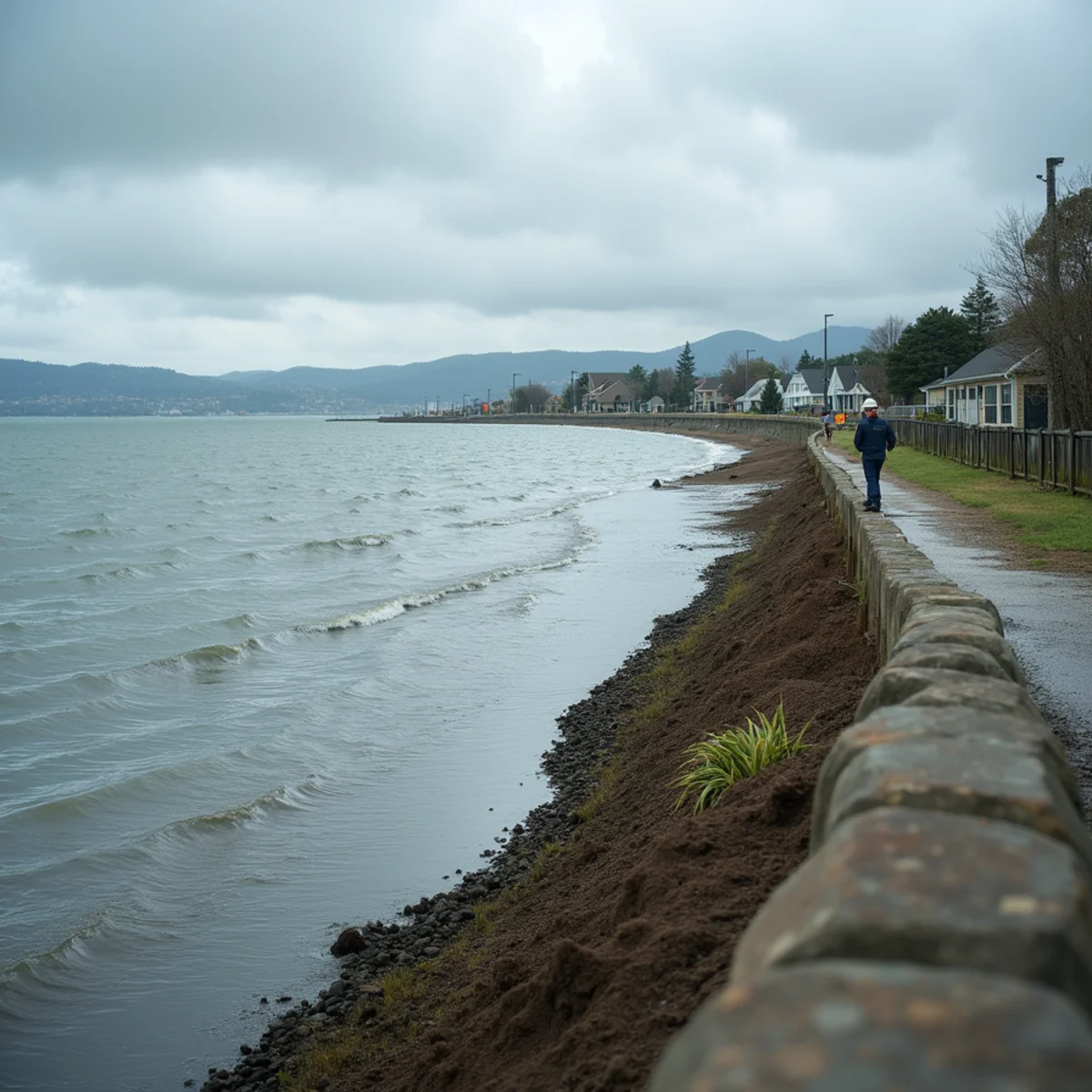
Bayfront and bayfill — Redwood Shores, Seaport, Foster City — At or near sea level behind levees and tide gates. Risk peaks when a king tide coincides with heavy rain and drainage cannot discharge. Sea level rise is increasing how often those two line up.
Creek corridors — Redwood Creek branches, San Francisquito Creek — Fast-rising water in neighbourhoods that do not feel like flood zones, including Mount Carmel and the Menlo Park and Palo Alto boundary areas.
Hillsides — Farm Hill, Emerald Lake Hills, Woodside, Portola Valley — Slope runoff, driveway and lightwell flooding, saturated soil bringing down trees, and landslide risk in the La Honda and Santa Cruz Mountains corridor.
Coastside — Pacifica, Montara, Moss Beach, El Granada, Half Moon Bay — Direct storm exposure with salt air and constant damp, plus coastal erosion and drainage that runs straight off bluffs.
The flats and downtown — Older housing stock, aging laterals that back up under storm inflow, and low points along major roads that pond during heavy cells.
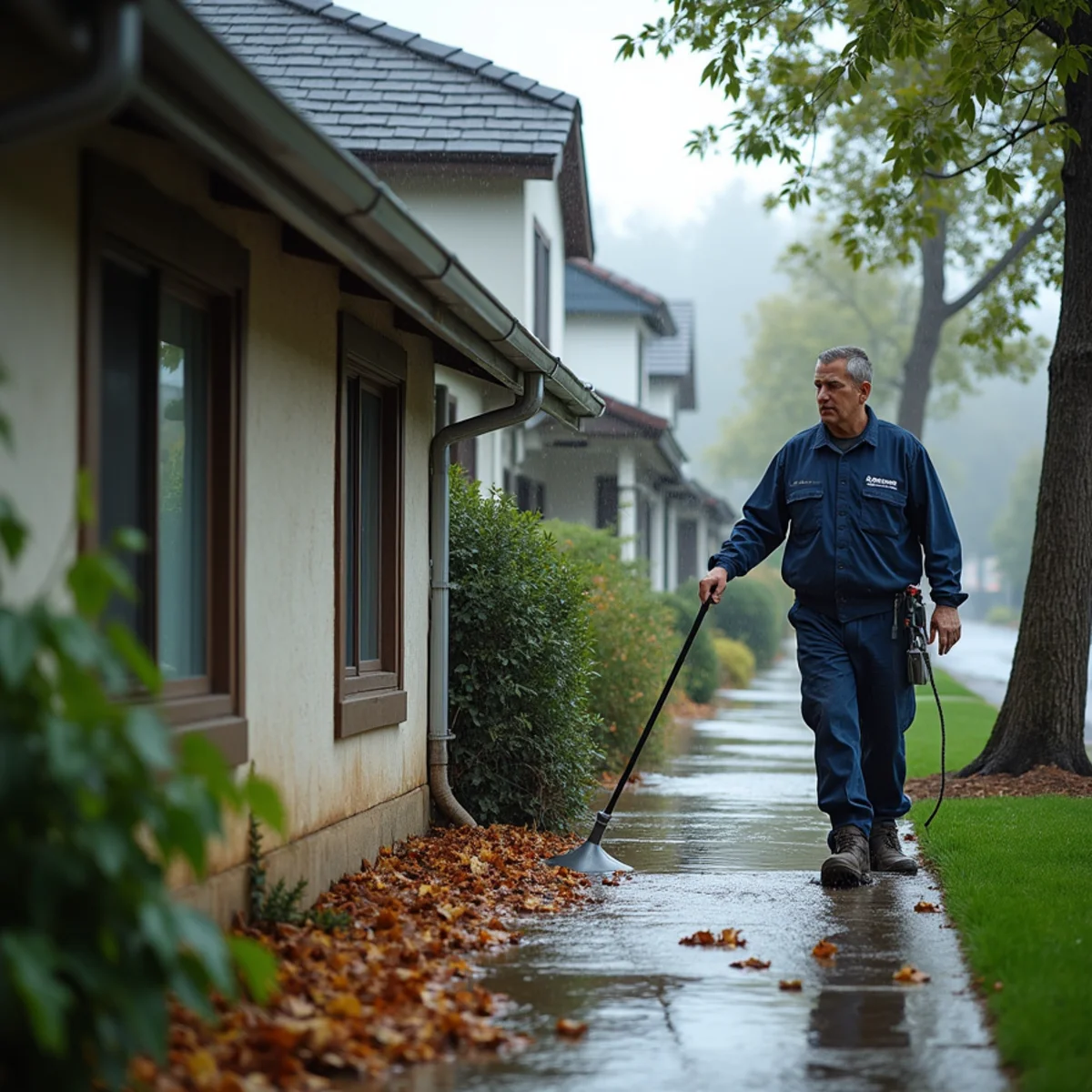
Clear gutters, downspouts and valleys — Twice per winter on tree-heavy streets. This one action prevents more interior water than anything else on the list.
Extend downspout discharge — Four to six feet from the foundation minimum, or into a solid pipe to daylight.
Check vent boots and flashing — Cracked rubber collars on plumbing vents are the most common roof leak we find, and they are cheap to replace.
Test the sump pump and add a battery backup — Power fails during storms, which is exactly when the pump is needed.
Clear area drains and lightwells — A leaf-blocked area drain turns a driveway into a reservoir feeding your garage.
Trim trees away from the roof and the house — Saturated soil plus wind is when limbs come down. Do this before the ground is soft.
Know where your shut-offs are — Water main, gas and electrical panel. Label them now, not by flashlight in the rain.
Photograph your property in good condition — A dated set of photos before the season makes any storm claim dramatically easier to substantiate.
Honest pricing
We publish ranges rather than hiding them behind a form. Mitigation runs $3 – $7.50 per square foot depending on water category, and most complete jobs land between $1,384 and $6,387. You get an itemised written estimate after inspection — never a firm number before anyone has checked for hidden moisture.
Why us for this
Restoration gets bought in a hurry, usually from whoever answers first. These are the things worth checking before you hand anyone a key — and what we put in writing on every storm damage job.
Openings secured, roof tarped, broken glazing boarded — before extraction, because the forecast rarely gives you a clear week. Emergency mitigation like this is generally covered as loss-limiting work.
Surface water carries soil, road runoff, fertiliser and sometimes sewage from overwhelmed lines. Porous material it touched comes out; squeegeeing a garage and calling it dry is how a storm becomes a mold job.
Bayfront tide-plus-rain backup, creek corridors that rise fast, hillside sheet runoff, coastside wind-driven rain, and downtown laterals that back up under storm inflow. Five very different jobs across one county.
In a regional storm every restoration company here is at capacity. We triage by severity and habitability and give you a realistic time with instructions for the interim, rather than a comfortable answer that slips.
Honest pricing
Mitigation is priced per square foot by water category. Reconstruction is quoted separately, and you get an itemised written estimate after inspection rather than a number over the phone.
| Water category | Typical source | Health risk | Mitigation cost |
|---|---|---|---|
| Category 1 — clean water | Broken supply lines, sink and tub overflows, clean appliance leaks | Low risk if dried quickly | $3 – $4 / sq ft |
| Category 2 — gray water | Washing machine or dishwasher discharge, urine-only toilet overflow, sump failure | Moderate — bacteria present, can cause illness | $4 – $7 / sq ft |
| Category 3 — black water | Sewage backup, storm floodwater, toilet overflow with solids, microbial growth | High — pathogens; PPE and containment required | $7 – $7.50 / sq ft |
Insurance
We bill your carrier directly for covered work, so you are not floating the cost and waiting on reimbursement. You do not need to wait for an adjuster before emergency mitigation starts — policies expect you to take reasonable steps to limit the damage.
Sudden and accidental damage — a burst supply line, a failed water heater, an appliance hose — is covered by most California policies. Gradual leaks and deferred maintenance often are not, rising water from outside needs separate flood insurance, and sewer backup usually needs its own endorsement.
Nobody can promise what your carrier will decide. What we can promise is that the loss is documented well enough for that decision to be made on the facts.
California coverage explainedStorm Damage in Redwood City? A person answers 24/7 and gives you shut-off instructions while the crew is on the way.
+1 (201) 277-9344Prevention·8 min read
Almost every storm call we take traces to something that would have been a cheap fix in September. Here is that list.
Read the guideLocal-specific·8 min read
Roughly 34.5% of properties here carry measurable flood risk. The exposure is not evenly spread, and knowing your version of it matters.
Read the guideReviewed by Water Damage Redwood City — checked by our IICRC-certified project managers.
Last reviewed
Where we provide this service
We cover Redwood City and the surrounding Peninsula. Local conditions change the plan — bayfill slabs dry slowly, hillside runoff is contaminated, and pre-1960 housing hides leaks under concrete — so pick your area for specifics.
FAQ
Yes, same day, and it is our first priority during storm season. Securing the envelope has to come before extraction and drying, because with atmospheric rivers arriving in sequence anything left open will simply get wet again within days.
Wind damage and wind-driven rain entering through a storm-created opening are generally covered, as is the resulting interior damage, and emergency tarping and board-up are usually covered as loss-limiting mitigation. Rising surface water and flooding almost always require separate flood insurance. Because the two are frequently mixed in one event, we document each entry point separately so the claim can be correctly split.
We answer 24/7 and target 60 minutes in Redwood City under normal conditions. During a significant regional event, every restoration company in the county is at capacity, and we triage by severity and habitability. You will get a realistic arrival window rather than a comfortable one, along with instructions for what to do in the meantime.
Get everyone out of the affected part of the building and call us for emergency board-up and dry-in. Do not attempt tree removal from a roof yourself — the load distribution is unpredictable and the roof structure may already be compromised. We stabilise the opening, coordinate tree removal, then handle water extraction, drying and the structural and interior repairs.
We coordinate it as part of the job rather than handing you a phone number. Removing a tree from a roof is a rigging problem — the load distribution is unpredictable and the structure underneath may already be compromised — so it is done by a crew equipped for it, with our board-up and dry-in following immediately behind. You get one project manager for the tree, the envelope, the drying and the repairs.
24/7 Emergency Response
A person answers 24/7 and gives you shut-off and safety instructions while a crew is already on the way. Emergency mitigation is loss-limiting work your policy expects you to start immediately.
550 Allerton St, Redwood City, CA 94063 · Emergency dispatch answered 24/7, including holidays