Emergency guides·8 min read
Steps to Take After a Flooded Basement in Redwood City
Below-grade water is the slowest to dry and the fastest to grow mold. Here is the order of operations and the honest timeline.
Read the guide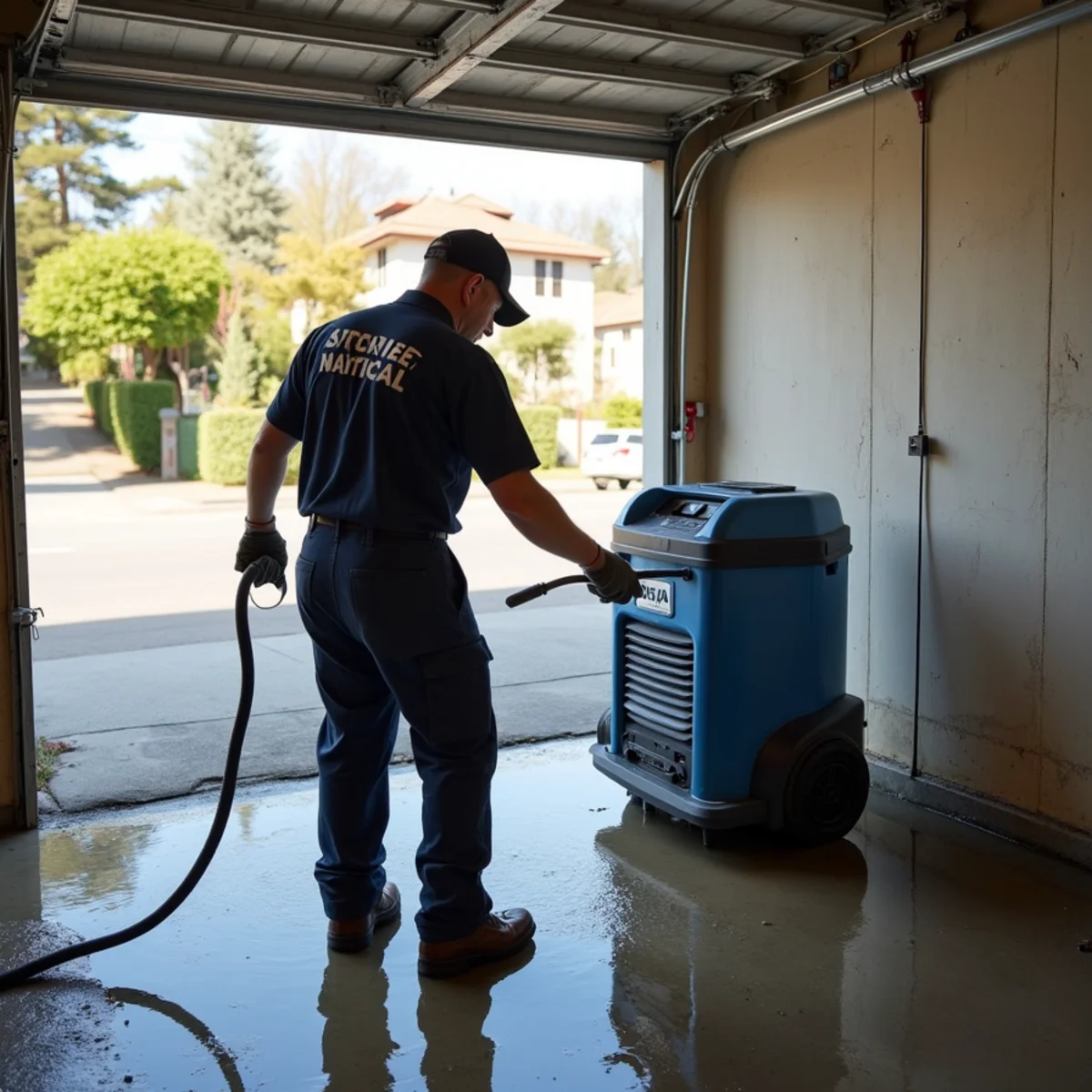
Restoration service · Redwood City, CA
Below-grade space is unforgiving. Water arrives from the outside, has nowhere to drain, and sits against framing and slab in an area with poor air movement. That combination dries slowly and grows mold quickly.
Answered by a person, 24/7 — crews on site within 60 minutes in Redwood City.
Full basements are less common in Redwood City than in older East Coast housing stock, but the equivalent spaces are everywhere: daylight basements and lower levels on the Farm Hill and Emerald Lake Hills slopes, below-grade garages downtown and in Redwood Shores condo buildings, and vented crawl spaces under most of the mid-century single-storey homes on the flats.
Every one of those spaces takes water from a different direction, and the fix depends on knowing which. We pump, extract, remove what cannot be saved, dry with equipment sized for a below-grade environment, and then tell you honestly what needs to change outside so it does not happen again.
Standing water after every heavy rain
Recurring water on the same schedule is a drainage problem outside the building, not a plumbing failure inside it.
Efflorescence — white chalky residue on concrete
Mineral salts left behind as water moves through the concrete. It confirms ongoing moisture intrusion even when the floor looks dry.
A high-humidity, musty lower level
Below-grade relative humidity above roughly 60% supports mold growth on stored contents, framing and drywall paper.
Rust at the base of appliances or steel posts
Corrosion at floor level is a reliable record of water that has been there repeatedly, even if you have never seen it.
A sump pump that runs constantly — or not at all
Constant cycling means volume is exceeding capacity. Silence during a storm means the pump, float or check valve has failed.
Sagging insulation or cupping floors above a crawl space
Water below the floor pushes moisture up. Cupped hardwood on a ground floor is often a crawl space problem in disguise.
Our process
Step 1
Pump and extract
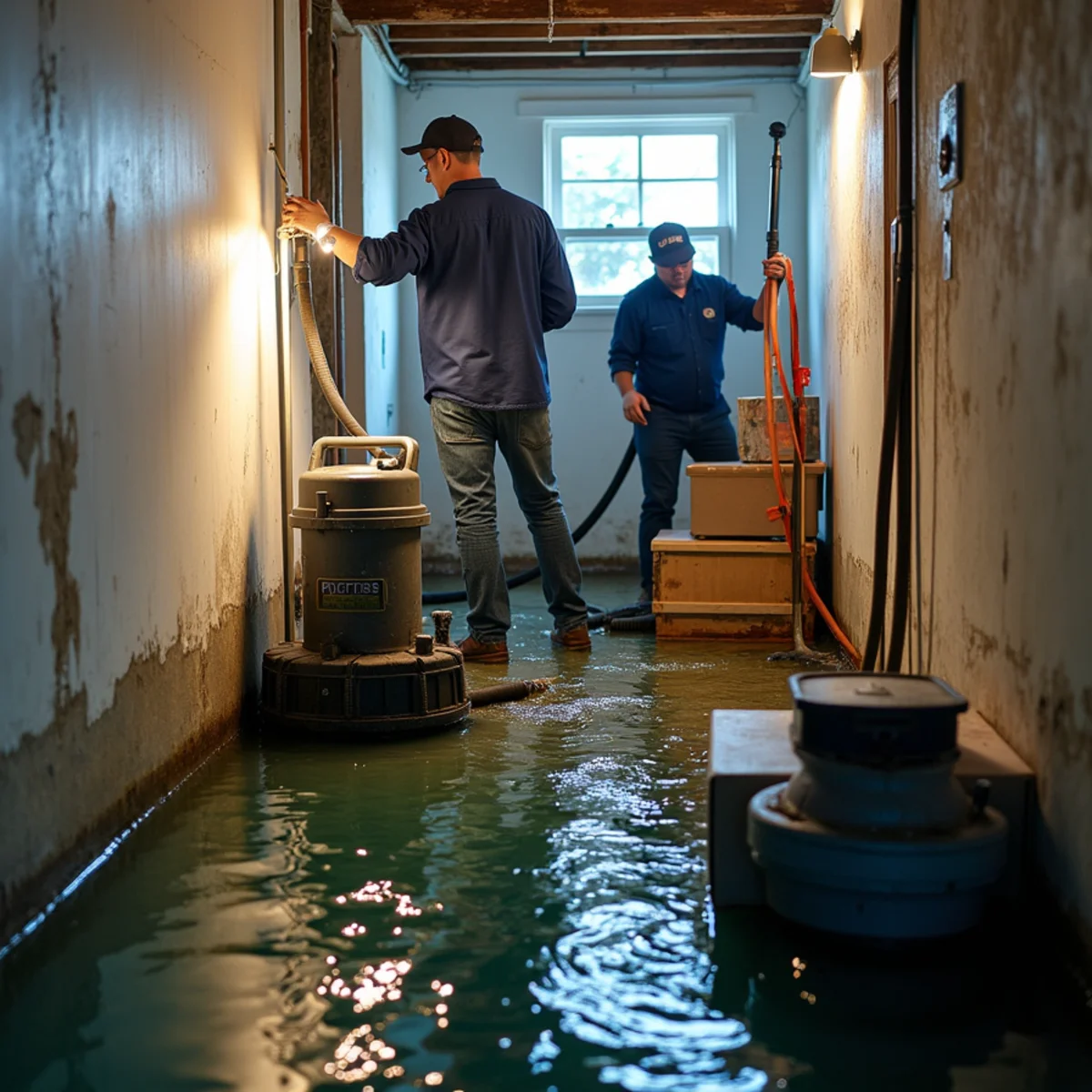
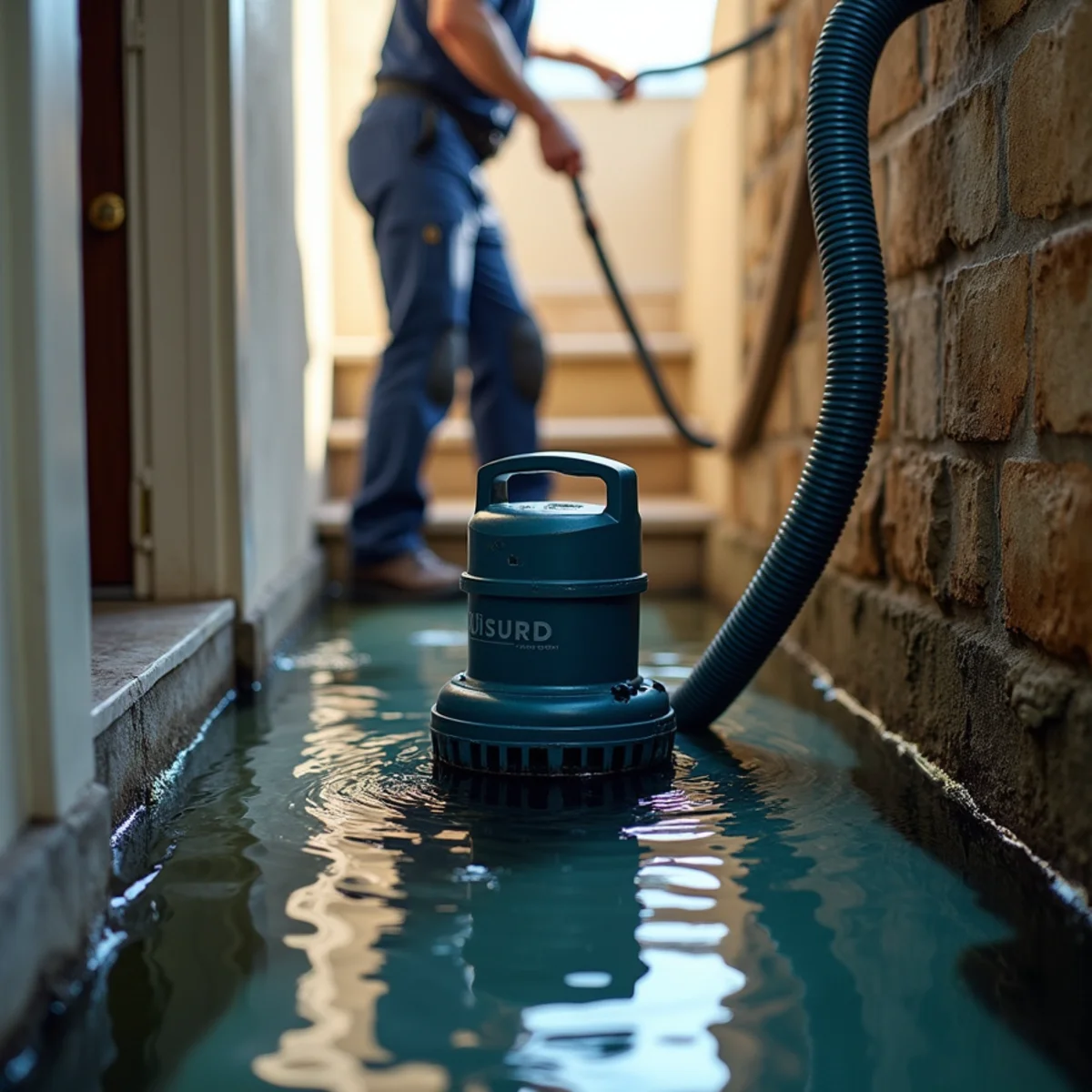
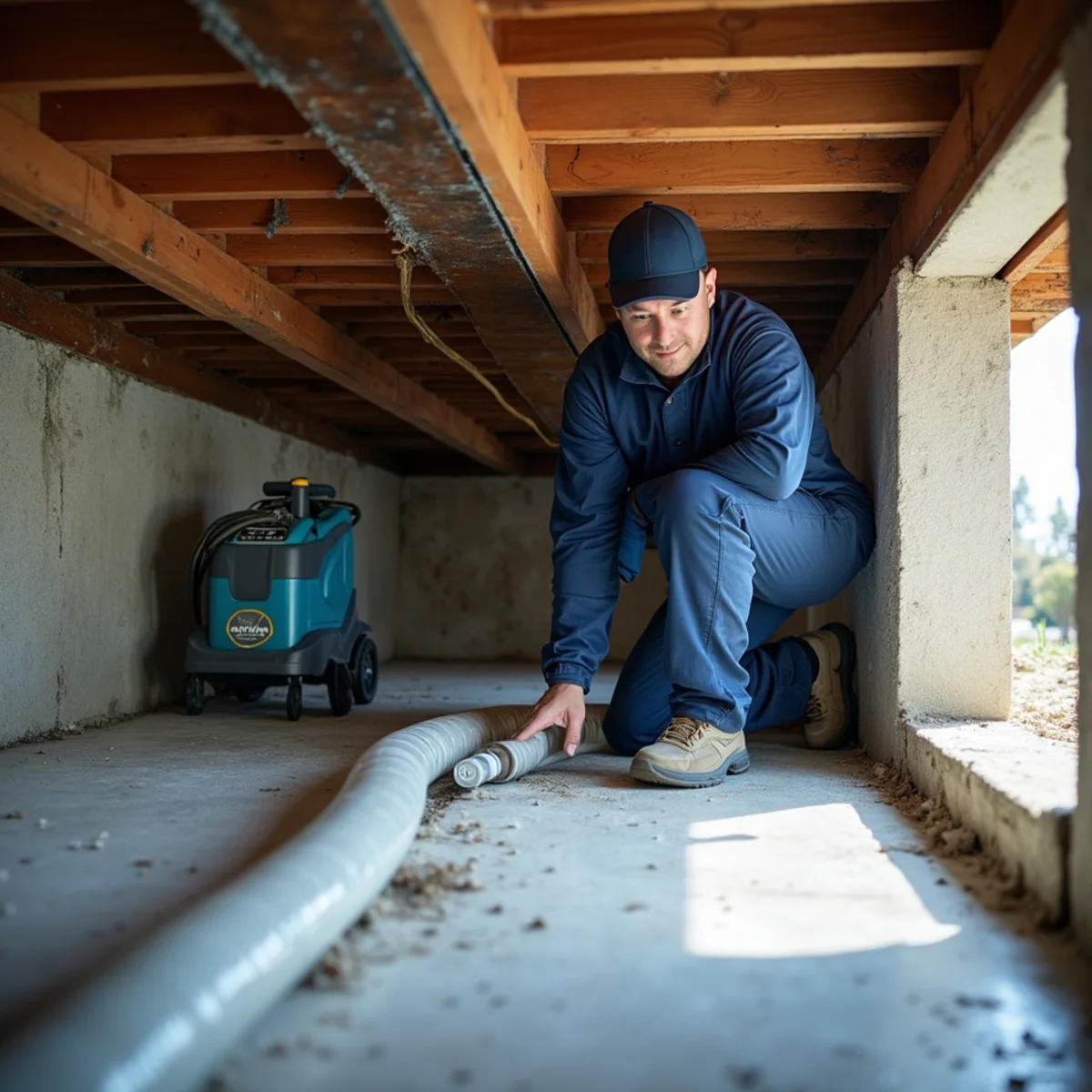
Submersible pumps for depth, truck-mount extraction for the remainder. In crawl spaces we work from the access point with hose runs rather than dragging equipment through insulation.
Step 2
Remove sediment, debris and vapour barrier
Storm and ground water leave silt. Contaminated plastic vapour barrier in a crawl space is removed rather than cleaned, since it traps water underneath.
Step 3
Strip unsalvageable materials
Wet insulation, drywall to a documented height, carpet and pad, and any stored contents that absorbed water. Below-grade finishes rarely survive contaminated water.
Step 4
Dry the space and the assembly
LGR dehumidifiers do the real work here — they keep pulling moisture in the cool, high-humidity conditions where standard refrigerant units stall. Air movers direct airflow across slab, framing and joists.
Step 5
Treat and verify
Antimicrobial on framing and slab, HEPA filtration through the drying period, and daily readings on concrete, joists and subfloor until they hold at standard.
Step 6
Rebuild and recommend
New insulation, vapour barrier, drywall and finishes. Then a written list of the drainage, grading and pump changes that would stop a repeat.
24/7 Emergency Response
Tell us what you are seeing and we will tell you honestly whether it needs a crew, and what it is likely to involve. Emergency dispatch is answered 24/7.
550 Allerton St, Redwood City, CA 94063 · Emergency dispatch answered 24/7, including holidays
Hydrostatic pressure is the main mechanism on the hillside neighbourhoods. After days of winter rain, saturated soil holds water against the foundation wall and pushes it through any crack, cold joint or tie-rod hole. Farm Hill, Emerald Lake Hills and the upper Woodside Road slopes see this reliably in wet years.
Surface water is the more common cause on the flats and downtown. Grade that slopes toward the house, a downspout discharging next to the foundation, a driveway that drains to a garage door, or a window well without a cover. This water arrives fast during a storm cell and stops when the rain does.
The third route is the drain itself. When the municipal line is overwhelmed in a storm or a lateral is blocked by roots, the lowest floor drain in the house becomes an inlet. That is a Category 3 event and it is handled as sewage work.
And near the bay, there is a fourth factor: a high water table. In Redwood Shores and other bayfill areas, groundwater sits close to the surface, so below-grade spaces dry slowly and any breach re-wets quickly. Drying schedules there are longer by design, not by accident.
Most of the single-storey homes on the Redwood City flats sit over a vented crawl space, and almost nobody looks in it. Water that would be obvious in a basement sits there unnoticed for months, driving humidity up through the floor assembly.
The consequences show up as things people blame on other causes: cupped hardwood, a musty smell in closets, a floor that feels cold and damp, allergy symptoms that get worse indoors, and eventually fungal decay in joists and subfloor. By then the repair is structural rather than cosmetic.
A wet crawl space is also the reason some drying jobs upstairs never quite finish. If the space below the floor is holding water, the assembly above it will not reach dry standard no matter how many air movers are in the living room.
Look twice a year — After the first heavy rain and again at the end of the wet season. Standing water, damp soil and sagging insulation are all visible from the access hatch.
Check the vapour barrier — Plastic sheeting should be intact and lapped. Torn or missing barrier lets ground moisture evaporate straight into the floor assembly.
Feel the insulation — Batt insulation between joists should be dry and tight to the subfloor. Sagging, dark or damp batts mean a moisture problem above or below.
Watch the vents — Blocked or buried foundation vents stop the airflow the space was designed around.
Fix the grade before anything else — Soil should fall about six inches over the first ten feet away from the foundation. This is the cheapest and highest-impact change available.
Extend downspouts — Discharge at least four to six feet from the foundation, or into a solid pipe run to daylight. A downspout dumping at the wall defeats every other measure.
Test the sump pump before the wet season — Pour a bucket of water in the pit in October. Check the float, the check valve and the discharge line, and consider a battery backup — the pump is needed exactly when the power tends to fail.
Cover the window wells — Clear polycarbonate covers keep rain and debris out while keeping light and egress.
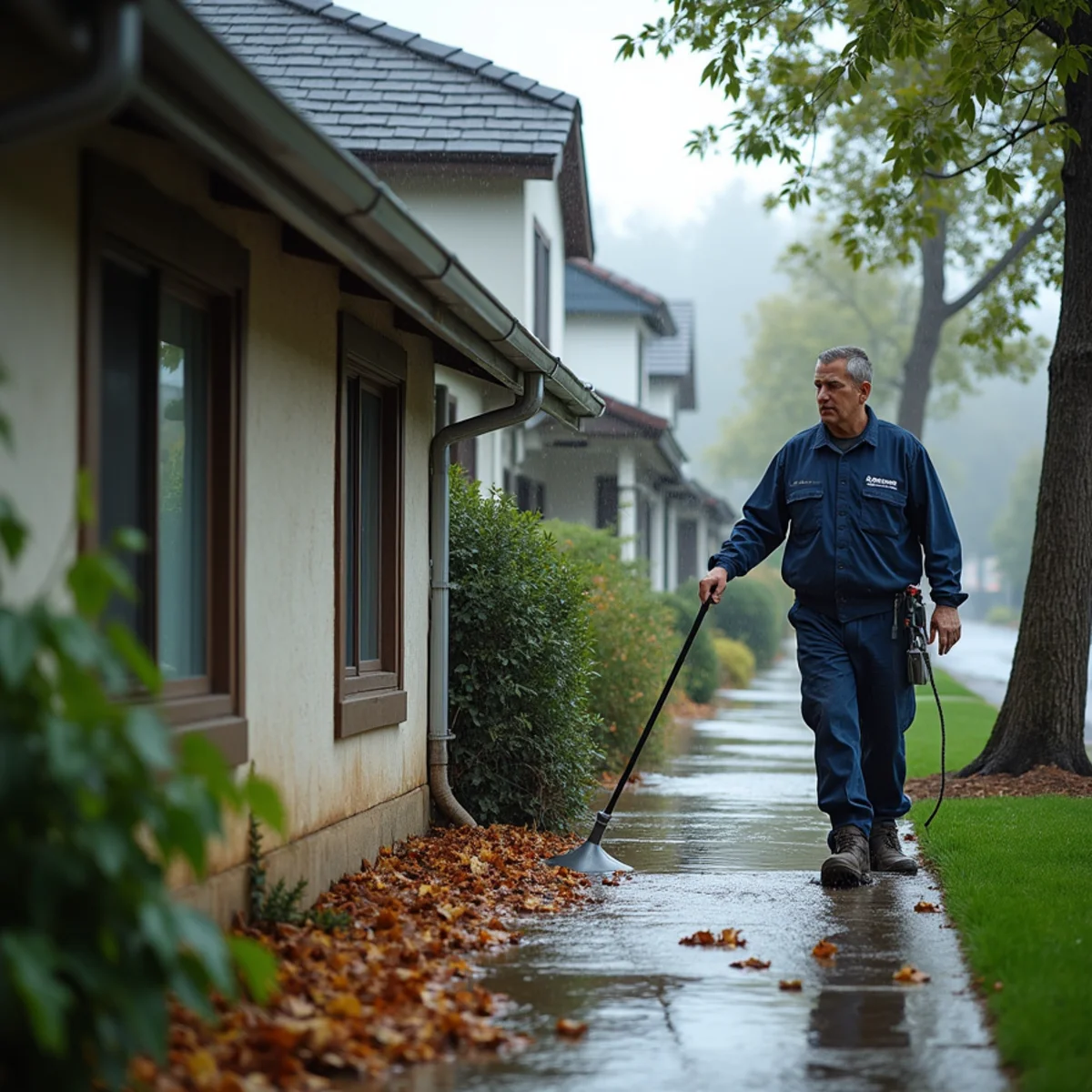
Clear the gutters twice each winter — On the tree-heavy streets in Farm Hill and around Edgewood Park, once is not enough.
Do not finish a lower level that still gets wet — Drywall and carpet over an unresolved intrusion problem is money spent on future demolition.
Honest pricing
We publish ranges rather than hiding them behind a form. Mitigation runs $3 – $7.50 per square foot depending on water category, and most complete jobs land between $1,384 and $6,387. You get an itemised written estimate after inspection — never a firm number before anyone has checked for hidden moisture.
Why us for this
Restoration gets bought in a hurry, usually from whoever answers first. These are the things worth checking before you hand anyone a key — and what we put in writing on every basement water job.
Cool, humid, still air is where standard refrigerant dehumidifiers stall. LGR units keep pulling moisture in exactly those conditions, which is why our schedules run 5–10 days rather than a hopeful three.
Most of the Redwood City flats sit over a vented crawl space, and a wet one drives humidity up through the floor for months. We pump, strip wet insulation and vapour barrier, dry with dedicated equipment and verify at the joists.
Recurring water in the same place is always a problem outside the building. You get a written list of the grade, downspout, area drain and window well corrections that would end it — whether or not you have us do that work.
Sump pump installation, drainage correction and grading are optional line items you can see and decline. Restoration and improvement are different things and your invoice should show which is which.
Honest pricing
Mitigation is priced per square foot by water category. Reconstruction is quoted separately, and you get an itemised written estimate after inspection rather than a number over the phone.
| Water category | Typical source | Health risk | Mitigation cost |
|---|---|---|---|
| Category 1 — clean water | Broken supply lines, sink and tub overflows, clean appliance leaks | Low risk if dried quickly | $3 – $4 / sq ft |
| Category 2 — gray water | Washing machine or dishwasher discharge, urine-only toilet overflow, sump failure | Moderate — bacteria present, can cause illness | $4 – $7 / sq ft |
| Category 3 — black water | Sewage backup, storm floodwater, toilet overflow with solids, microbial growth | High — pathogens; PPE and containment required | $7 – $7.50 / sq ft |
Insurance
We bill your carrier directly for covered work, so you are not floating the cost and waiting on reimbursement. You do not need to wait for an adjuster before emergency mitigation starts — policies expect you to take reasonable steps to limit the damage.
Sudden and accidental damage — a burst supply line, a failed water heater, an appliance hose — is covered by most California policies. Gradual leaks and deferred maintenance often are not, rising water from outside needs separate flood insurance, and sewer backup usually needs its own endorsement.
Nobody can promise what your carrier will decide. What we can promise is that the loss is documented well enough for that decision to be made on the facts.
California coverage explainedBasement Water in Redwood City? A person answers 24/7 and gives you shut-off instructions while the crew is on the way.
+1 (201) 277-9344Emergency guides·8 min read
Below-grade water is the slowest to dry and the fastest to grow mold. Here is the order of operations and the honest timeline.
Read the guidePrevention·8 min read
Almost every storm call we take traces to something that would have been a cheap fix in September. Here is that list.
Read the guideReviewed by Water Damage Redwood City — checked by our IICRC-certified project managers.
Last reviewed
Where we provide this service
We cover Redwood City and the surrounding Peninsula. Local conditions change the plan — bayfill slabs dry slowly, hillside runoff is contaminated, and pre-1960 housing hides leaks under concrete — so pick your area for specifics.
FAQ
Yes — crawl spaces are the more common below-grade problem in Redwood City. We pump standing water, remove sediment, contaminated vapour barrier and wet insulation, dry the space with dedicated equipment, treat framing with antimicrobial, and replace the barrier and insulation. Leaving a crawl space to dry on its own is how a small intrusion becomes a structural repair.
Because the cause is outside the building. Recurring intrusion at the same point almost always traces to grade, a downspout discharging at the foundation, a blocked area drain, or hydrostatic pressure through a specific crack. We identify the mechanism during the job and give you a written list of what to correct, rather than drying it and waiting for the next call.
Longer than an equivalent area upstairs. Cool temperatures, high humidity, poor natural airflow and concrete all slow evaporation, so expect 5 to 10 days rather than 3 to 5. We verify with daily readings on slab, framing and subfloor and do not pull equipment on a schedule.
Yes, and where a space takes water repeatedly it is often the right recommendation alongside drainage correction. We quote it as a separate optional line item so you can see exactly what is restoration and what is improvement.
Not until the intrusion is genuinely solved, and we will be blunt about whether it is. Drywall, framing and carpet over a space that still takes water in a wet year is money spent on future demolition. If the correction list — grade, downspouts, area drains, a pump — has been done and the space stays dry through a full winter, finishing it is reasonable. Before that, it is optimistic.
24/7 Emergency Response
A person answers 24/7 and gives you shut-off and safety instructions while a crew is already on the way. Emergency mitigation is loss-limiting work your policy expects you to start immediately.
550 Allerton St, Redwood City, CA 94063 · Emergency dispatch answered 24/7, including holidays