Problem-solving·7 min read
Hardwood Floor Water Damage: Can It Be Saved?
Often yes — if it goes on a mat system within about 24 hours. Here is how to read the damage and what the honest odds are.
Read the guide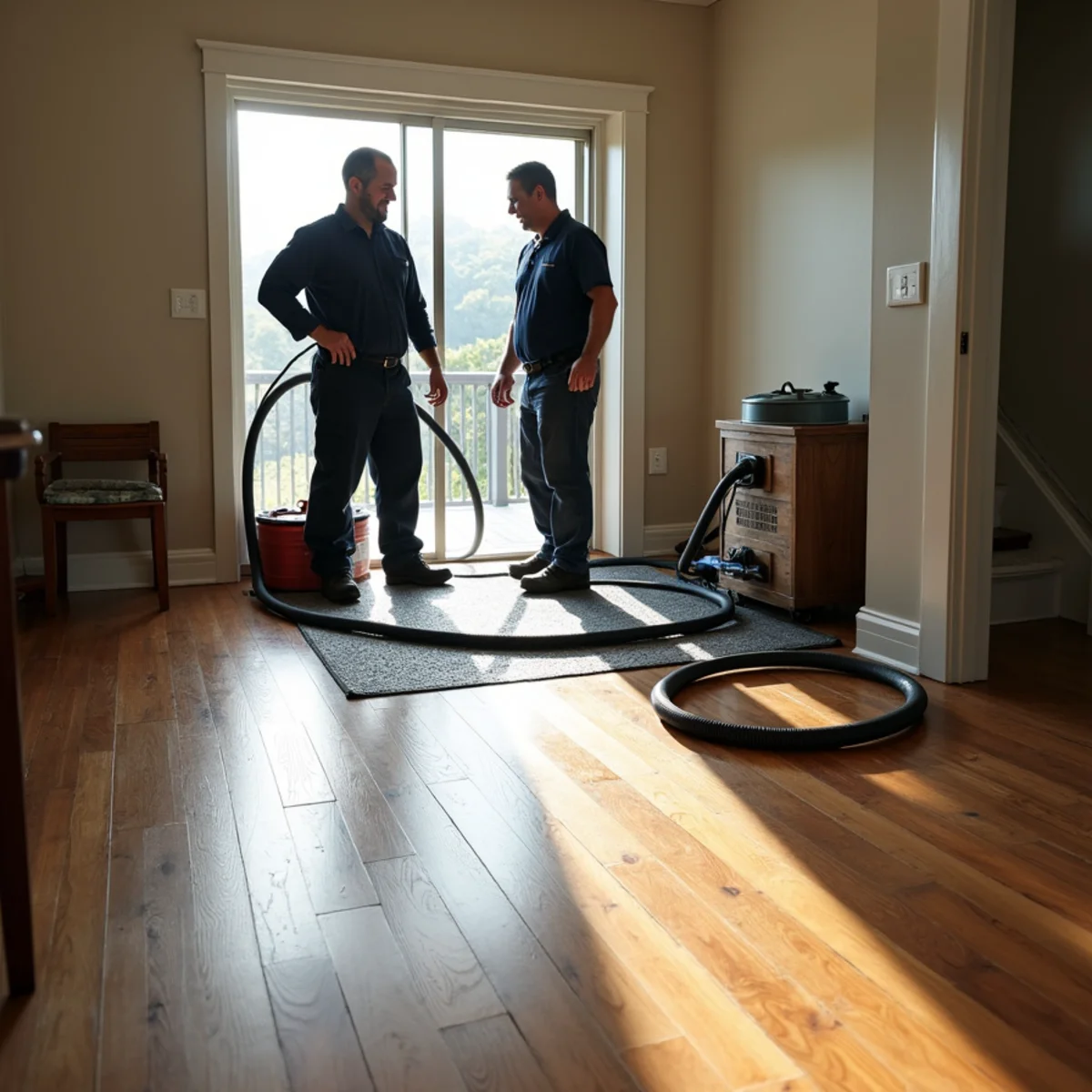
Restoration service · Redwood City, CA
Hardwood is usually the most expensive thing water touches in a Peninsula home, and it is also the most time-sensitive. Replacement runs $10 to $15 per square foot depending on species and finish; specialty drying costs a fraction of that. The variable that decides which one you are paying for is how fast the floor gets on a mat system.
Answered by a person, 24/7 — crews on site within 60 minutes in Redwood City.
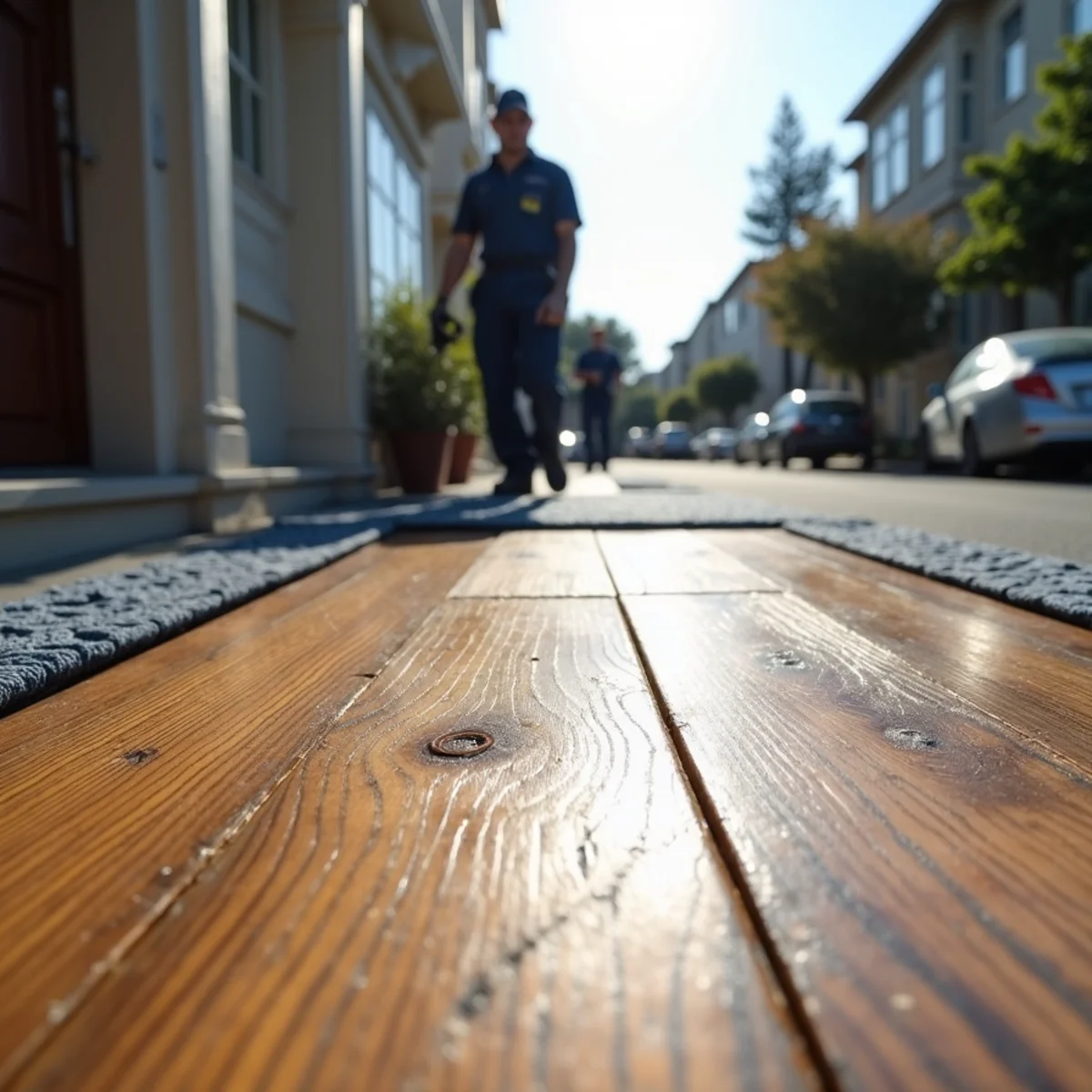
Wood absorbs water across the grain and swells. Boards press against each other, the edges lift, and you get cupping — the classic wavy floor. Left alone, the top dries and shrinks while the bottom stays wet, and the cup inverts into crowning. At that point sanding cannot fix it, because sanding a cupped floor flat removes the wear layer you will need after it flattens naturally.
We assess honestly. Some floors are saveable, some are not, and pretending otherwise costs you either a floor or a wasted week.
Cupping — edges higher than the centre
The first and most common sign. The board has taken on moisture from below and swelled at the edges. Often recoverable if addressed quickly.
Crowning — centre higher than the edges
Usually means a cupped floor was sanded too early, or dried unevenly from the top. Much harder to reverse and often terminal.
Buckling — boards lifting off the subfloor
Severe swelling has overcome the fasteners or the adhesive. Affected sections almost always need replacement.
Dark staining along seams
Water sitting in the joints for days, often with tannin bleed or early fungal growth beneath the finish.
A hollow or spongy feel underfoot
The subfloor beneath is saturated or delaminating. The floor covering is the smaller problem here.
Cracked or hazy finish
Moisture has broken the finish bond. Refinishing is needed after drying, and it should not be attempted before.
Our process
Hour 0
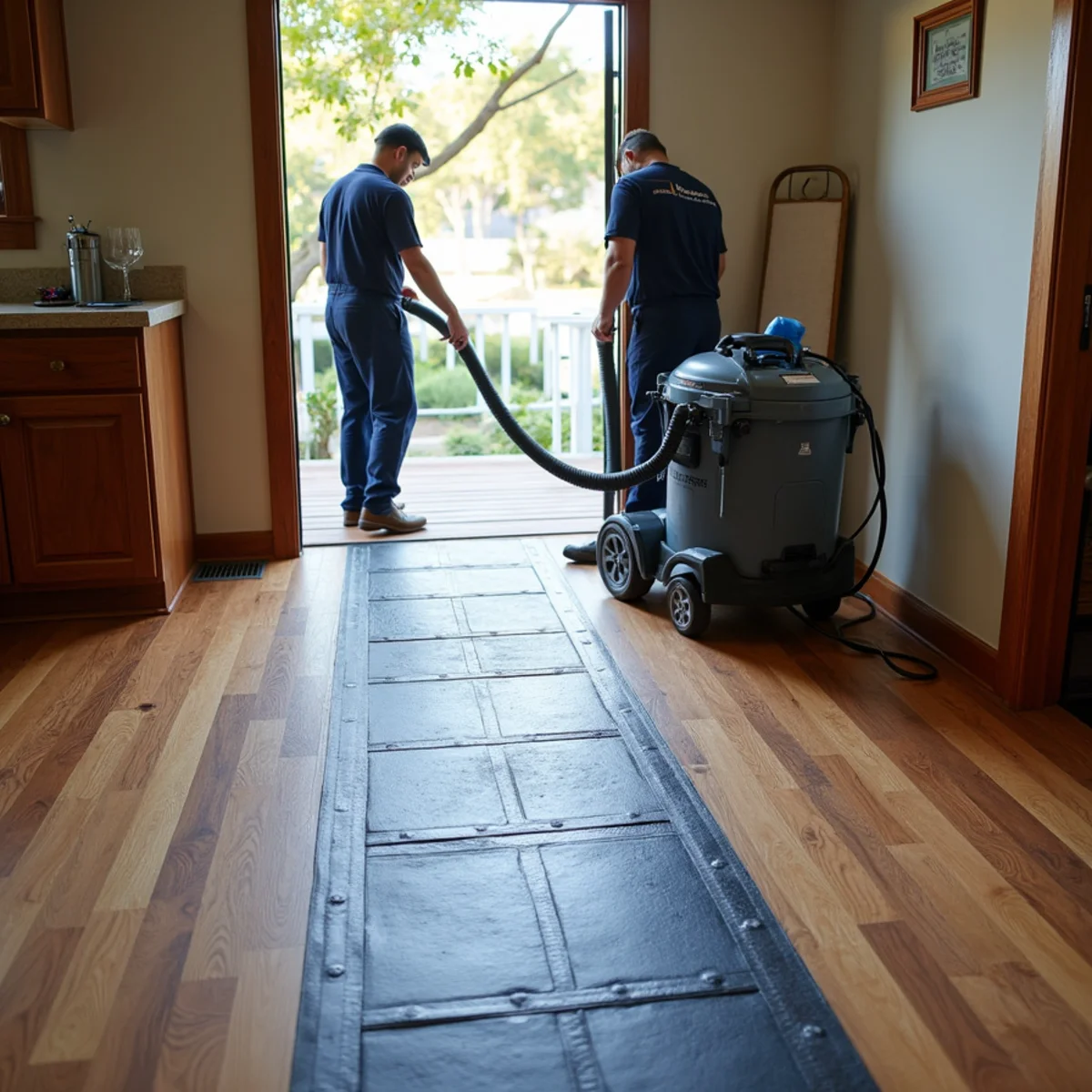
Surface water off immediately
Weighted extraction heads pull standing water from between boards before it drives into the subfloor. This hour matters more than anything that follows.
Hour 1
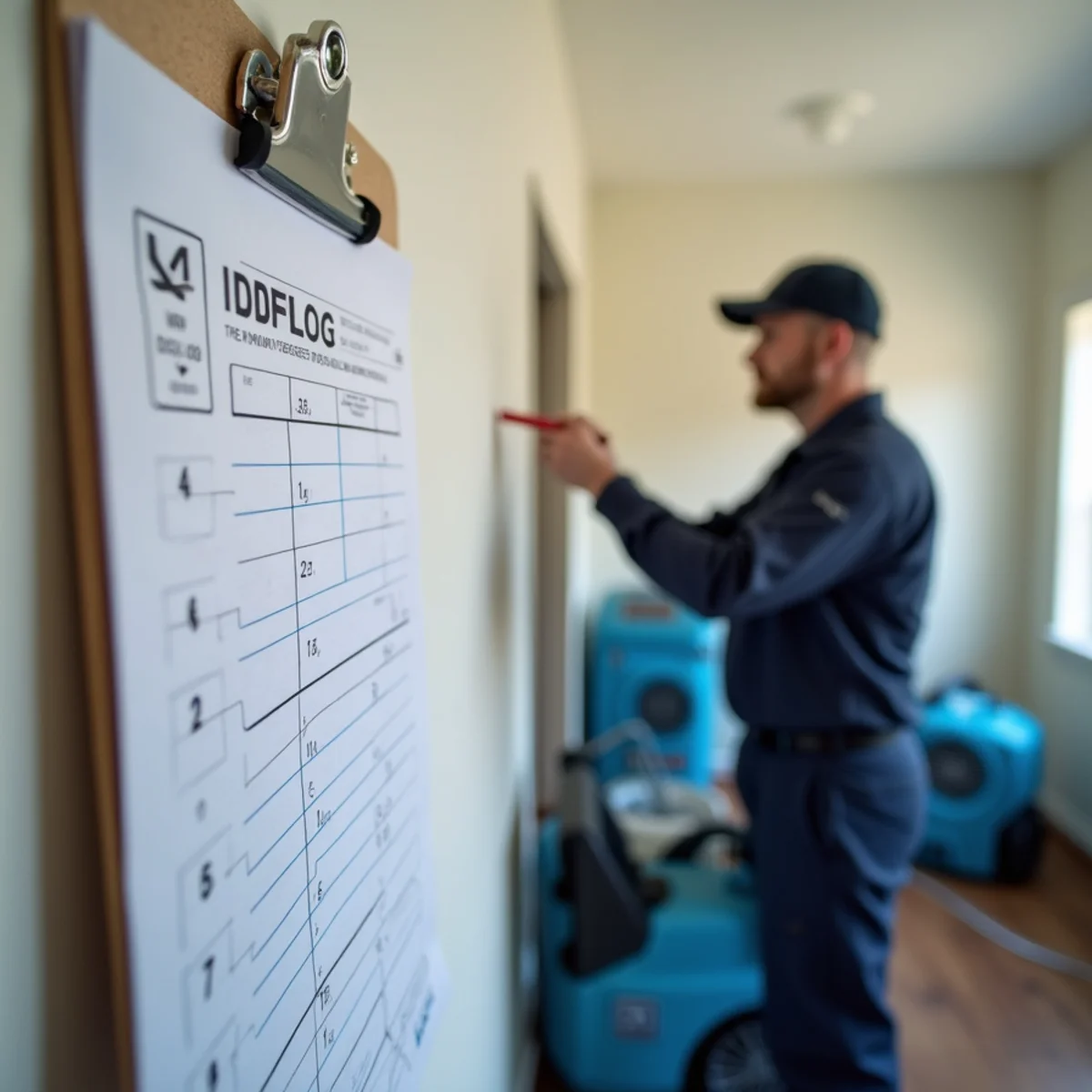
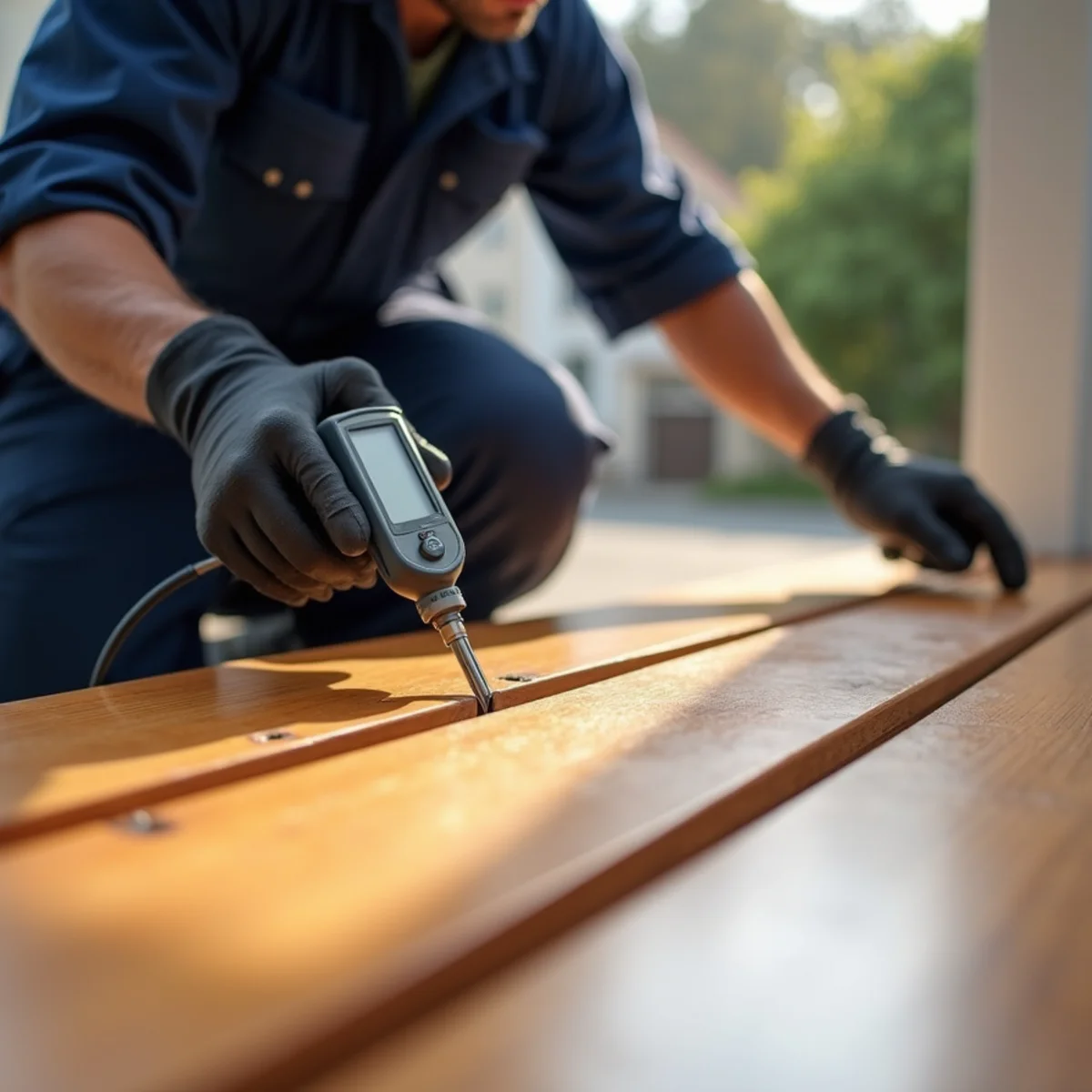
Map moisture in wood and subfloor
Readings taken in the boards and in the subfloor beneath, at multiple points, to define the wet perimeter and establish how deep the water went.
Day 1
Mat system installed
Sealed panels over the affected area pull water up through the boards under negative pressure, ducted into an LGR dehumidifier. This is the system that saves solid hardwood.
Days 2–10
Controlled drying with daily readings
Slow and steady wins here. Drying too aggressively causes checking and splits, so we hold a rate the wood can tolerate and log progress at marked points.
After drying
Wait, then assess for refinishing
Most cupping relaxes substantially as moisture equalises. We wait for the floor to stabilise before deciding on sanding — sanding early is the most expensive mistake on a wood floor.
Final
Sand, stain and finish — or replace the failed sections
Refinish where the floor came back, board or section replacement where it did not, with species and stain matched into the existing run.
24/7 Emergency Response
Tell us what you are seeing and we will tell you honestly whether it needs a crew, and what it is likely to involve. Emergency dispatch is answered 24/7.
550 Allerton St, Redwood City, CA 94063 · Emergency dispatch answered 24/7, including holidays
This is the question every homeowner asks first, and it deserves a straight answer rather than a hedge.
Likely saveable — Solid hardwood, clean water, discovered within 24 hours, on a mat system the same day, no subfloor delamination.
Possible with specialty drying — Solid hardwood, 24–48 hours elapsed, moderate cupping, subfloor intact. Longer schedule and refinishing almost certain.
Unlikely — More than 72 hours elapsed, crowning already present, buckling, or Category 3 water in the assembly.
Replacement — Engineered wood over a slab, laminate of any kind, delaminated subfloor, or sewage contamination beneath the boards.
A cupped floor is under moisture stress. Sand it flat while the boards are still swollen and you remove material from the raised edges. Then the wood finishes drying, contracts, and the middle of each board sits higher than the edges you just cut down — a permanently crowned floor with a thinner wear layer and no easy remedy.
The right sequence is patience: dry to equilibrium, then let the floor sit for a further two to four weeks in normal conditions so moisture distributes evenly through each board, then assess. A surprising number of cupped floors come back close to flat on their own and need only a light screen and recoat.
If someone offers to sand your cupped floor next week, that is the moment to ask what the moisture readings are and what the wood was at before the loss. If they cannot answer, get another opinion.
Two local factors change the calculus here. The first is slab construction. So many Redwood City homes from the 1950s and 60s are slab-on-grade, and wood installed over a slab — engineered, or solid over a plywood subfloor and vapour barrier — has water pinned between the flooring and the concrete when a leak happens. The concrete then releases that moisture upward for days, which is why slab-related hardwood losses need slab readings, not just wood readings, before anything is refinished.
The second is our humidity range. Wood floors here equilibrate around 7–9% moisture content, with seasonal movement between damp winters and dry summer afternoons. A floor dried aggressively to a low target in February will shrink further and gap when the house warms up. So the target is your building, in this season, not a number from a manual.
Older homes closer to the coast — the Half Moon Bay and El Granada side of the county — sit at the damp end of that range year-round, and floors there behave differently from an equivalent floor in Woodside.
Honest pricing
We publish ranges rather than hiding them behind a form. Mitigation runs $3 – $7.50 per square foot depending on water category, and most complete jobs land between $1,384 and $6,387. You get an itemised written estimate after inspection — never a firm number before anyone has checked for hidden moisture.
Why us for this
Restoration gets bought in a hurry, usually from whoever answers first. These are the things worth checking before you hand anyone a key — and what we put in writing on every hardwood floors job.
Solid hardwood caught within about 24 hours and put on a sealed mat system that day is frequently saveable. This is the one material where the hour you call genuinely decides the outcome.
Sanding a cupped floor flat while the boards are swollen produces a permanently crowned floor with a thinner wear layer. We dry to equilibrium, wait two to four weeks, then assess — a surprising number come back close to flat.
Over the slab-on-grade construction common here, concrete releases moisture upward for days. Refinishing on wood readings alone is how a floor gets done twice.
Carriers question hardwood replacement more than almost any line item. Readings showing the floor was wet, the drying attempt logged and the outcome recorded is what gets replacement approved when drying genuinely fails.
Honest pricing
Mitigation is priced per square foot by water category. Reconstruction is quoted separately, and you get an itemised written estimate after inspection rather than a number over the phone.
| Water category | Typical source | Health risk | Mitigation cost |
|---|---|---|---|
| Category 1 — clean water | Broken supply lines, sink and tub overflows, clean appliance leaks | Low risk if dried quickly | $3 – $4 / sq ft |
| Category 2 — gray water | Washing machine or dishwasher discharge, urine-only toilet overflow, sump failure | Moderate — bacteria present, can cause illness | $4 – $7 / sq ft |
| Category 3 — black water | Sewage backup, storm floodwater, toilet overflow with solids, microbial growth | High — pathogens; PPE and containment required | $7 – $7.50 / sq ft |
Insurance
We bill your carrier directly for covered work, so you are not floating the cost and waiting on reimbursement. You do not need to wait for an adjuster before emergency mitigation starts — policies expect you to take reasonable steps to limit the damage.
Sudden and accidental damage — a burst supply line, a failed water heater, an appliance hose — is covered by most California policies. Gradual leaks and deferred maintenance often are not, rising water from outside needs separate flood insurance, and sewer backup usually needs its own endorsement.
Nobody can promise what your carrier will decide. What we can promise is that the loss is documented well enough for that decision to be made on the facts.
California coverage explainedHardwood Floors in Redwood City? A person answers 24/7 and gives you shut-off instructions while the crew is on the way.
+1 (201) 277-9344Problem-solving·7 min read
Often yes — if it goes on a mat system within about 24 hours. Here is how to read the damage and what the honest odds are.
Read the guideProblem-solving·7 min read
Extraction is hours. Drying is days. Rebuild is weeks. Here is what actually determines each number, and where schedules slip.
Read the guideReviewed by Water Damage Redwood City — checked by our IICRC-certified project managers.
Last reviewed
Where we provide this service
We cover Redwood City and the surrounding Peninsula. Local conditions change the plan — bayfill slabs dry slowly, hillside runoff is contaminated, and pre-1960 housing hides leaks under concrete — so pick your area for specifics.
FAQ
Not necessarily. Cupping is swelling, and swelling can reverse. Solid hardwood caught within about 24 hours and put on a mat drying system the same day is frequently saveable, often needing only a screen and recoat afterwards. Crowning and buckling are much worse signs. What we will not do is guess — we take readings in the boards and the subfloor and tell you the realistic odds.
Drying itself is typically 5 to 10 days on a mat system. Then the floor should sit a further two to four weeks so moisture equalises through the thickness of each board before any sanding. Sanding a still-swollen floor flat is the most common way a recoverable floor becomes a replacement.
Engineered wood occasionally, if it is a thick-veneer product over a wood subfloor and we get there almost immediately. Over a concrete slab it is rarely worth attempting. Laminate is not saveable — the HDF core swells irreversibly once water gets under the wear layer. We would rather tell you that on day one than bill you for a week of drying with no realistic outcome.
If it resulted from a sudden covered loss such as a burst supply line, appliance failure or water heater rupture, generally yes — both the drying attempt and replacement if drying fails. This is a case where documentation pays for itself: readings showing the floor was wet, the drying attempt logged, and the outcome recorded. Carriers question replacement far less when the salvage attempt is documented.
That is the entire point of a mat system — sealed panels sit on top of the finished floor and pull water up through the boards and joints under negative pressure, so the floor stays installed. We only lift boards when the subfloor beneath has delaminated or when contaminated water got underneath, and in both of those cases the boards were not coming back regardless.
24/7 Emergency Response
A person answers 24/7 and gives you shut-off and safety instructions while a crew is already on the way. Emergency mitigation is loss-limiting work your policy expects you to start immediately.
550 Allerton St, Redwood City, CA 94063 · Emergency dispatch answered 24/7, including holidays