Emergency guides·7 min read
What to Do Immediately After Water Damage in Your Redwood City Home
The first sixty minutes decide how much of your house ends up in a dumpster. Here is exactly what to do, in order, and what to avoid.
Read the guide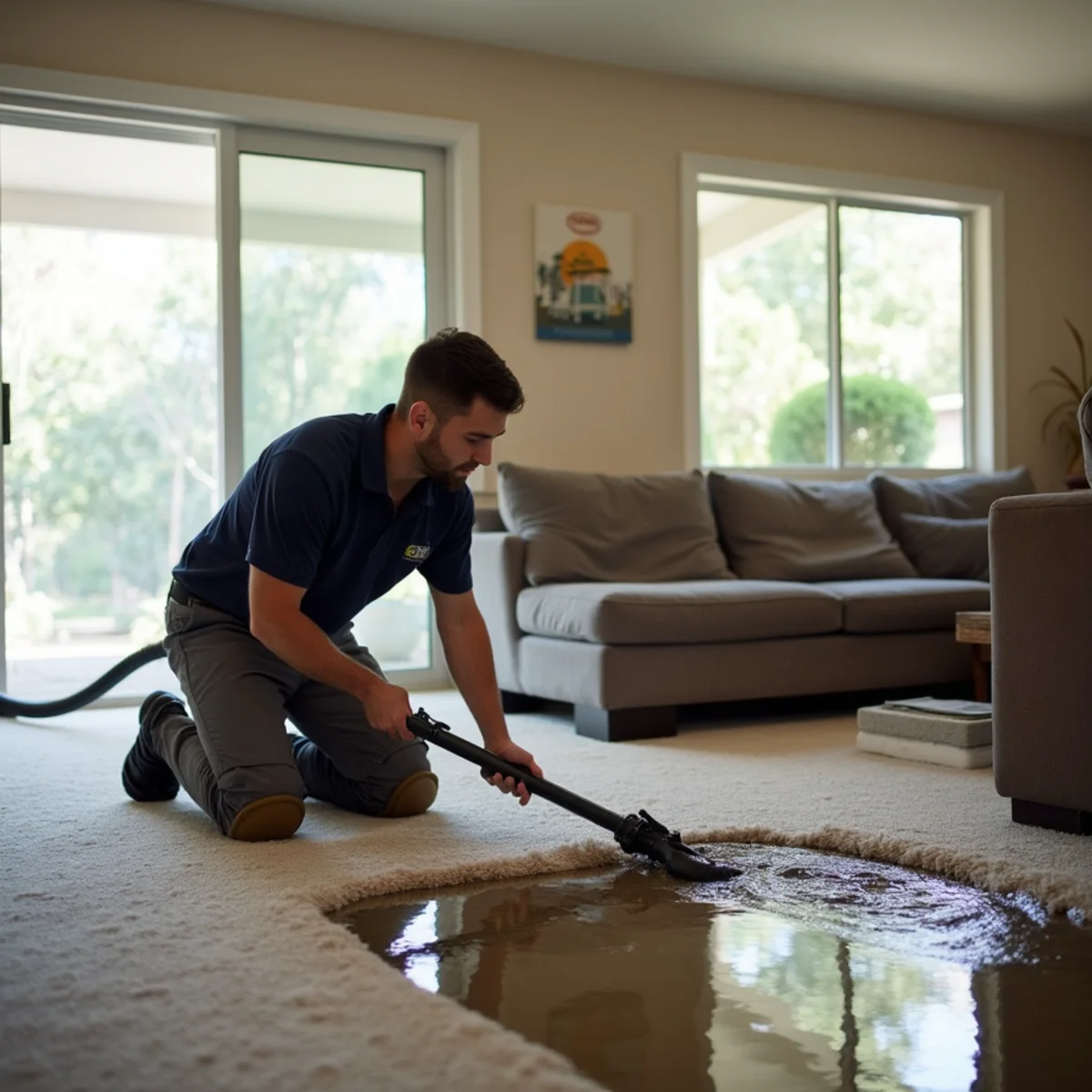
24/7 emergency service · Redwood City, CA
If water is spreading through your home right now, shut off the main valve, cut power to the affected area, and call us. We answer 24/7 and can have a crew at your door within the hour.
Answered by a person, 24/7 — crews on site within 60 minutes in Redwood City.
Water does its worst damage in the hours before anyone touches it. It wicks up drywall, runs along joists, and soaks into the subfloor where you cannot see it. Mold can start on damp materials within 24 to 48 hours. Every hour you wait adds material to the demolition list and dollars to the invoice.
We handle the entire job in Redwood City — emergency extraction, structural drying with documented moisture readings, antimicrobial treatment, and the drywall, paint and flooring work that puts the house back together. You deal with one crew and one project manager, not four subcontractors and an insurance adjuster you have never met.
Standing water anywhere in the house
Any pooled water on a floor, in a crawl space or in a cabinet base needs extraction, not towels. Water under a floating floor or carpet pad will not air-dry.
A stain that keeps growing
A ceiling or wall stain with a defined brown ring means water has already saturated the drywall paper and is still being fed from above.
Musty smell with no visible source
That odour is microbial growth on damp material inside a wall cavity or under a floor. It rarely appears until moisture has been sitting for several days.
Floors that cup, crown or feel spongy
Hardwood cupping and soft vinyl seams mean the subfloor is wet. Refinishing over a wet subfloor traps the moisture and guarantees a second failure.
A water bill that jumped for no reason
On Redwood City slab-built homes from the 1950s and 60s, this is often a slab leak feeding water under the concrete long before it reaches a visible surface.
Baseboards separating or paint blistering
Swelling MDF baseboard and bubbling paint are the last stage of a slow leak. By then the wall cavity behind them is usually wet.
Our process
First hour
Emergency response and safety check
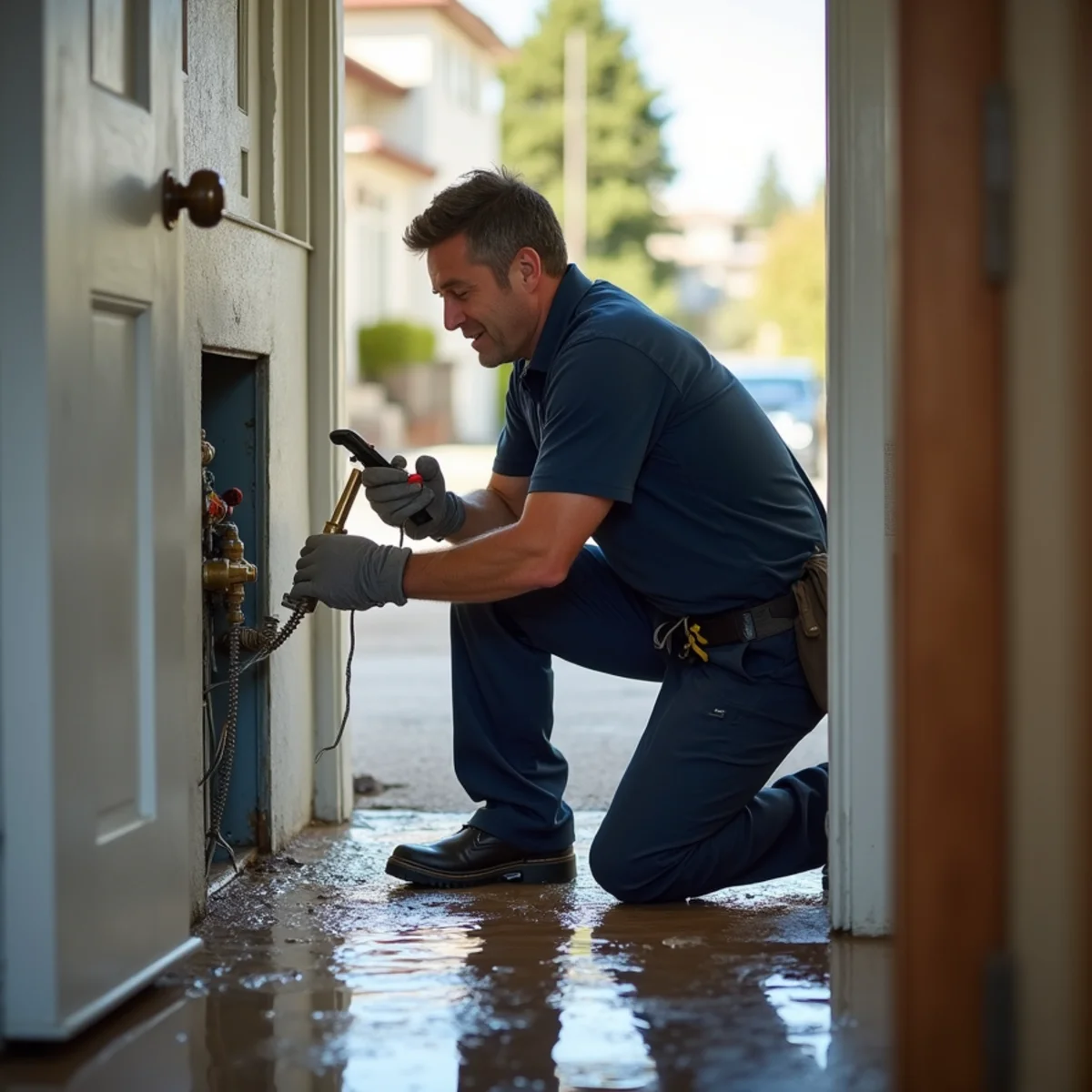
A live person answers the phone, gives you shut-off and safety instructions while the crew is rolling, and dispatches immediately. On arrival we find the source, identify the water category, and check for electrical and structural hazards before anyone walks into standing water.
Hours 1–4
Extraction and controlled demolition
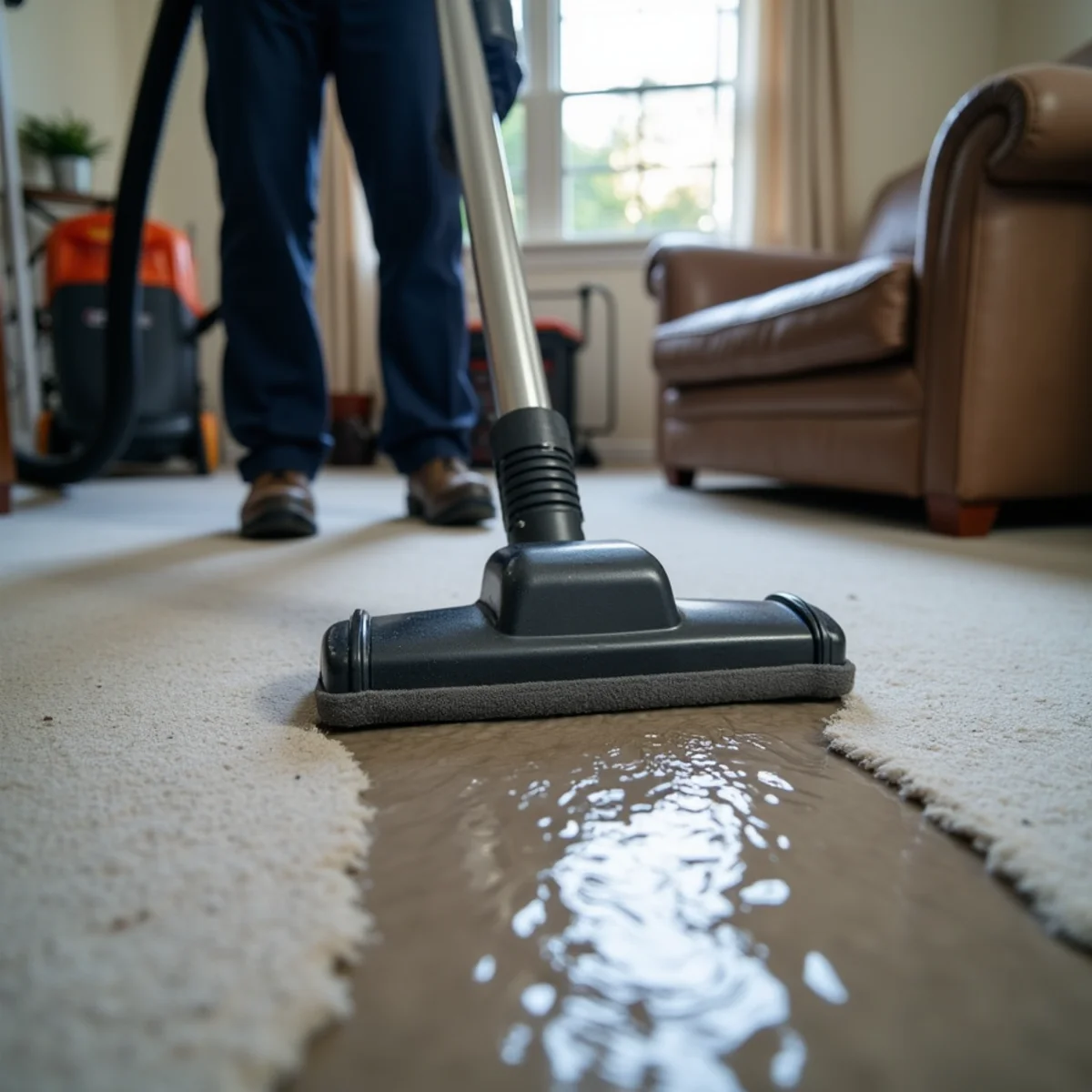
Truck-mounted and portable extractors pull standing water; sub-surface tools pull water out of carpet and pad. Unsalvageable material — wet pad, saturated drywall bottoms, ruined insulation — comes out now so the structure can actually dry.
Day 1
Drying equipment and a written scope
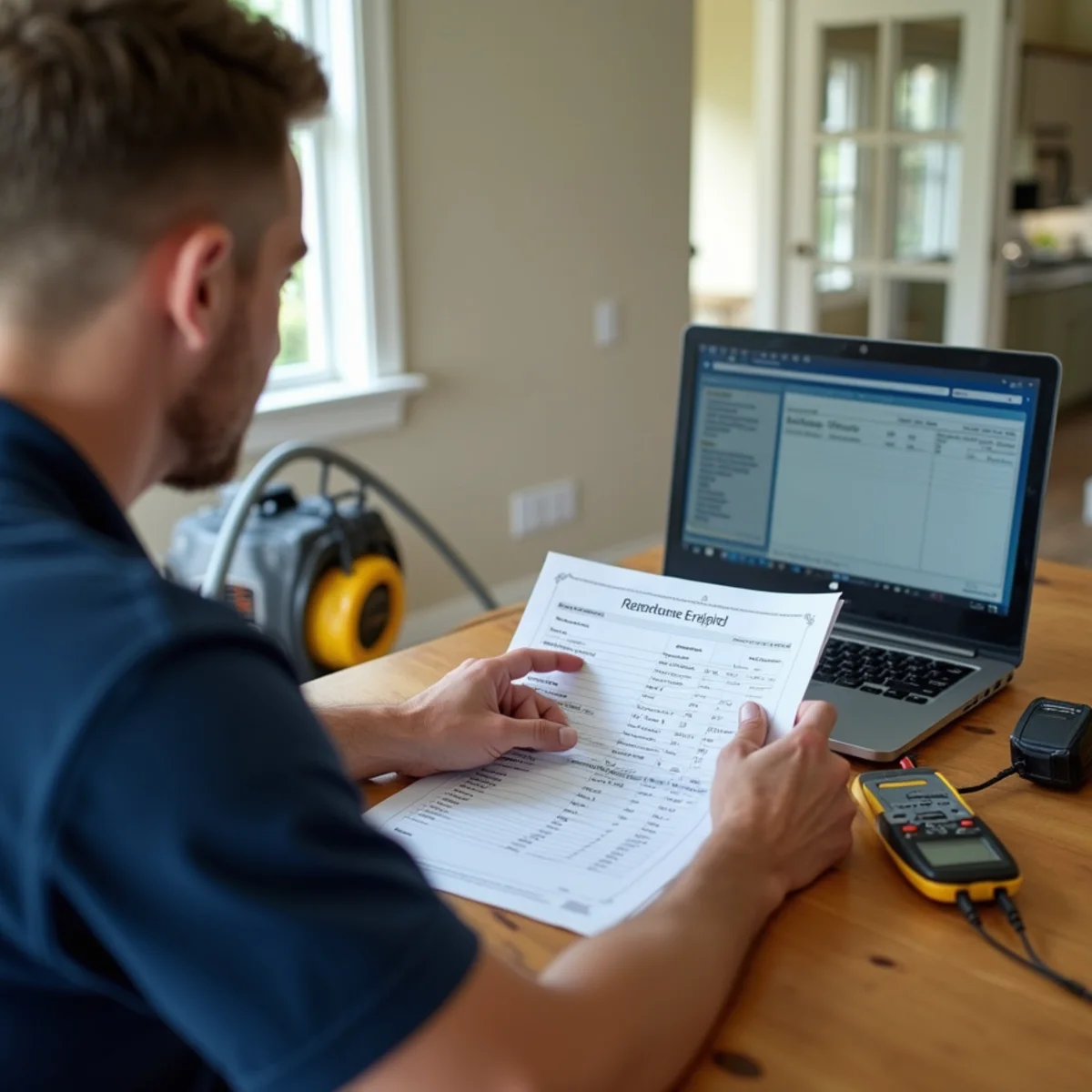
We set commercial air movers and LGR dehumidifiers, map the affected area with thermal imaging, and log baseline moisture readings. Before we leave you get a written scope of work, a realistic timeline, and the documentation your adjuster will ask for.
Days 2–5
Daily monitoring until materials hit dry standard
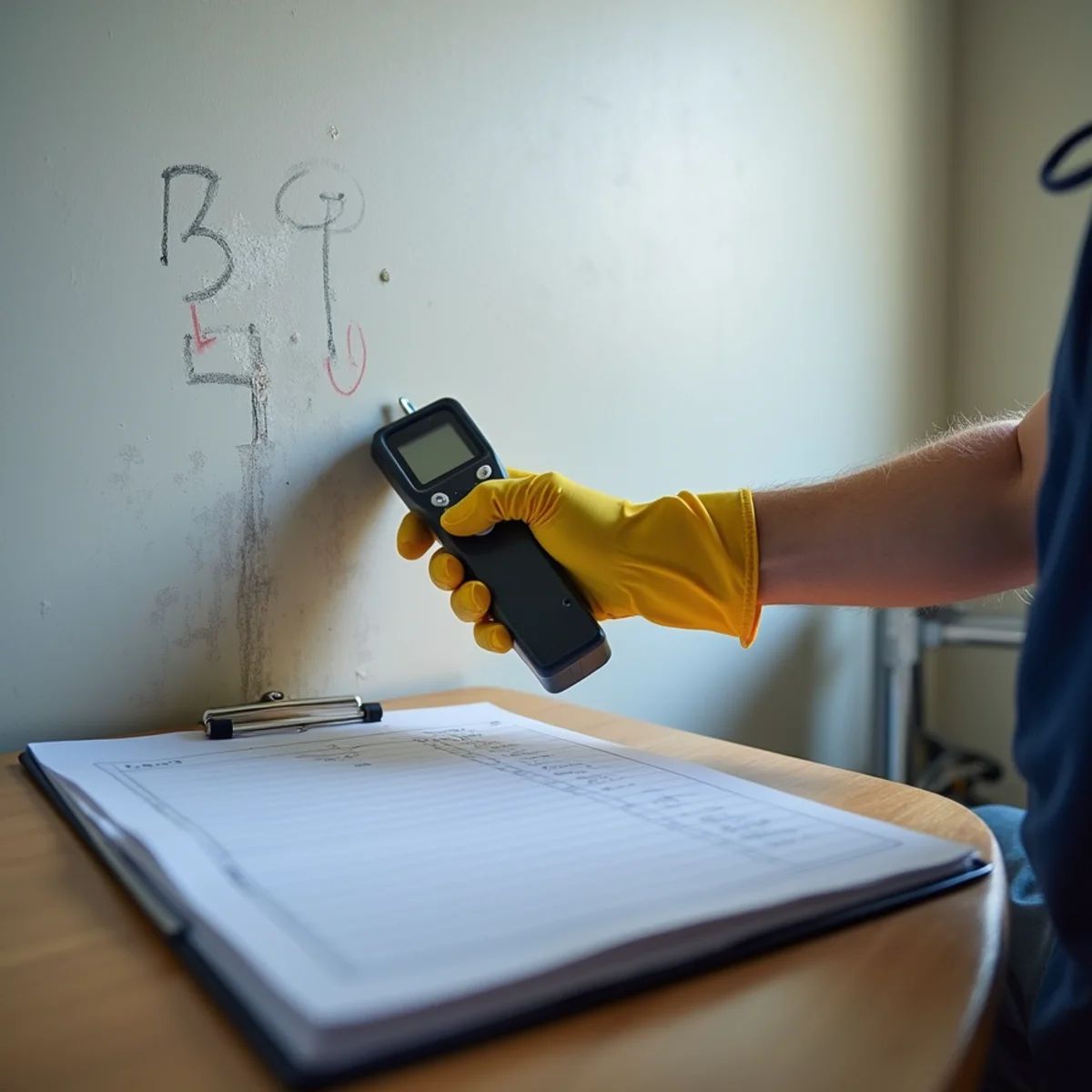
We return each day, take moisture-meter readings in the same marked locations, reposition equipment, and add capacity if a wall or subfloor is lagging. Drying is finished when the numbers say so — typically 3 to 5 days — not when the surface feels dry.
Week 1+
Repair, rebuild and final walkthrough
Drywall, texture, paint, baseboard, flooring and cabinetry go back in. Minor repairs take a few days; a full room rebuild can run several weeks. We walk the finished work with you and hand over the complete moisture log, photos and itemised invoice for your claim.
24/7 Emergency Response
Tell us what you are seeing and we will tell you honestly whether it needs a crew, and what it is likely to involve. Emergency dispatch is answered 24/7.
550 Allerton St, Redwood City, CA 94063 · Emergency dispatch answered 24/7, including holidays
Restoration is two distinct phases, and it matters that you know which one you are being quoted for. Mitigation is the emergency work that stops the loss getting worse: extraction, controlled demolition, drying, antimicrobial treatment. Reconstruction is putting the house back — drywall, paint, flooring, trim, cabinets.
Some companies only do mitigation and hand you a list of contractors when the fans come out. We do both, which is why our moisture logs and our repair estimate agree with each other. That consistency is what keeps an adjuster from disputing the scope.
Emergency extraction — Truck-mounted units for volume, portable extractors for tight spaces, sub-surface tools for carpet and pad.
Structural drying — Commercial air movers plus LGR dehumidifiers, which keep pulling moisture at the cooler temperatures and lower humidity where standard units stall.
Hidden-moisture detection — Thermal imaging and pin and pinless moisture meters to find water inside walls, under flooring and behind cabinet runs.
Antimicrobial and mold prevention — Applied once surfaces are dry, with HEPA air scrubbers running for Category 2 and 3 losses or any job with existing growth.
Reconstruction — Drywall, texture and paint, baseboard, hardwood and tile, carpet and pad, cabinet repair and replacement.
Insurance documentation — Photo record, daily moisture logs, equipment logs and an itemised estimate formatted the way carriers expect it.
This is not generic advice — the failure points here are specific. A large share of the housing stock west of El Camino Real was built between 1945 and 1965 on concrete slab with galvanised or early copper supply lines. Those lines are now at or past end of life, which is why slab leaks and pinhole failures are so common in Mount Carmel, Redwood Oaks and Woodside Plaza.
Water heaters are the other repeat offender. Most last 8 to 12 years, and a large number of them sit in garages or interior closets where a failed tank dumps 40 to 50 gallons directly onto finished flooring with nothing to stop it.
Then there is the rain. Winter atmospheric rivers push water through roof flashing, window heads and foundation grade. Closer to the bay — Redwood Shores, the Seaport industrial area, anything on old bayfill — a high tide during a storm turns a drainage problem into standing water. Roughly a third of properties in the city carry some flood risk, and that number is rising with sea level, not falling.
Do these in order. If any step feels unsafe, skip it and wait for the crew.
Shut off the water
Main valve at the street side of the house, or the fixture supply if you know the source. On a water heater, close the cold inlet valve on top of the tank.
Cut the power to wet areas
Switch off the affected breakers at the panel. Do not stand in water to reach a panel or an outlet.
Photograph everything before you touch it
Wide shots of each room, close-ups of the source, standing water depth against a baseboard, and the contents that got wet. This is the evidence your claim runs on.
Move what you can save
Lift rugs, get electronics and paper off the floor, put foil or blocks under furniture legs so stain does not bleed into carpet.
Note the time and call
Write down when you discovered it. Carriers ask. Then call us — the sooner extraction starts, the less of your house ends up in a dumpster.
Do not use a household vacuum — A shop vac is not rated for the volume and a household vacuum is an electrocution risk.
Do not run ceiling fans under a wet ceiling — You will spread contaminated aerosol and add load to a fixture that may already be compromised.
Do not throw damaged items out yet — Photograph and set aside. Adjusters routinely ask to see what was discarded.
Most homeowner policies in California cover sudden and accidental water damage — a burst supply line, a failed water heater, an overflowing appliance. Gradual leaks and deferred maintenance are commonly excluded, and rising water from outside the building almost always requires separate flood insurance.
We bill your carrier directly for covered work, so you are not floating the cost and waiting on reimbursement. Practically, that means you give us your policy details, we talk to the adjuster, and we submit the photo record, daily moisture logs, equipment logs and itemised estimate.
One honest warning: nobody can promise you what your carrier will cover. What we can promise is that the loss will be documented well enough that coverage decisions are made on the facts. Claims fall apart on thin documentation far more often than on the merits.
Honest pricing
We publish ranges rather than hiding them behind a form. Mitigation runs $3 – $7.50 per square foot depending on water category, and most complete jobs land between $1,384 and $6,387. You get an itemised written estimate after inspection — never a firm number before anyone has checked for hidden moisture.
Why us for this
Restoration gets bought in a hurry, usually from whoever answers first. These are the things worth checking before you hand anyone a key — and what we put in writing on every water damage restoration job.
Extraction, drying, remediation and the rebuild are all ours. That is why the moisture log and the repair estimate agree with each other — the single most common reason an adjuster disputes a scope is that two different companies wrote them.
Mitigation runs $3–$4 per square foot for clean water, $4–$7 for gray and $7–$7.50 for Category 3, with most jobs landing between $1,384 and $6,387. No competitor in this market publishes that, and you should not have to fill in a form to learn it.
Daily readings at marked locations, compared against a dry standard taken from your own building. Equipment leaves when the meter says so. You get the whole log, and so does your carrier.
Slab-on-grade construction west of El Camino, bayfill water tables in Redwood Shores that slow drying by days, pre-1980 acoustic ceilings that need asbestos testing before anyone cuts. A crew dispatched from out of the area learns this on your job.
Honest pricing
Mitigation is priced per square foot by water category. Reconstruction is quoted separately, and you get an itemised written estimate after inspection rather than a number over the phone.
| Water category | Typical source | Health risk | Mitigation cost |
|---|---|---|---|
| Category 1 — clean water | Broken supply lines, sink and tub overflows, clean appliance leaks | Low risk if dried quickly | $3 – $4 / sq ft |
| Category 2 — gray water | Washing machine or dishwasher discharge, urine-only toilet overflow, sump failure | Moderate — bacteria present, can cause illness | $4 – $7 / sq ft |
| Category 3 — black water | Sewage backup, storm floodwater, toilet overflow with solids, microbial growth | High — pathogens; PPE and containment required | $7 – $7.50 / sq ft |
Insurance
We bill your carrier directly for covered work, so you are not floating the cost and waiting on reimbursement. You do not need to wait for an adjuster before emergency mitigation starts — policies expect you to take reasonable steps to limit the damage.
Sudden and accidental damage — a burst supply line, a failed water heater, an appliance hose — is covered by most California policies. Gradual leaks and deferred maintenance often are not, rising water from outside needs separate flood insurance, and sewer backup usually needs its own endorsement.
Nobody can promise what your carrier will decide. What we can promise is that the loss is documented well enough for that decision to be made on the facts.
California coverage explainedWater Damage Restoration in Redwood City? A person answers 24/7 and gives you shut-off instructions while the crew is on the way.
+1 (201) 277-9344Emergency guides·7 min read
The first sixty minutes decide how much of your house ends up in a dumpster. Here is exactly what to do, in order, and what to avoid.
Read the guideCost & insurance·8 min read
Most restoration companies hide pricing behind a quote form. Here are the actual ranges, what moves them, and how to read an estimate.
Read the guideReviewed by Water Damage Redwood City — checked by our IICRC-certified project managers.
Last reviewed
Where we provide this service
We cover Redwood City and the surrounding Peninsula. Local conditions change the plan — bayfill slabs dry slowly, hillside runoff is contaminated, and pre-1960 housing hides leaks under concrete — so pick your area for specifics.
FAQ
We answer the phone 24/7 and aim to have a crew on site within 60 minutes anywhere in Redwood City, including Redwood Shores, Farm Hill, Mount Carmel and Woodside Plaza. Nearby cities like San Carlos, Belmont, Menlo Park and Atherton are close behind. Speed matters because mold can begin on damp material within 24 to 48 hours.
Mitigation runs roughly $3–$4 per square foot for clean water, $4–$7 for gray water and $7–$7.50 for Category 3 black water. Most complete jobs land between $1,384 and $6,387, with an average around $3,867. You get an itemised written estimate after the inspection — never a number over the phone before anyone has checked for hidden moisture.
Extraction is usually a few hours for a single room. Structural drying typically runs 3 to 5 days with daily moisture readings. Repairs depend on scope: drywall and paint can be a few days, while a full room rebuild can take several weeks. You get a realistic timeline in writing after the initial inspection.
Sudden and accidental water damage — burst pipes, water heater failures, appliance line breaks — is covered by most policies. Gradual leaks and lack of maintenance often are not, and external flooding usually needs separate flood insurance. We bill carriers directly and provide the moisture logs, photos and itemised estimates adjusters require.
Usually yes. Air movers and dehumidifiers are noisy and some rooms will have restricted access, but most families stay put. For Category 3 losses or jobs with heavy demolition and containment, we will tell you plainly if staying is a bad idea.
24/7 Emergency Response
A person answers 24/7 and gives you shut-off and safety instructions while a crew is already on the way. Emergency mitigation is loss-limiting work your policy expects you to start immediately.
550 Allerton St, Redwood City, CA 94063 · Emergency dispatch answered 24/7, including holidays