Emergency guides
How to Handle a Burst Pipe Emergency in San Mateo County
A half-inch line under pressure moves several gallons a minute. Here is the order of operations, and what to expect once the water is off.
The first ten minutes
A burst supply line is one of the few genuine minute-by-minute emergencies in home ownership. A half-inch line at typical residential pressure delivers several gallons a minute, continuously, until someone closes a valve.
Shut off the water first. The main valve is usually near the street at the front of the property, in a garage, or in a utility closet. If you know which fixture is involved and can reach its supply stop, that is faster. On a water heater, close the cold inlet valve on top of the tank.
Cut power to the affected area at the breaker panel — but never reach for a panel or an outlet while standing in water. If you cannot get there dry, leave it and wait outside.
Then call. We answer 24/7 and target 60 minutes anywhere in Redwood City, with the rest of the county close behind. We will give you instructions while the crew is already moving.
Why Peninsula pipes fail
The pattern here is specific enough to be predictable. Much of the housing stock across Redwood City, San Carlos, Belmont, San Mateo and the older parts of Burlingame and Menlo Park was built between the late 1940s and the mid 1960s, with galvanised steel or thin-wall copper supply lines.
Galvanised steel corrodes internally, narrowing the bore and eventually perforating. Thin-wall copper develops pinhole failures from internal corrosion, influenced by water chemistry, high static pressure and stray current. Both fail from the inside out, which is why there is rarely a warning you can see.
Freezing is a smaller factor here than in most of the country, but not zero. Exposed lines in garages, crawl spaces and unheated utility rooms do split during cold snaps, and it happens most in the inland Tri-Valley areas we serve.
The failures cluster. Once you have found one pinhole in a run, more are usually coming in the same run — which is worth knowing before you decide between a patch and a re-pipe.
Slab leaks: the version you cannot see
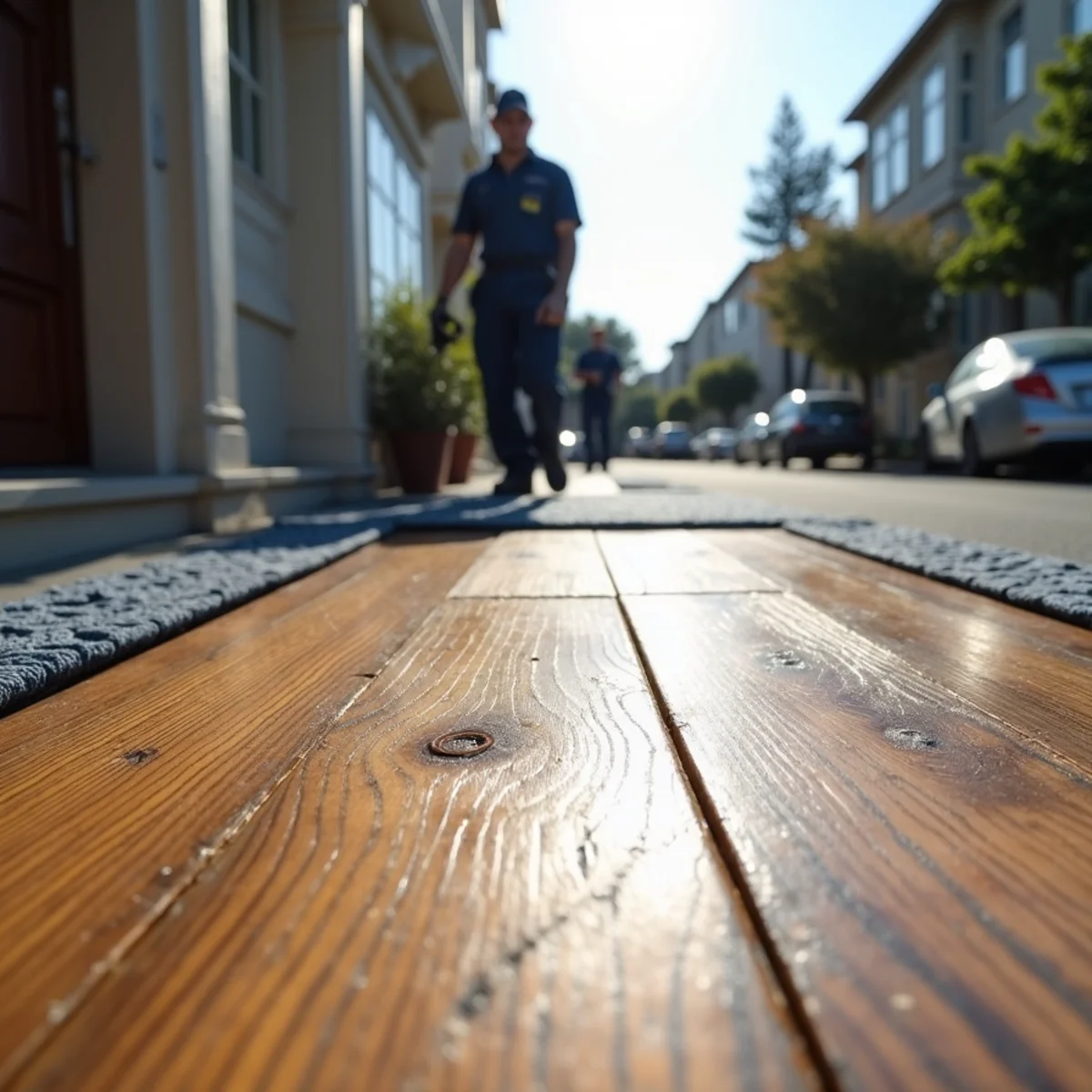
On slab-on-grade homes — extremely common across the Redwood City flats, San Carlos and the mid-century tracts county-wide — a failing supply line under the concrete produces a slab leak. It is the hardest failure for a homeowner to catch and the most expensive to leave.
The signs are subtle: a warm patch on a tile or wood floor where a hot-water line is failing beneath, the sound of running water with every fixture closed, a water bill that crept up over two months, a musty smell from a closet on an exterior wall, or new cracks in tile grout and drywall corners as the slab moves.
A two-minute test: close every fixture in the house and look at the water meter. If it is still turning, water is escaping somewhere.
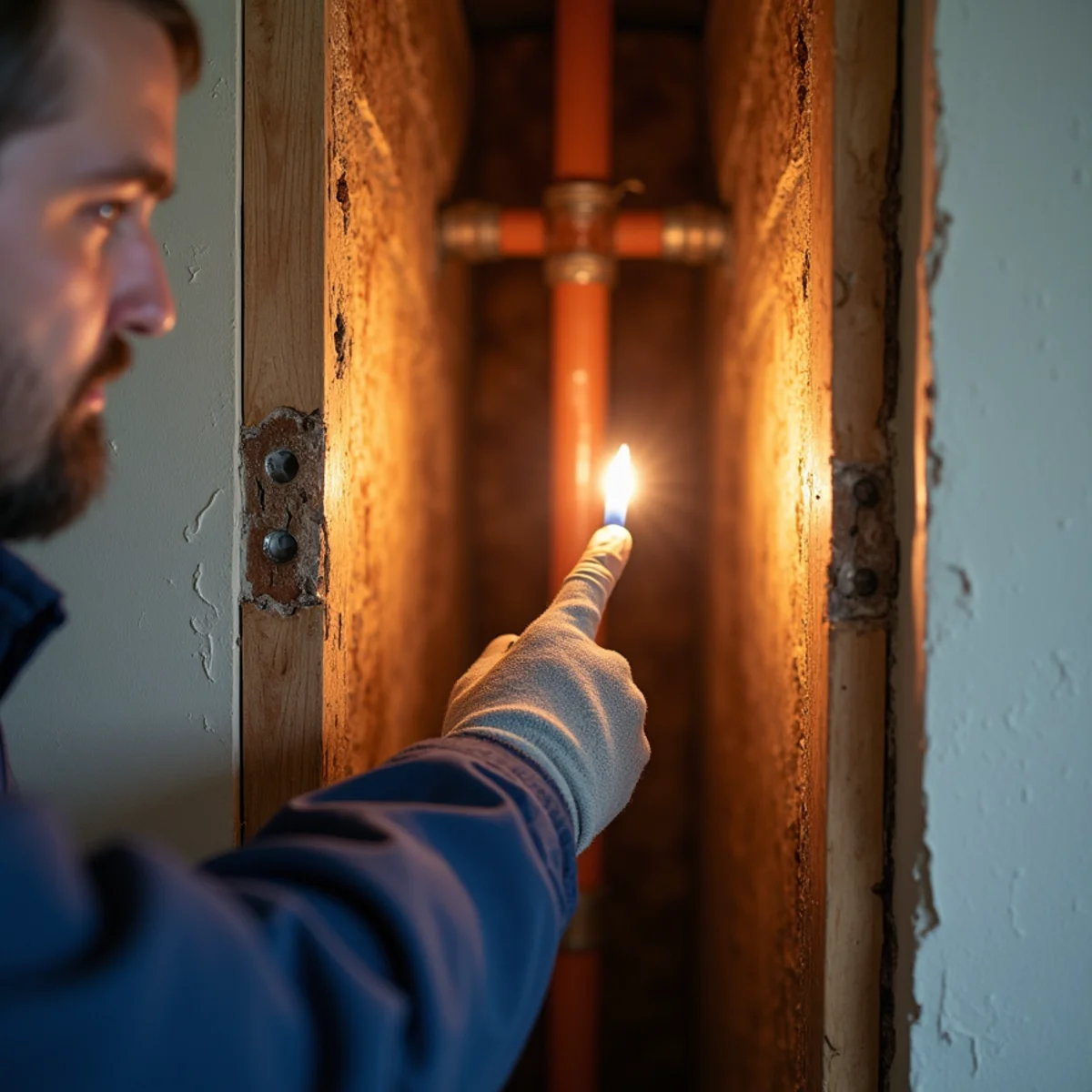
Detection matters more than muscle here. Thermal imaging finds the temperature signature quickly, and moisture mapping shows how far the water has travelled through the slab and into the framing. That is what allows us to open one section of floor instead of three rooms. Be wary of anyone who wants to start breaking concrete before they have imaged and mapped — ask what evidence they have for the location, and ask to see it.
What happens after the water is off
The restoration sequence for a burst pipe is fairly consistent, and knowing it makes the process much less stressful.
- 1
Extraction and stabilisation
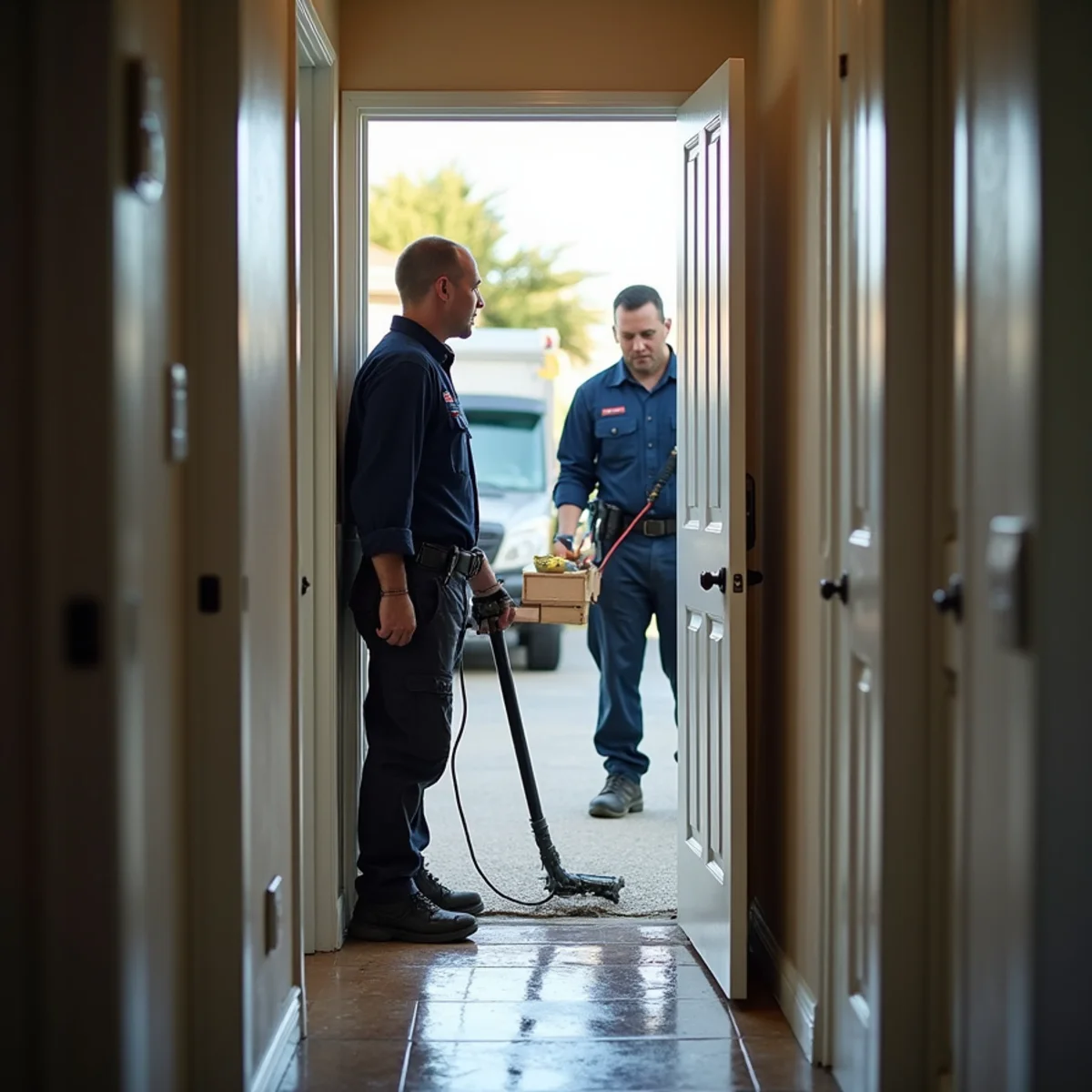
Standing water out, contents lifted or moved, the plumbing repair coordinated so the rest of the house can have water back.
- 2
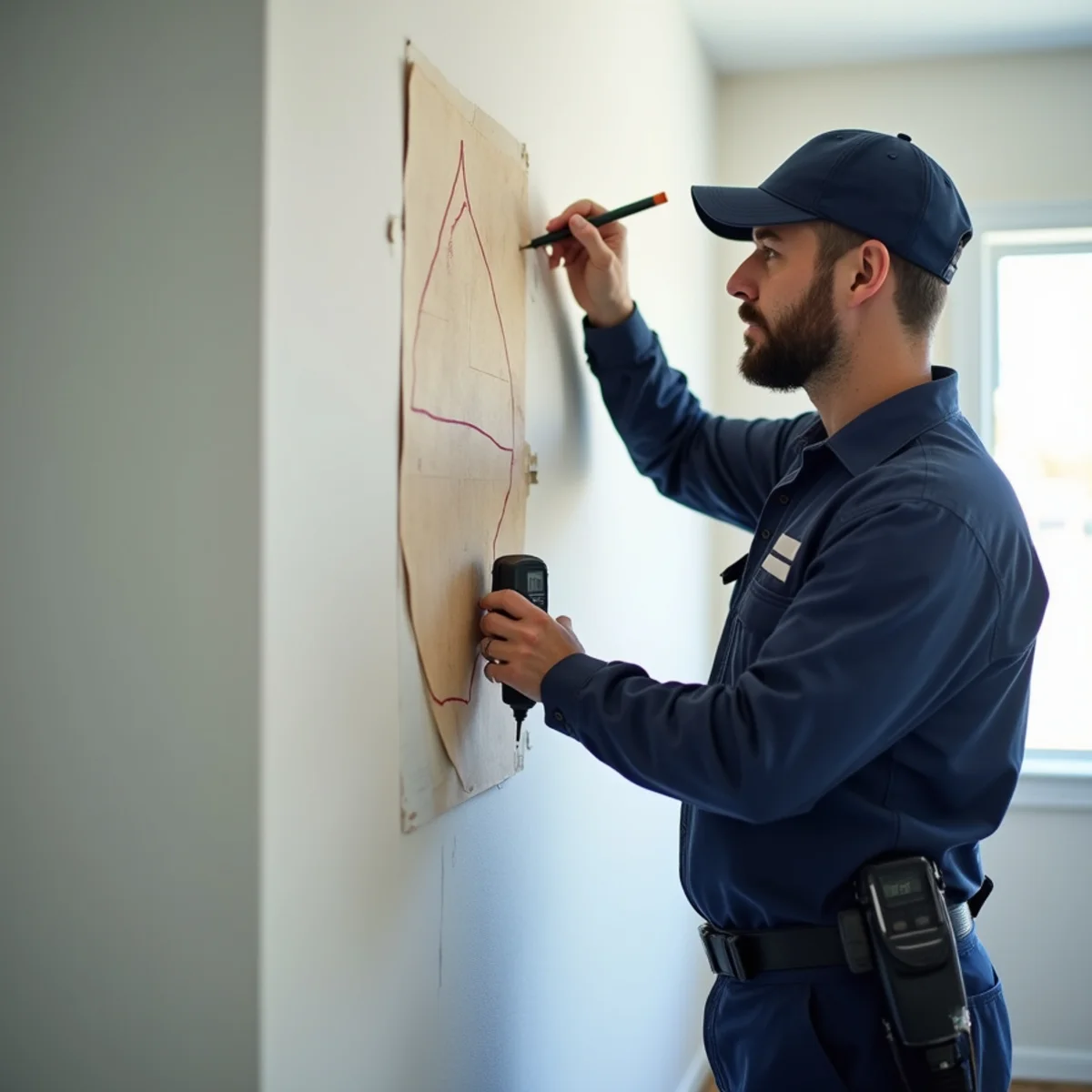
Mapping the real wet area
Thermal imaging and moisture meters trace where the water actually travelled — nearly always well beyond the visible damage. We mark the perimeter on the wall so you can see it.
- 3
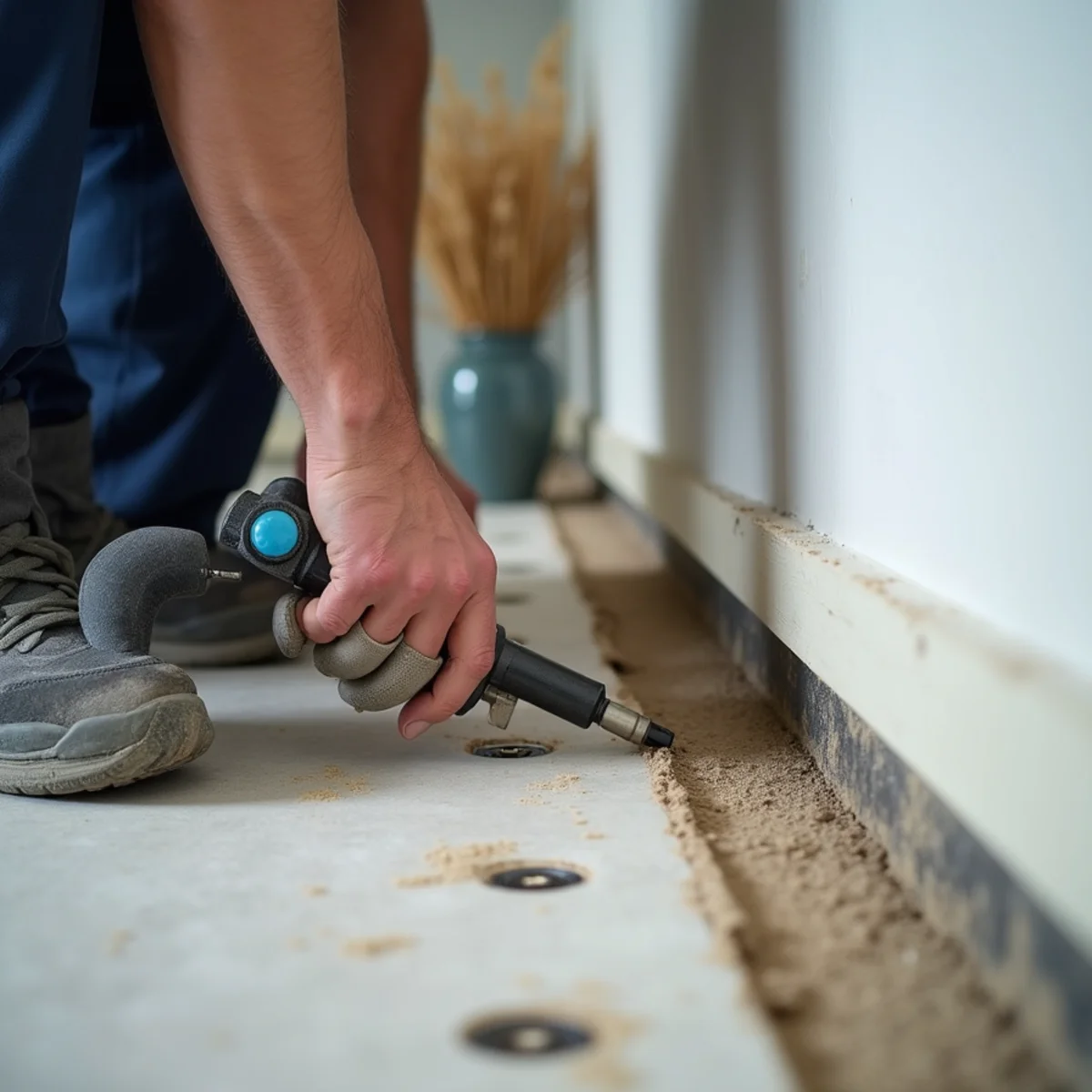
Targeted access
Inspection holes, baseboard removal, drilled cavity ports, and a flood cut only where a cavity genuinely cannot be dried in place. The goal is fewer square feet of drywall replaced, not more.
- 4
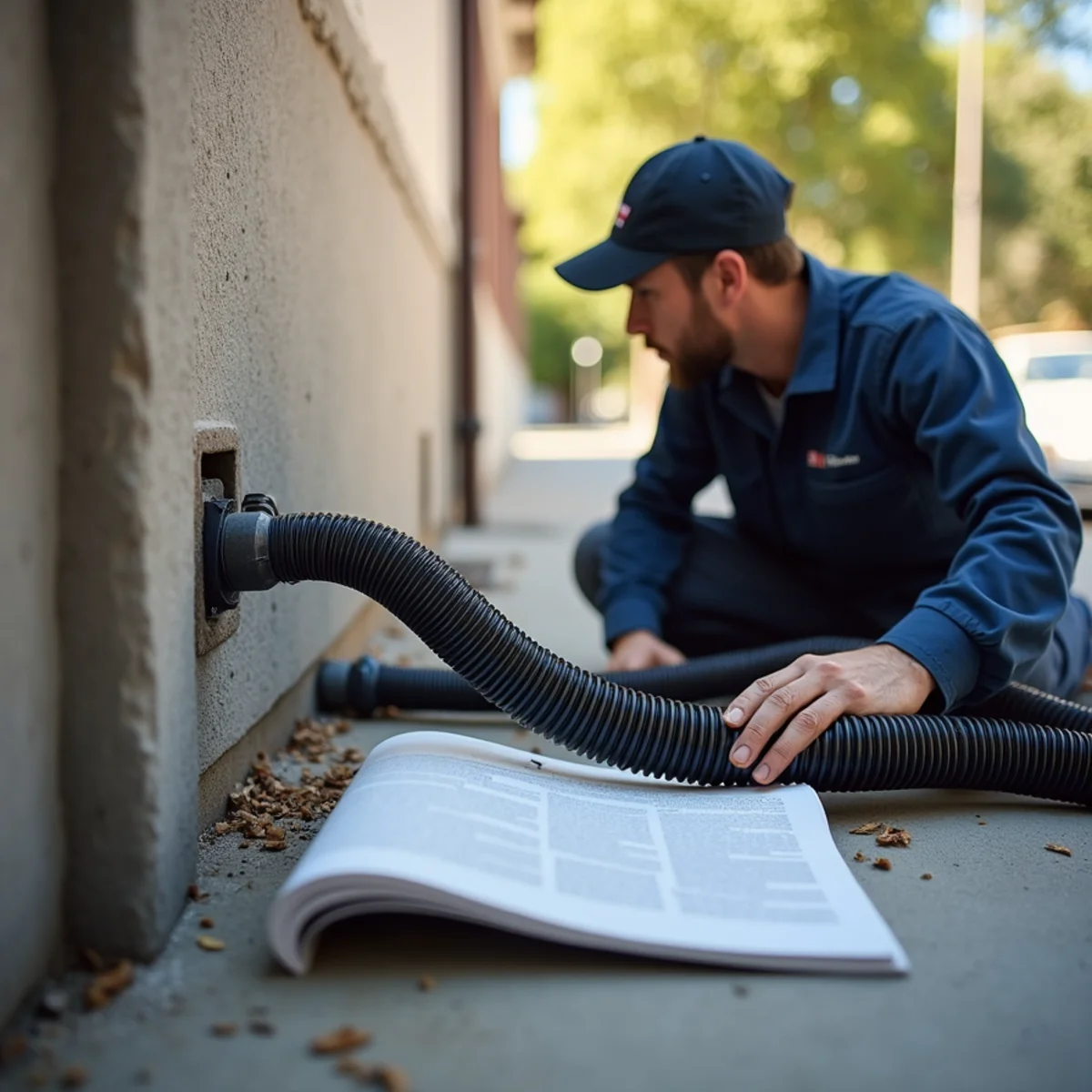
Cavity and structural drying
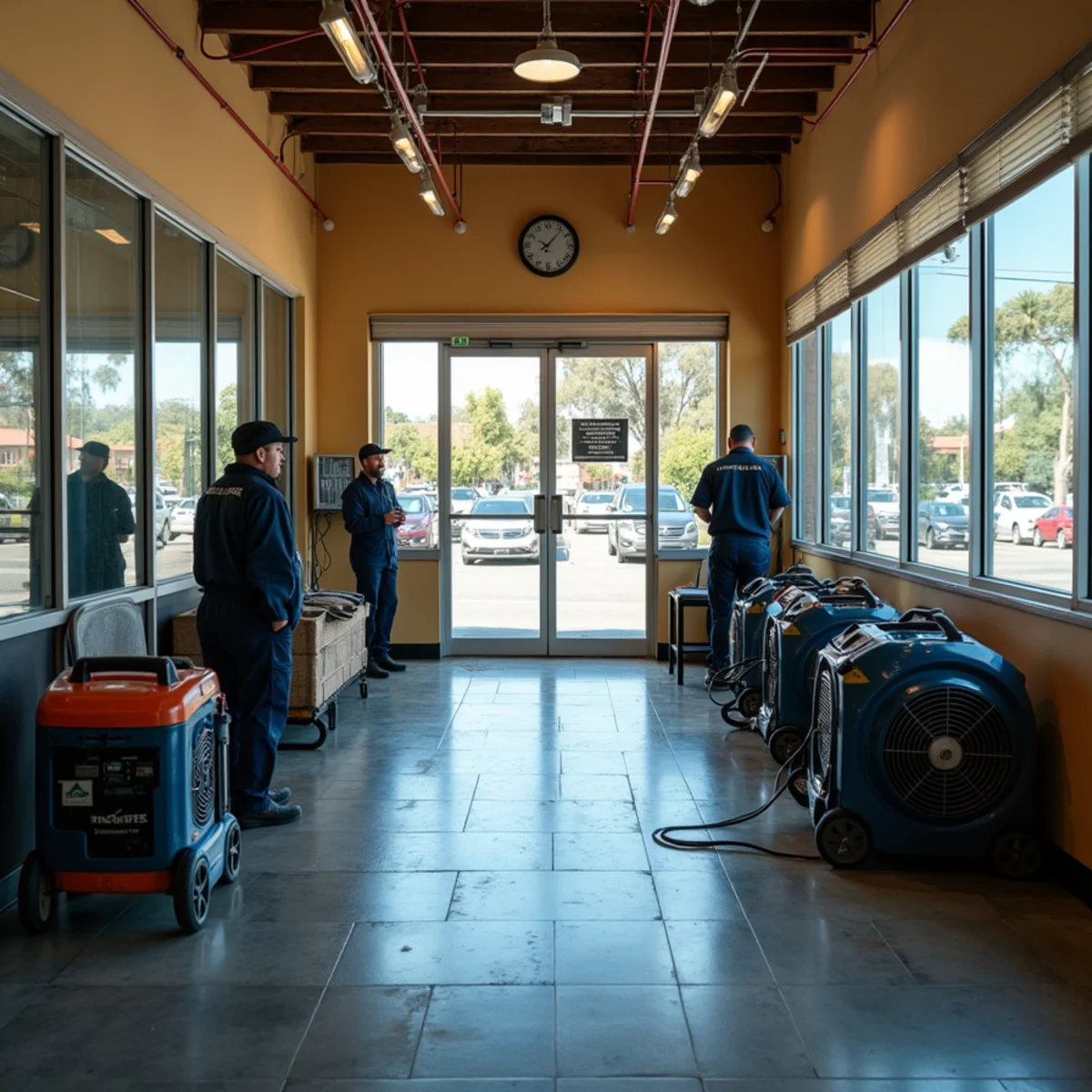
Dry air injected directly into wall cavities, air movers across hard surfaces, LGR dehumidifiers controlling the room, with wet insulation removed rather than dried through drywall.
- 5
Verification then repair
Daily readings at marked points until materials hold at dry standard, then drywall, texture match, paint, baseboard and flooring.

Patch or re-pipe? An honest way to decide
This is a real decision and it deserves a straight answer rather than a default.
Patching a single failure makes sense when the system is otherwise sound — copper in good condition, a localised cause such as a mechanical strike or a freeze event, and no history of previous leaks.
Re-piping a run or the house makes sense when the failure is the second or third one, when the system is original galvanised, or when the affected walls are already open for drying. That last point matters financially: if we are already opening a wall for cavity drying, the access is effectively paid for, and that is the cheapest moment in the life of the house to replace the pipe behind it.
One more variable worth checking: static water pressure. Anything much above 80 psi accelerates failures throughout the system. A pressure gauge costs a few dollars, and a regulator is inexpensive relative to a single repair.
Insurance: this is usually the good news
Sudden and accidental pipe failure is one of the most commonly covered water losses under a California homeowners policy. A supply line that bursts is exactly the peril these policies are written for.
The exception is long-term seepage. A pinhole that has been weeping visibly for months, with a stain someone noticed and left, can be treated as a maintenance issue. That is why acting on the first sign matters for the claim as much as for the damage.
Note also that the policy generally covers the resulting damage rather than the pipe itself — the plumbing repair is often your cost while the drying and reconstruction are covered. We bill carriers directly and provide the photo record, moisture logs and itemised estimate they require. Our guide to California water damage insurance coverage covers the details.
Preventing the next one
Locate and test your main shut-off today — Not during an emergency. Confirm it turns, label it, and make sure everyone in the house knows where it is.
Check your static pressure — Above roughly 80 psi, install a regulator. High pressure shortens the life of every pipe, fitting and appliance valve in the house.
Replace braided supply lines on a schedule — Washing machine, ice maker, dishwasher and toilet supplies. Every five years, regardless of appearance.
Insulate exposed lines — Garages, crawl spaces and unheated utility rooms — the places Peninsula cold snaps actually reach.
Watch the meter monthly — Everything off, meter still moving, means a hidden leak. Two minutes, once a month, catches slab leaks months earlier.
Consider a smart shut-off valve — Particularly on a slab home or if you travel. It closes the main automatically when flow patterns suggest a leak.
24/7 Emergency Response
Dealing with this in Redwood City right now?
We answer 24/7 and can usually be on site within the hour. Extraction, verified drying and the rebuild, documented for your insurer.
- IICRC-certified technicians
- Licensed, bonded & insured
- Direct insurance billing
- 24/7 live answer — no phone trees
550 Allerton St, Redwood City, CA 94063 · Emergency dispatch answered 24/7, including holidays