Commercial·8 min read
Commercial Water Damage: Protecting Your Redwood City Business
The restoration invoice is rarely the biggest cost. The days you cannot trade are. Here is how to reduce both.
Read the guide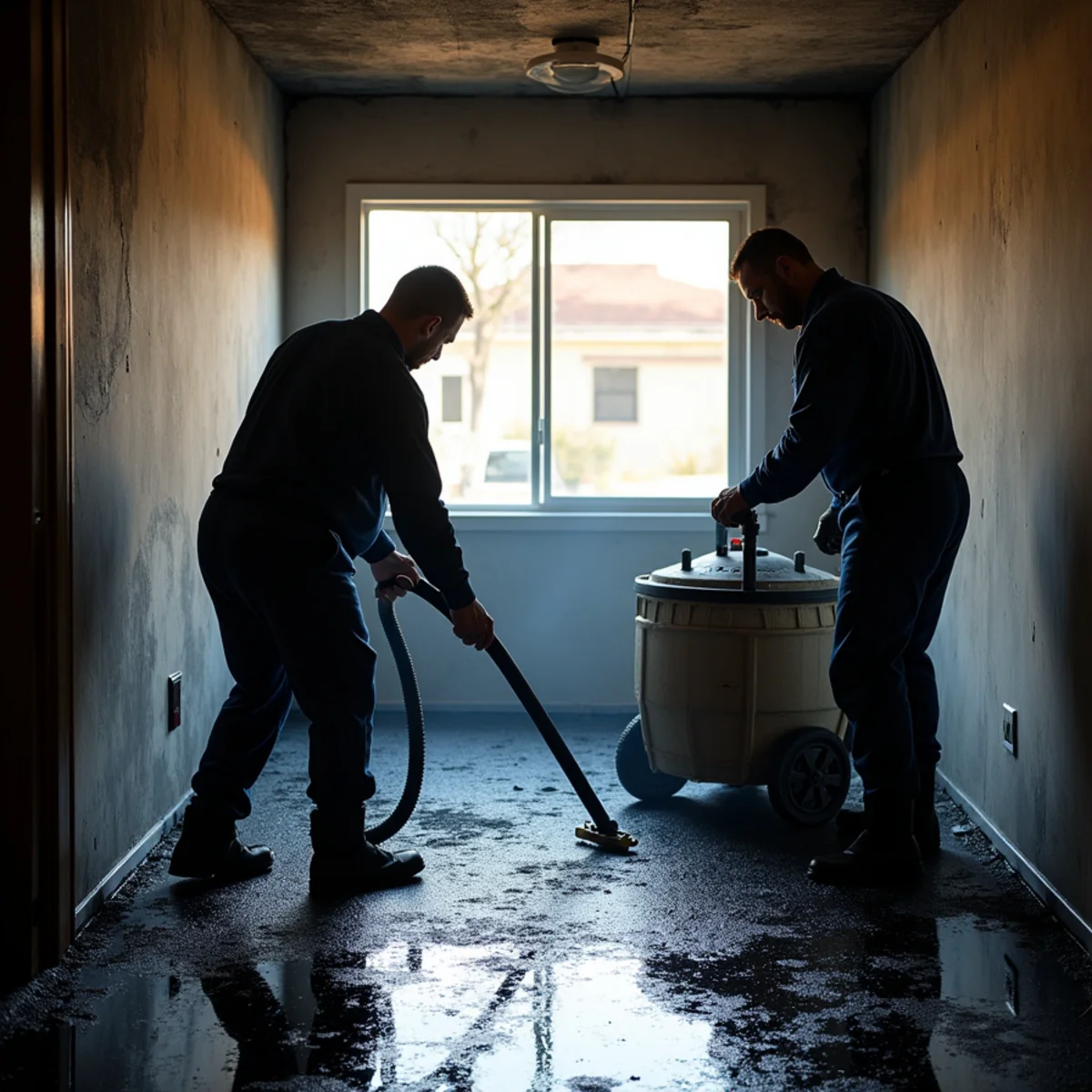
Restoration service · Redwood City, CA
After a fire, the water is the damage nobody warned you about. Fire suppression puts hundreds or thousands of gallons into a structure in minutes, and it goes everywhere — down through floors, into wall cavities, into the units or rooms below, and into the crawl space.
Answered by a person, 24/7 — crews on site within 60 minutes in Redwood City.
Combined losses have to be sequenced correctly or the work gets done twice. Water first, because wet soot bonds permanently to surfaces and because saturated material starts growing mold on the same 24-to-48-hour clock as any other water loss. Then smoke and soot. Then odour. Then rebuild.
We handle the whole sequence: board-up and stabilisation, extraction and structural drying, soot removal, odour control and reconstruction — with the documentation a fire claim needs, because fire claims are examined far more closely than water claims.
Standing suppression water below the fire floor
Water follows gravity through the structure. The rooms below an upstairs fire are often the wettest part of the building.
Wet soot on walls and contents
Soot plus water is acidic and reactive. It etches glass and metal and drives into porous surfaces, which is why timing matters.
Smoke odour throughout the building
Smoke travels far beyond the burn area through cavities and ductwork, and it settles in soft materials and insulation.
Saturated insulation and framing
Both suppression water and firefighting overhaul — the deliberate opening of walls and ceilings to check for hidden fire — leave insulation soaked and cavities exposed.
Corrosion starting on metal and appliances
Acidic residue plus moisture starts pitting hardware, fixtures and electronics within days. Early treatment saves items that would otherwise be losses.
An open building envelope
Ventilation holes, broken windows and removed roofing leave the structure exposed to the next rain and to intrusion until it is boarded and dried in.
Our process
Step 1
Secure and stabilise
Board-up of openings, temporary roof dry-in, and a safety assessment covering structural integrity, electrical hazards and air quality before any work begins.
Step 2
Water first
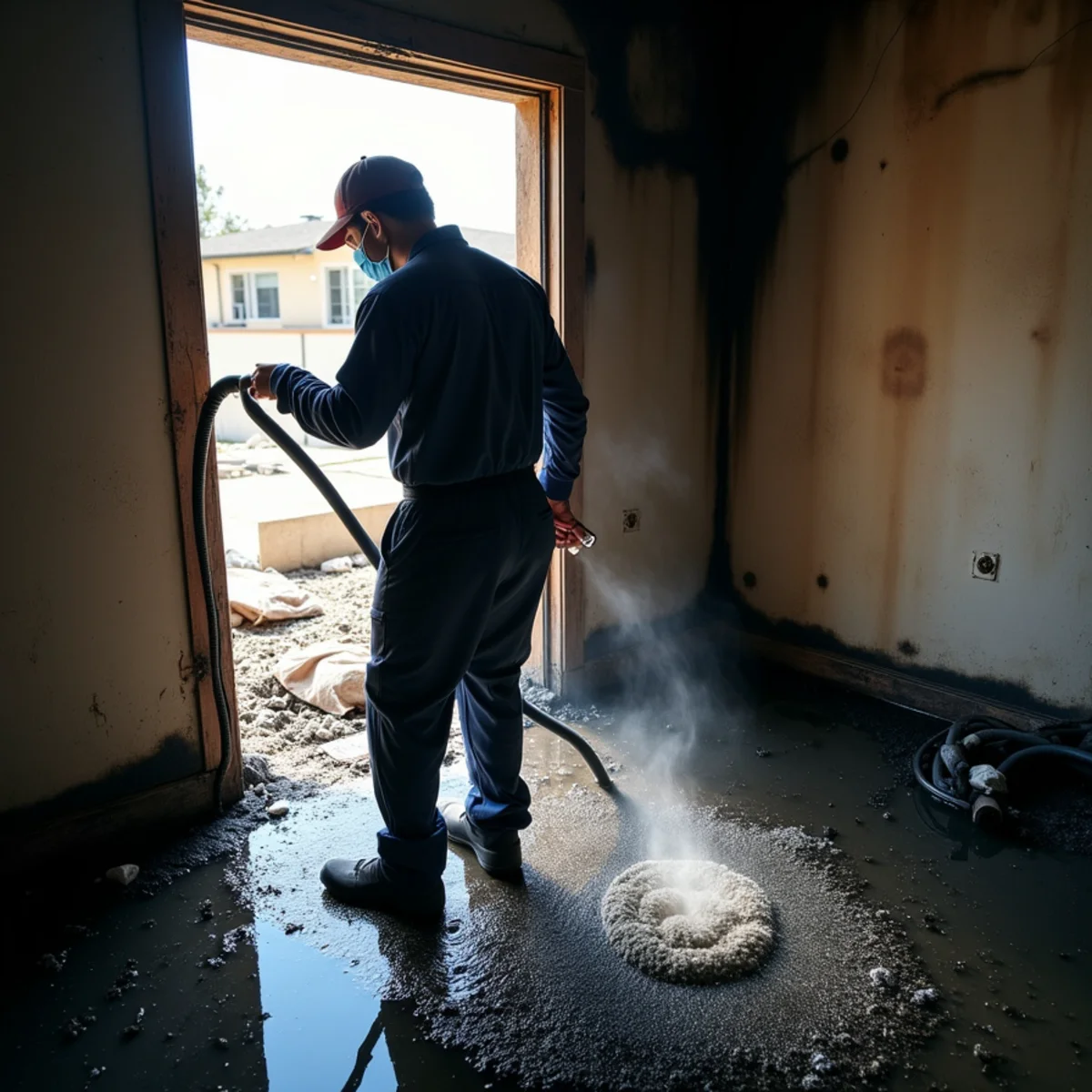
Extraction of suppression water throughout the structure, removal of saturated insulation and unsalvageable material, and drying equipment set immediately. The mold clock is running from the moment the hoses stopped.
Step 3
Soot and residue removal
Dry soot removed before wet cleaning, then surface-appropriate cleaning of walls, ceilings, framing and contents. Corrosion-prone metals and fixtures treated early.
Step 4
Odour control at the source
Removal of odour-holding materials, HEPA filtration, sealing of framing where residue is embedded, and thermal or hydroxyl treatment as appropriate. Fragrance is not odour control.
Step 5
Contents inventory and handling
Itemised inventory of salvageable and non-salvageable contents with photographs, cleaning of what can be recovered, and documentation of losses for the claim.
Step 6
Reconstruction
Framing repair, insulation, drywall, electrical and plumbing coordination, flooring, cabinetry, trim and paint, back to pre-loss condition.
24/7 Emergency Response
Tell us what you are seeing and we will tell you honestly whether it needs a crew, and what it is likely to involve. Emergency dispatch is answered 24/7.
550 Allerton St, Redwood City, CA 94063 · Emergency dispatch answered 24/7, including holidays
This is the part that separates a competent combined-loss response from an expensive mistake. Two clocks start when the fire is out.
The mold clock runs 24 to 48 hours on wet organic material, exactly as it does in any water loss. Suppression water in a wall cavity behaves no differently from a burst pipe.
The corrosion and staining clock runs in parallel. Soot combined with moisture forms an acidic residue that etches glass, pits chrome and aluminium, and drives pigment into porous surfaces. What can be cleaned in the first days becomes permanent within weeks.
Attempting soot cleaning on saturated surfaces makes both problems worse: it spreads residue into wet porous material and delays drying. So the order is stabilise, extract, dry, then clean. Any contractor proposing to start with wall cleaning while there is still standing water is going to do the job twice, and only one of those times will be covered.
A significant share of the fire-adjacent losses we handle involve no fire at all — just an activated sprinkler head. A forklift strike in a warehouse, corrosion in an old system, a frozen line in an unheated space, or a contractor catching a head with a ladder.
The water volume is substantial: 20 to 50 gallons a minute, continuing until someone locates and closes the zone valve, which in an unfamiliar building can take a while. And sprinkler water is not clean. It has been standing in steel pipe for years, so it comes out rusty, stagnant and staining, and it falls from ceiling height into the ceiling assembly, light fixtures and cable trays.
Response is specific: close the zone, extract, drop affected ceiling tile, remove wet insulation above the grid, treat rust staining before it sets, dry the assembly, and coordinate with your sprinkler contractor to inspect and recharge the system so the building is protected again.
Fire claims get more scrutiny than water claims, and they take longer. Expect a fire investigator to determine cause and origin before restoration begins in earnest, and expect to be asked for a detailed contents inventory.
Do not throw anything out before it has been photographed and inventoried, even obvious total losses. Keep receipts for emergency expenses like hotels and clothing — most policies include additional living expense coverage. And get the fire report number from the responding department, because your carrier will ask for it.
We handle the restoration side of the documentation: photographic record of conditions, moisture logs for the water portion, itemised contents inventory, and scope documents separated by damage type. We bill carriers directly and work alongside the investigator rather than around them.
Honest pricing
We publish ranges rather than hiding them behind a form. Mitigation runs $3 – $7.50 per square foot depending on water category, and most complete jobs land between $1,384 and $6,387. You get an itemised written estimate after inspection — never a firm number before anyone has checked for hidden moisture.
Why us for this
Restoration gets bought in a hurry, usually from whoever answers first. These are the things worth checking before you hand anyone a key — and what we put in writing on every fire & water job.
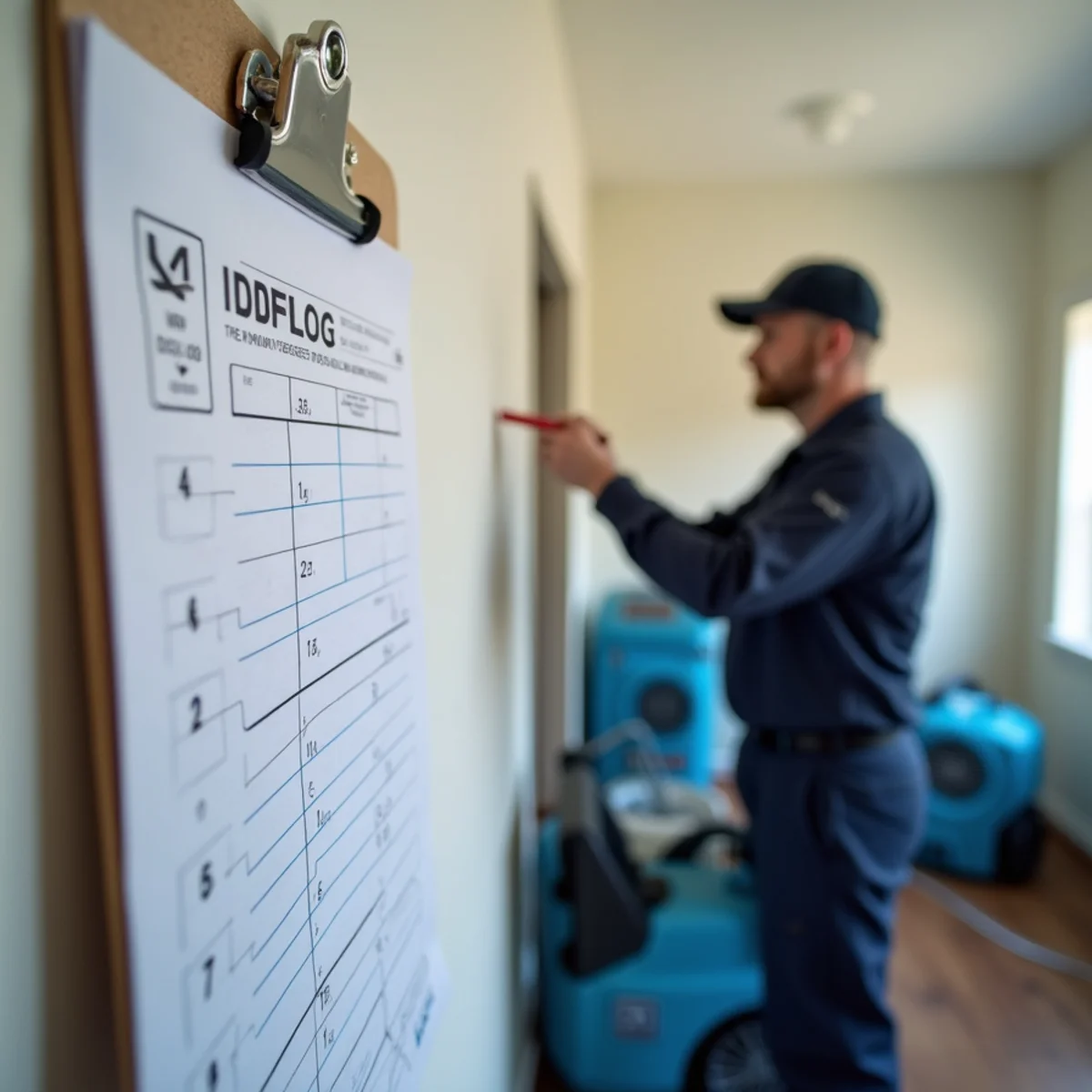
Two clocks start when the hoses stop: mold on wet material within 24–48 hours, and acidic soot etching glass, chrome and porous finishes within days. Cleaning soot on saturated surfaces spreads residue and delays drying — so stabilise, extract, dry, then clean.
Odour-holding materials out, framing cleaned and sealed where residue is embedded, HEPA filtration throughout. Fragrance or a single ozone pass leaves smoke that returns on the first humid day.
Itemised, photographed and separated into salvageable and non-salvageable. Fire claims are examined far more closely than water claims, and undocumented disposals are where they come apart.
Cause and origin gets determined before restoration begins in earnest. We sequence around that rather than through it, and we handle the reconstruction that firefighting overhaul makes necessary.
Honest pricing
Mitigation is priced per square foot by water category. Reconstruction is quoted separately, and you get an itemised written estimate after inspection rather than a number over the phone.
| Water category | Typical source | Health risk | Mitigation cost |
|---|---|---|---|
| Category 1 — clean water | Broken supply lines, sink and tub overflows, clean appliance leaks | Low risk if dried quickly | $3 – $4 / sq ft |
| Category 2 — gray water | Washing machine or dishwasher discharge, urine-only toilet overflow, sump failure | Moderate — bacteria present, can cause illness | $4 – $7 / sq ft |
| Category 3 — black water | Sewage backup, storm floodwater, toilet overflow with solids, microbial growth | High — pathogens; PPE and containment required | $7 – $7.50 / sq ft |
Insurance
We bill your carrier directly for covered work, so you are not floating the cost and waiting on reimbursement. You do not need to wait for an adjuster before emergency mitigation starts — policies expect you to take reasonable steps to limit the damage.
Sudden and accidental damage — a burst supply line, a failed water heater, an appliance hose — is covered by most California policies. Gradual leaks and deferred maintenance often are not, rising water from outside needs separate flood insurance, and sewer backup usually needs its own endorsement.
Nobody can promise what your carrier will decide. What we can promise is that the loss is documented well enough for that decision to be made on the facts.
California coverage explainedFire & Water in Redwood City? A person answers 24/7 and gives you shut-off instructions while the crew is on the way.
+1 (201) 277-9344Commercial·8 min read
The restoration invoice is rarely the biggest cost. The days you cannot trade are. Here is how to reduce both.
Read the guideProblem-solving·7 min read
Extraction is hours. Drying is days. Rebuild is weeks. Here is what actually determines each number, and where schedules slip.
Read the guideReviewed by Water Damage Redwood City — checked by our IICRC-certified project managers.
Last reviewed
Where we provide this service
We cover Redwood City and the surrounding Peninsula. Local conditions change the plan — bayfill slabs dry slowly, hillside runoff is contaminated, and pre-1960 housing hides leaks under concrete — so pick your area for specifics.
FAQ
Because two clocks are running. Wet organic material starts growing mold within 24 to 48 hours regardless of the fire, and wet soot forms an acidic residue that permanently etches and stains within days. Cleaning soot on saturated surfaces also spreads residue into porous material and delays drying. Stabilise, extract, dry, then clean — in that order.
It can be removed, but only by addressing the source rather than masking it. That means removing odour-holding materials like insulation and pad, cleaning and often sealing framing where residue is embedded, running HEPA filtration, and treating the space appropriately. If a company is proposing fragrance or a single ozone treatment as the whole solution, the odour will come back on the first humid day.
Yes — framing repair, insulation, drywall, coordination with electrical and plumbing, flooring, cabinetry, trim and paint. Fire losses involve a lot of reconstruction because firefighting overhaul opens walls and ceilings to check for hidden fire, and that scope is often larger than the burn area itself.
Do not enter until the fire department clears the building. Get the fire report number. Contact your carrier to open the claim. Photograph everything before anything is moved or discarded, including obvious total losses. Keep receipts for hotels, meals and replacement clothing, as most policies include additional living expense coverage. Then call us to secure the building and start extraction.
More than people expect, if it is reached early. Hard, non-porous items — glass, metal, sealed surfaces, most furniture frames — clean up well before acidic residue has time to etch them. Soft porous contents that absorbed smoke are the difficult category, and textiles are assessed individually rather than written off as a group. The variable is time: what cleans in the first days often cannot be recovered after a few weeks.
24/7 Emergency Response
A person answers 24/7 and gives you shut-off and safety instructions while a crew is already on the way. Emergency mitigation is loss-limiting work your policy expects you to start immediately.
550 Allerton St, Redwood City, CA 94063 · Emergency dispatch answered 24/7, including holidays