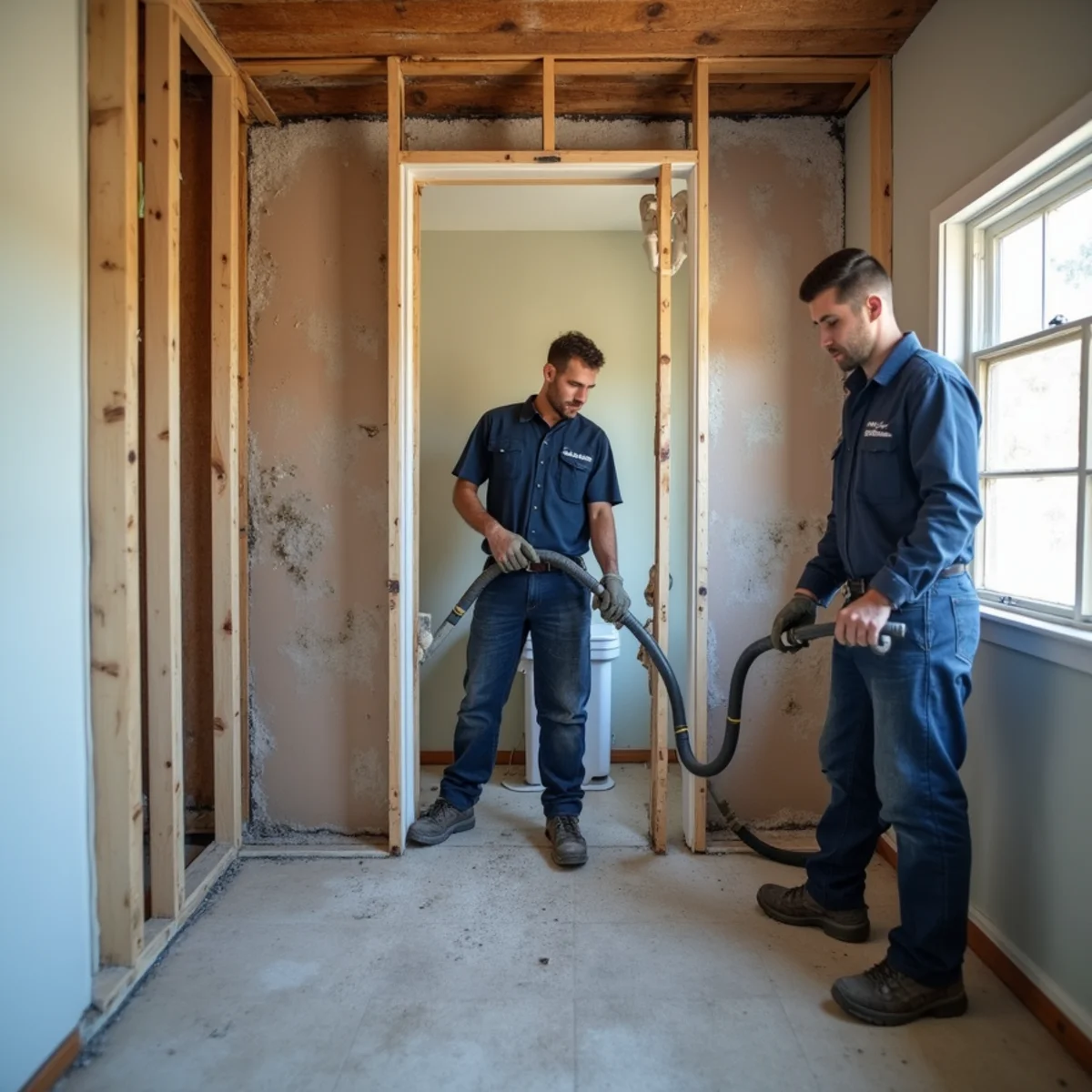
Problem-solving·8 min read
How to Detect Hidden Water Damage in Your Redwood City Home
Most water damage is discovered late, not because it was subtle, but because nobody knew what to look for. Here is the list.
Read the guide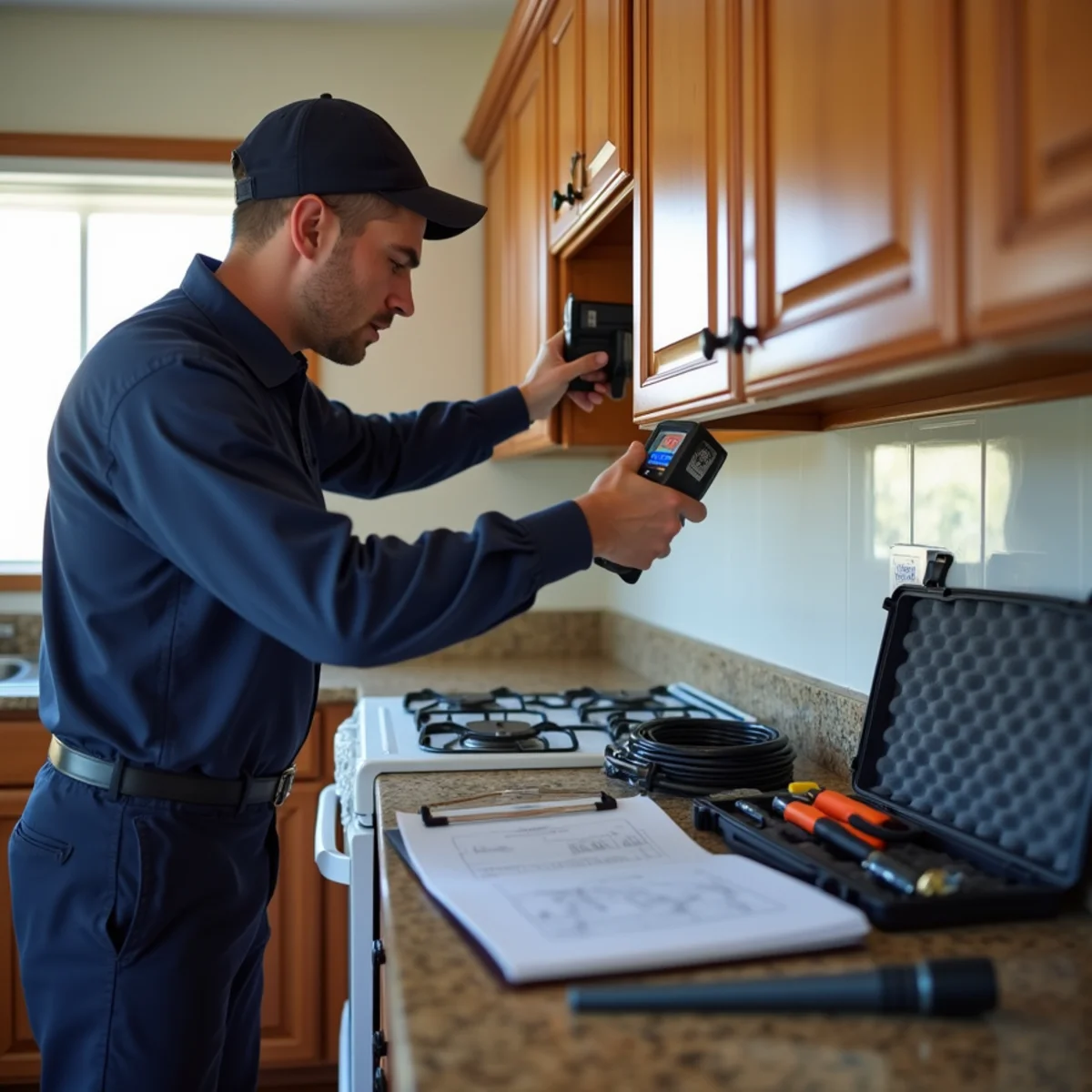
Restoration service · Redwood City, CA
You cannot make a good decision about water damage without knowing where the water is. A stain tells you where it surfaced, not where it came from or how far it spread. That gap is where money gets wasted — either on demolition that was not needed or on a repair that traps moisture in place.
Answered by a person, 24/7 — crews on site within 60 minutes in Redwood City.
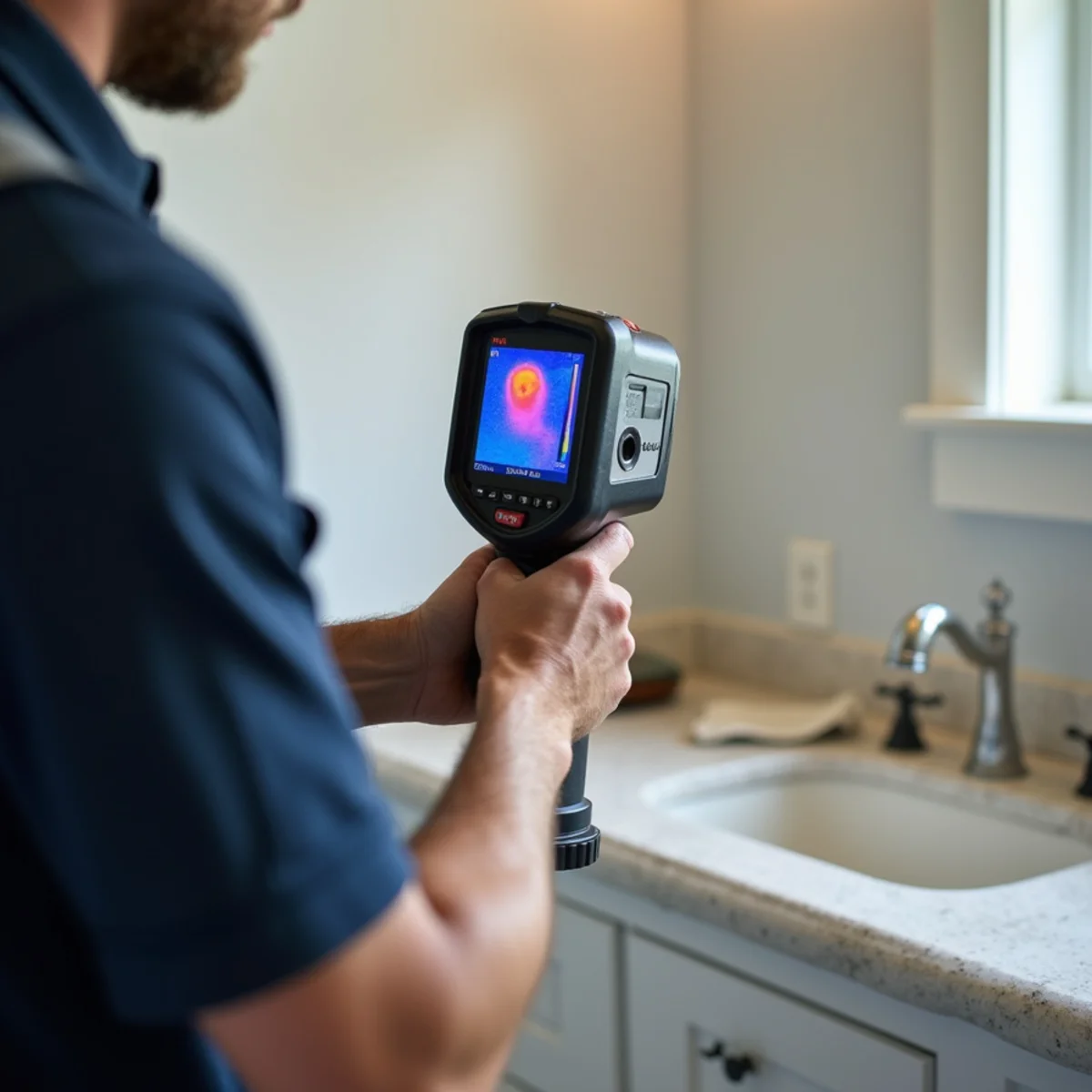
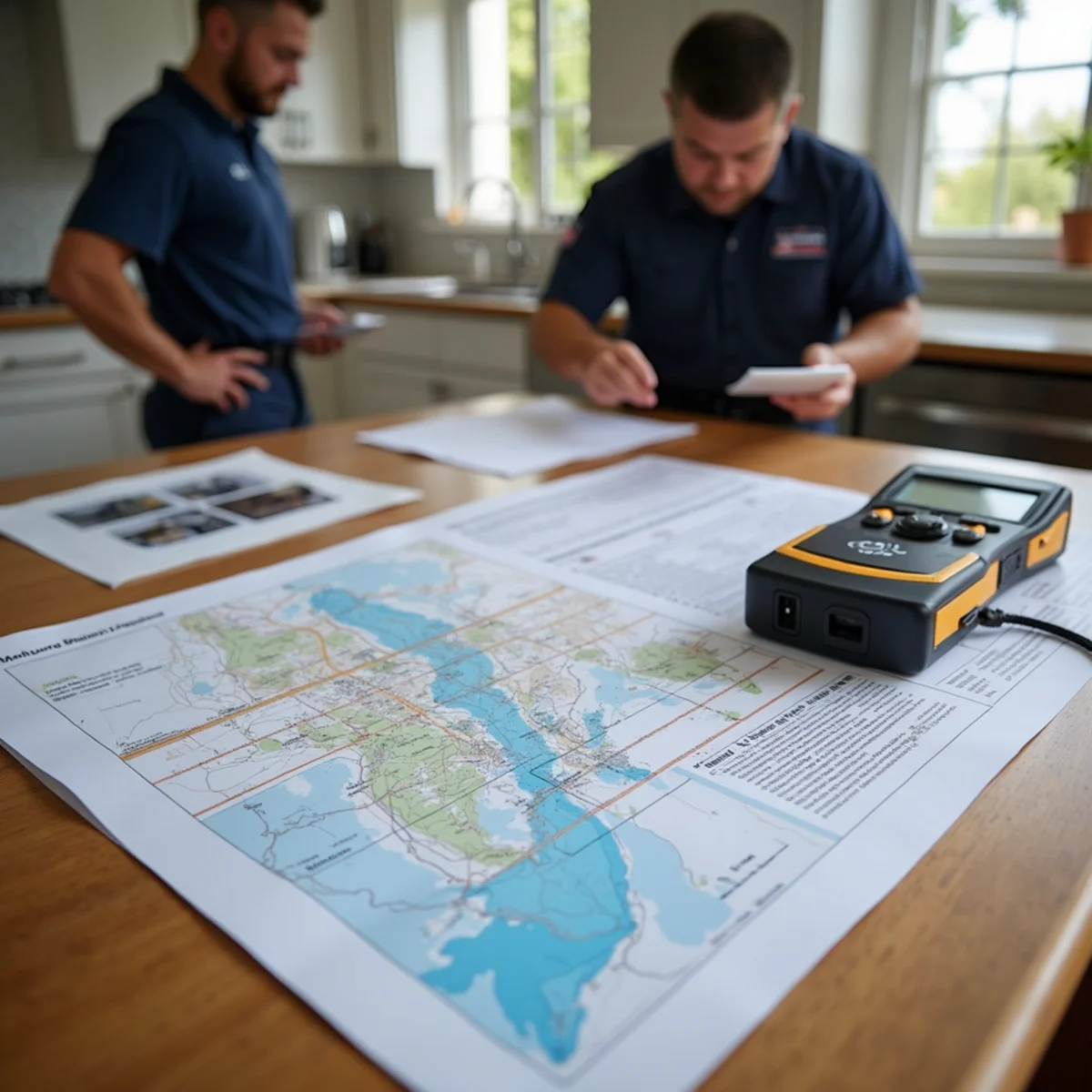
An inspection answers three questions in writing: what is wet, how wet, and what is feeding it. We use thermal imaging to find temperature anomalies, pin and pinless meters to confirm and quantify, hygrometers to assess the air, and a borescope where a cavity needs to be seen rather than inferred.
You get a report with readings, marked photos and a plain-language recommendation — including "this does not need restoration" when that is the honest answer.
You smell mold but cannot find it
The most common reason people call. Odour means damp material somewhere; imaging and mapping narrow it down without exploratory demolition.
A stain you are not sure is active
Old and dry versus current and wet are two completely different jobs. A meter settles it in minutes.
Your water bill jumped
A hidden supply leak or a slab leak can run for months. Imaging plus a meter check finds where it is surfacing.
You are buying a house
A moisture survey before close finds concealed past damage, active leaks and previous repairs that were done over wet material.
Another contractor gave you a big demolition quote
Getting an independent moisture map before agreeing to open three rooms is a reasonable, cheap second opinion.
Post-repair verification
Confirming that a completed job actually reached dry standard before flooring or drywall goes back.
Our process
Step 1
Interview and history
What happened, when, what you have noticed, what has been repaired before. History narrows the search area more than any instrument does.
Step 2
Thermal imaging survey
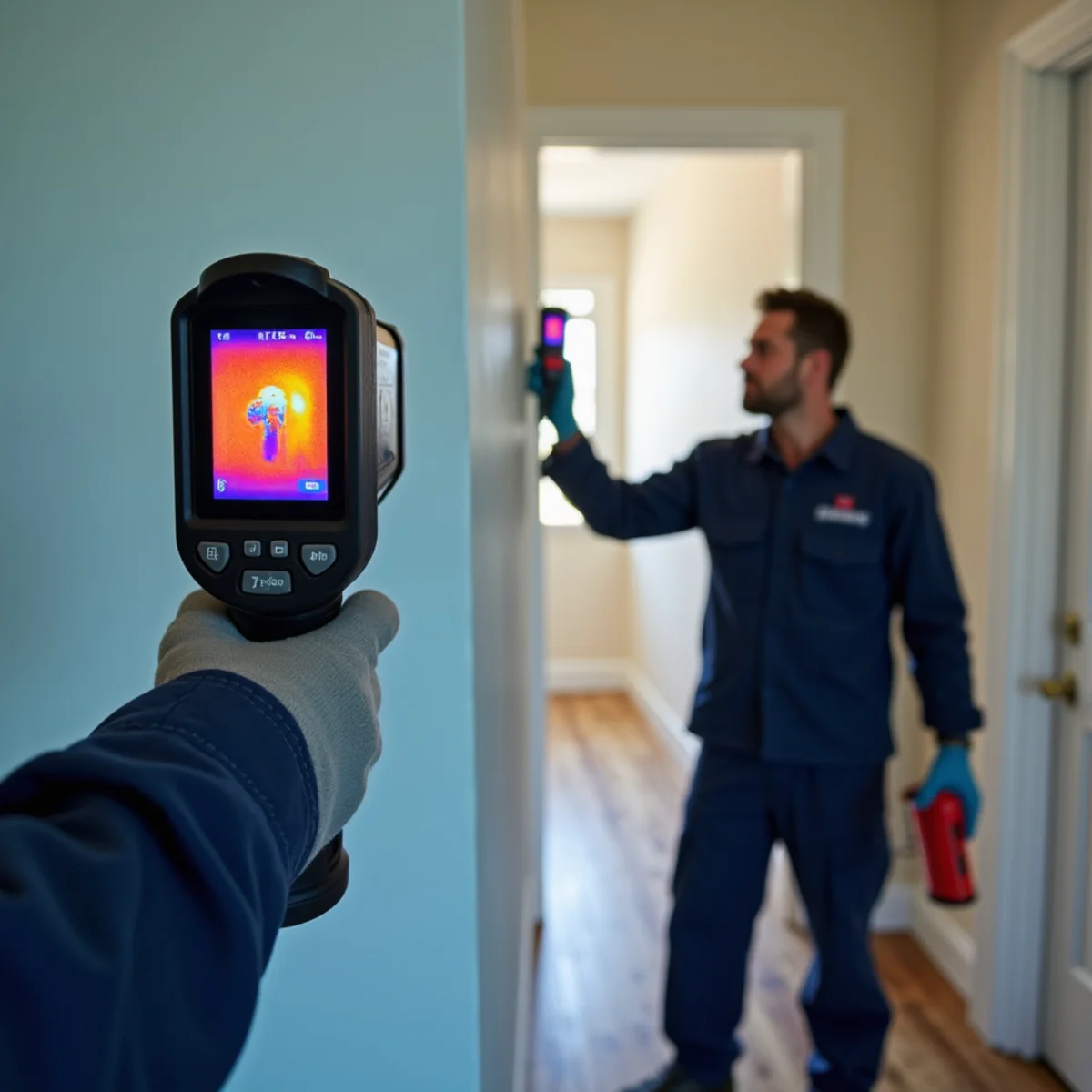
Systematic scan of walls, ceilings, floors and cabinet runs. Thermal cameras show temperature differences caused by evaporation and standing water — they do not see moisture directly, which is why the next step matters.
Step 3
Moisture verification and mapping
Every thermal anomaly is confirmed with a meter. Pinless for scanning, pin probes for depth. We mark the wet perimeter so you can see the real footprint versus the visible one.
Step 4
Air and cavity assessment
Temperature, relative humidity and dew point readings, plus borescope inspection into a cavity where a small hole answers a question that would otherwise cost a wall.
Step 5
Written report and recommendation
Photos with marked readings, a diagram of the affected area, the likely source, and a clear recommendation with a scope and estimate if work is needed.
24/7 Emergency Response
Tell us what you are seeing and we will tell you honestly whether it needs a crew, and what it is likely to involve. Emergency dispatch is answered 24/7.
550 Allerton St, Redwood City, CA 94063 · Emergency dispatch answered 24/7, including holidays
It is worth being honest about the tools, because they get oversold. Thermal imaging does not detect moisture. It detects surface temperature differences, and wet material is usually cooler because evaporation removes heat. That makes it an outstanding search tool and a poor confirmation tool.
Anyone showing you a thermal image as proof of a leak without a meter reading beside it is skipping the step that matters. Cold spots come from missing insulation, air leaks, plumbing runs and framing members too.
Moisture meters are the confirmation. Pinless meters read moisture content through the surface without damage, which is ideal for scanning large areas. Pin meters read between two probes at a set depth, which tells you whether the wet layer is at the surface or deeper in the assembly.
Hygrometers put the room in context — a wall reading means something different at 35% relative humidity than it does at 70%. And a borescope through a quarter-inch hole often replaces an exploratory cut, which is the cheapest decision in the whole process.
Peninsula home prices make an undisclosed water problem an expensive surprise. A standard home inspection is broad and visual; it is not a moisture survey, and inspectors routinely note "recommend further evaluation" on exactly the things a meter would settle.
The recurring findings in this market are consistent. Fresh paint on one section of ceiling. A bathroom remodel that was finished over a wet subfloor. Crawl space insulation that has been damp long enough to sag. Efflorescence on a garage slab. A slab-leak repair with no documentation of the drying that followed.
None of those are automatic reasons to walk away. They are reasons to negotiate with evidence, and to know what you are taking on before the contingency period closes.
Three concepts make any report readable.
Moisture content is the percentage of water by weight in a material. Wood framing sits comfortably around 8–12% in this climate; readings in the high teens and above mean active moisture. Drywall and masonry use relative scales rather than a true percentage.
Dry standard is the reading an unaffected area of the same material in the same building gives you. That is why we take control readings in a dry room — the target is your house, not a textbook number.
Relative humidity and dew point describe the air. Below roughly 50% relative humidity, materials give up moisture readily. Above 60%, the air itself becomes part of the problem, which is why dehumidification rather than fans is what actually dries a structure.
Honest pricing
We publish ranges rather than hiding them behind a form. Mitigation runs $3 – $7.50 per square foot depending on water category, and most complete jobs land between $1,384 and $6,387. You get an itemised written estimate after inspection — never a firm number before anyone has checked for hidden moisture.
Why us for this
Restoration gets bought in a hurry, usually from whoever answers first. These are the things worth checking before you hand anyone a key — and what we put in writing on every inspection job.
Thermal cameras detect temperature difference, not moisture — cold spots also come from missing insulation and framing. Every anomaly is confirmed with a meter before it goes in the report. Anyone showing you a thermal image alone is skipping the step that matters.
A quarter-inch hole and a camera answers most cavity questions that would otherwise cost a wall. It is the cheapest decision in the whole process and it is standard on our surveys.
If a paid survey leads straight into mitigation, the inspection fee comes off the job. You are not paying twice to find the same water.
Marked photographs, readings against a dry standard, a diagram of the affected area and a plain recommendation — including "this does not need restoration" when that is the honest answer. Useful in a purchase contingency as well as a claim.
Honest pricing
Mitigation is priced per square foot by water category. Reconstruction is quoted separately, and you get an itemised written estimate after inspection rather than a number over the phone.
| Water category | Typical source | Health risk | Mitigation cost |
|---|---|---|---|
| Category 1 — clean water | Broken supply lines, sink and tub overflows, clean appliance leaks | Low risk if dried quickly | $3 – $4 / sq ft |
| Category 2 — gray water | Washing machine or dishwasher discharge, urine-only toilet overflow, sump failure | Moderate — bacteria present, can cause illness | $4 – $7 / sq ft |
| Category 3 — black water | Sewage backup, storm floodwater, toilet overflow with solids, microbial growth | High — pathogens; PPE and containment required | $7 – $7.50 / sq ft |
Insurance
We bill your carrier directly for covered work, so you are not floating the cost and waiting on reimbursement. You do not need to wait for an adjuster before emergency mitigation starts — policies expect you to take reasonable steps to limit the damage.
Sudden and accidental damage — a burst supply line, a failed water heater, an appliance hose — is covered by most California policies. Gradual leaks and deferred maintenance often are not, rising water from outside needs separate flood insurance, and sewer backup usually needs its own endorsement.
Nobody can promise what your carrier will decide. What we can promise is that the loss is documented well enough for that decision to be made on the facts.
California coverage explainedInspection in Redwood City? A person answers 24/7 and gives you shut-off instructions while the crew is on the way.
+1 (201) 277-9344Problem-solving·8 min read
Most water damage is discovered late, not because it was subtle, but because nobody knew what to look for. Here is the list.
Read the guideProblem-solving·8 min read
Mold is a moisture problem wearing a costume. Remove the water and growth stops; clean the growth without removing the water and it returns.
Read the guideReviewed by Water Damage Redwood City — checked by our IICRC-certified project managers.
Last reviewed
Where we provide this service
We cover Redwood City and the surrounding Peninsula. Local conditions change the plan — bayfill slabs dry slowly, hillside runoff is contaminated, and pre-1960 housing hides leaks under concrete — so pick your area for specifics.
FAQ
Emergency assessment during an active loss is part of the response — we are not going to meter your house and hand you a bill while water is running. A standalone investigative or pre-purchase survey with a written report is a paid service, and if it leads directly into mitigation work we credit it against the job.
In the large majority of cases, yes. Thermal imaging plus moisture mapping locates the wet area, and a borescope through a quarter-inch hole confirms what is inside a cavity. Sometimes a small inspection opening is genuinely the right call — but it should be one deliberate hole based on readings, not exploratory demolition.
Only if there is a specific reason. If growth is visible and the moisture source is identified, testing usually just adds cost and delay. Testing earns its keep when you smell mold but cannot find it, when you need documentation for a health complaint, a transaction or a dispute, or when you want independent clearance after remediation.
Yes, and it is worth doing on the Peninsula. We survey for concealed moisture, past repairs done over wet material, crawl space and slab issues, and active leaks, then give you a written report with readings and photos you can use during your contingency period.
A single-room investigation is typically 45 minutes to an hour; a whole-house or pre-purchase survey on a larger property runs two to three hours. You get a written report with marked photographs, moisture readings compared against a dry standard from an unaffected part of the same building, a diagram of the affected area, the likely source, and a clear recommendation — with a scope and estimate attached only if work is actually needed.
24/7 Emergency Response
A person answers 24/7 and gives you shut-off and safety instructions while a crew is already on the way. Emergency mitigation is loss-limiting work your policy expects you to start immediately.
550 Allerton St, Redwood City, CA 94063 · Emergency dispatch answered 24/7, including holidays