Problem-solving
How to Detect Hidden Water Damage in Your Redwood City Home
Most water damage is discovered late, not because it was subtle, but because nobody knew what to look for. Here is the list.
The signs, ranked by how reliable they are
Concealed moisture gives itself away, but the signals are easy to attribute to something else. These are the ones worth acting on, roughly in order of how strongly they indicate a real problem.

A musty, earthy smell that never fully clears
The most reliable indicator of concealed growth. Microbial compounds pass through drywall and paint long before anything is visible. If you smell it, something is damp.

A water bill that increased with no change in usage
Strongly suggests a hidden supply leak, and on a slab home it is often the only early signal you get.
A warm patch on the floor
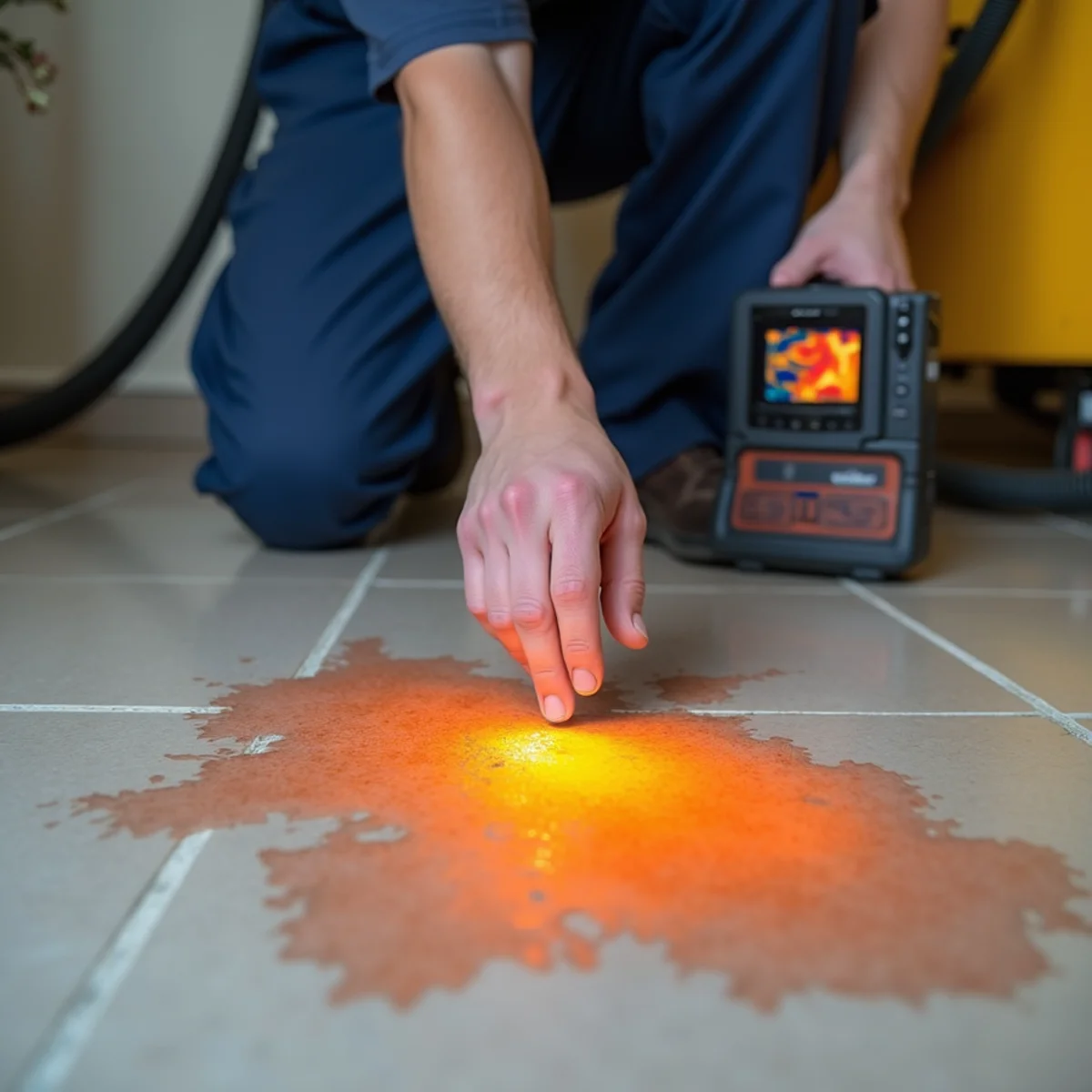
The classic slab leak signature — a hot-water line failing under concrete. Common in the mid-century slab housing across the Redwood City flats and San Carlos.

Running water audible with every fixture off
Shut everything down and listen at walls and floors. A faint continuous hiss or trickle is a live leak.
Hardwood cupping in one area
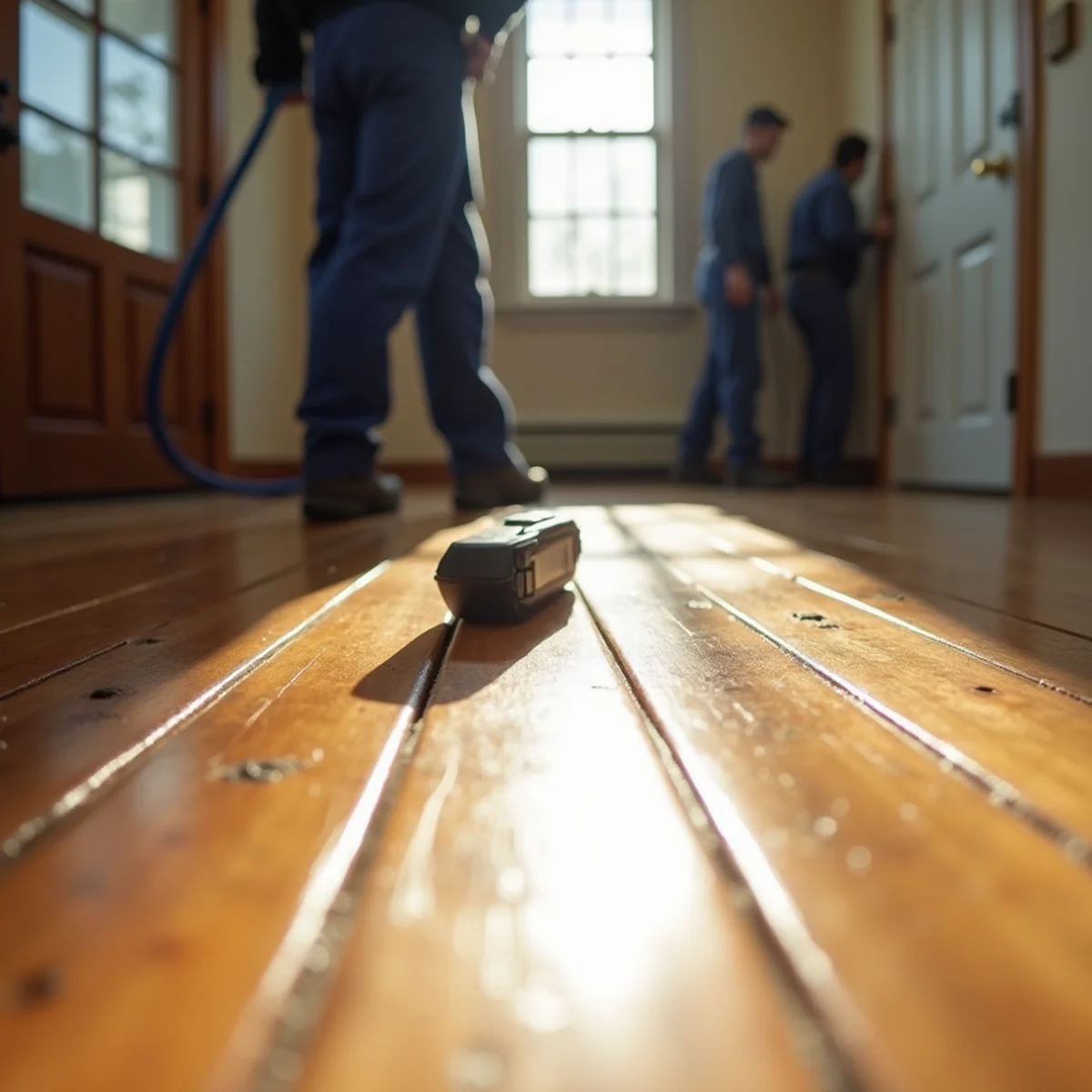
Wood absorbing moisture from below. Frequently the first visible evidence of a crawl space or slab problem.
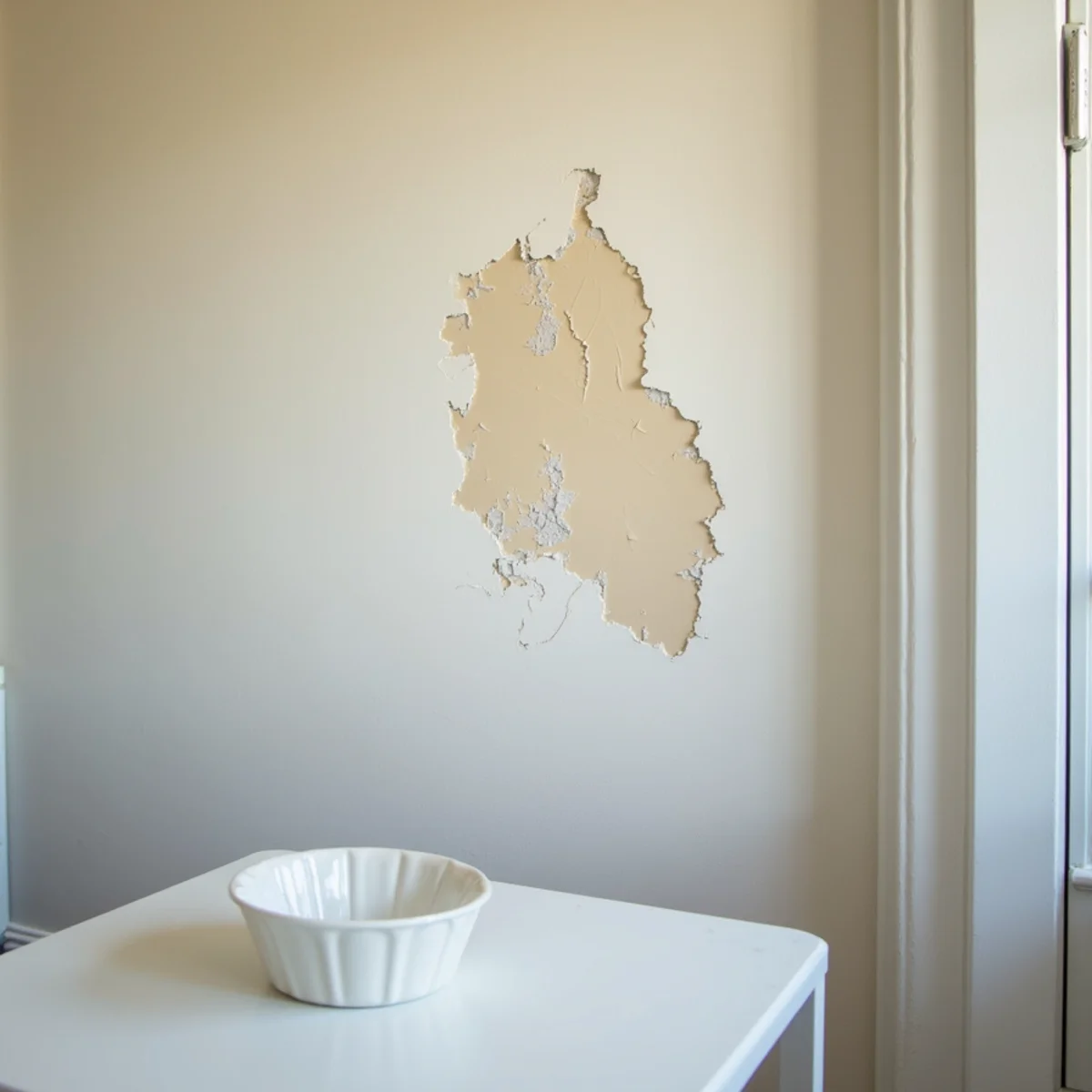
Peeling paint or wallpaper on one specific wall
Adhesion failure in a defined area usually means the substrate has been damp for a long time.
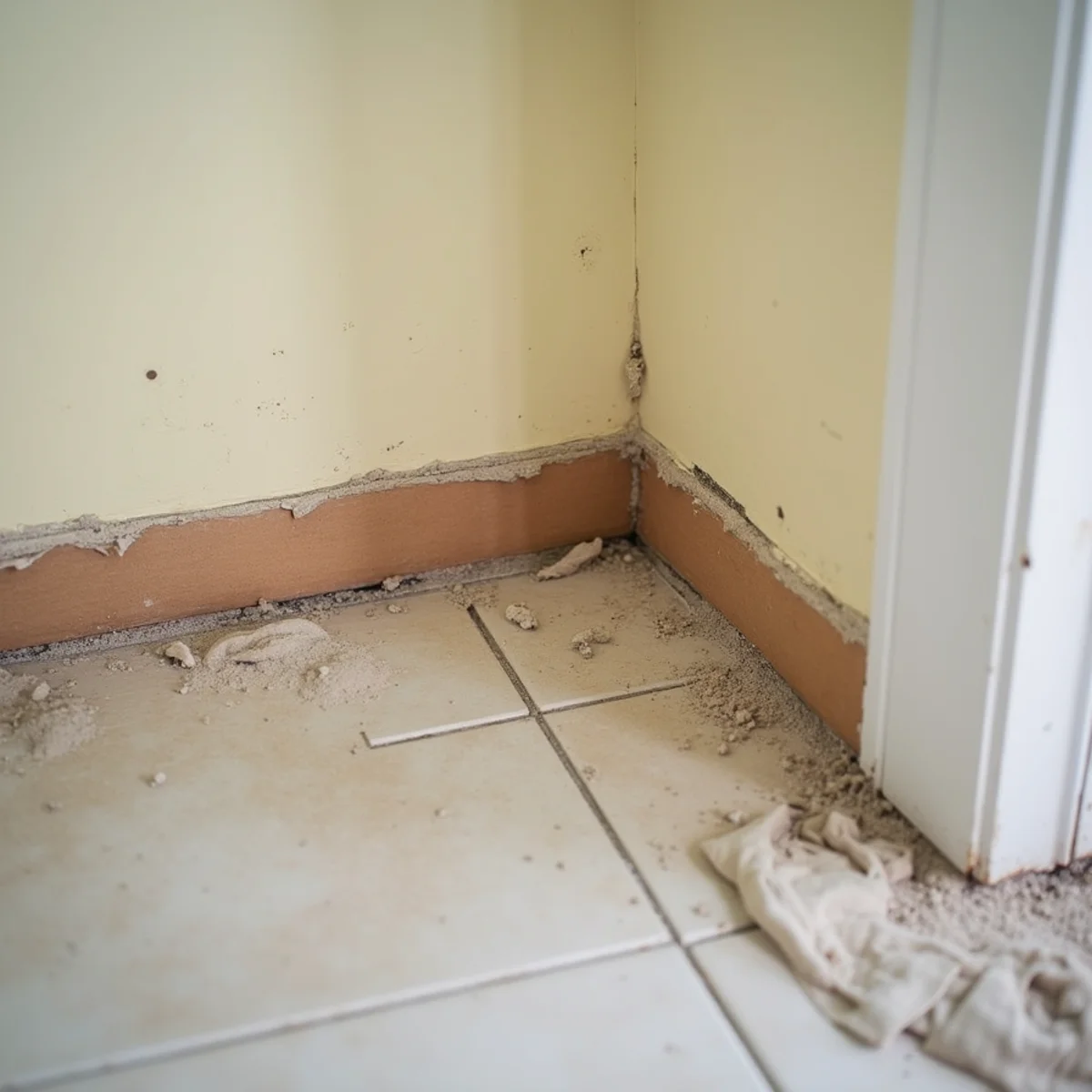
Nail pops, seam cracks or a bulging baseboard
Repeated wetting swells and shrinks drywall, pushing fasteners and opening taped seams. MDF baseboard swells visibly.
Symptoms that improve when you leave the house
Congestion, headaches or asthma flare-ups that ease at work and return at home are worth taking seriously as an indoor air signal.
Where to look, room by room
Under every sink — Angle stops, supply lines, P-traps, disposal seals. Run a hand along the cabinet base — a soft or swollen spot means a slow leak.
Behind and beneath the dishwasher — Warped or darkened flooring at the cabinet toe-kick is often the first visible sign of months of weeping.
Behind the refrigerator — The ice-maker line. Pull the fridge out once a year; almost nobody does, which is why these leaks run so long.
At the water heater base — Rust or mineral crust at the bottom of the tank means it has been weeping and a full failure is coming.
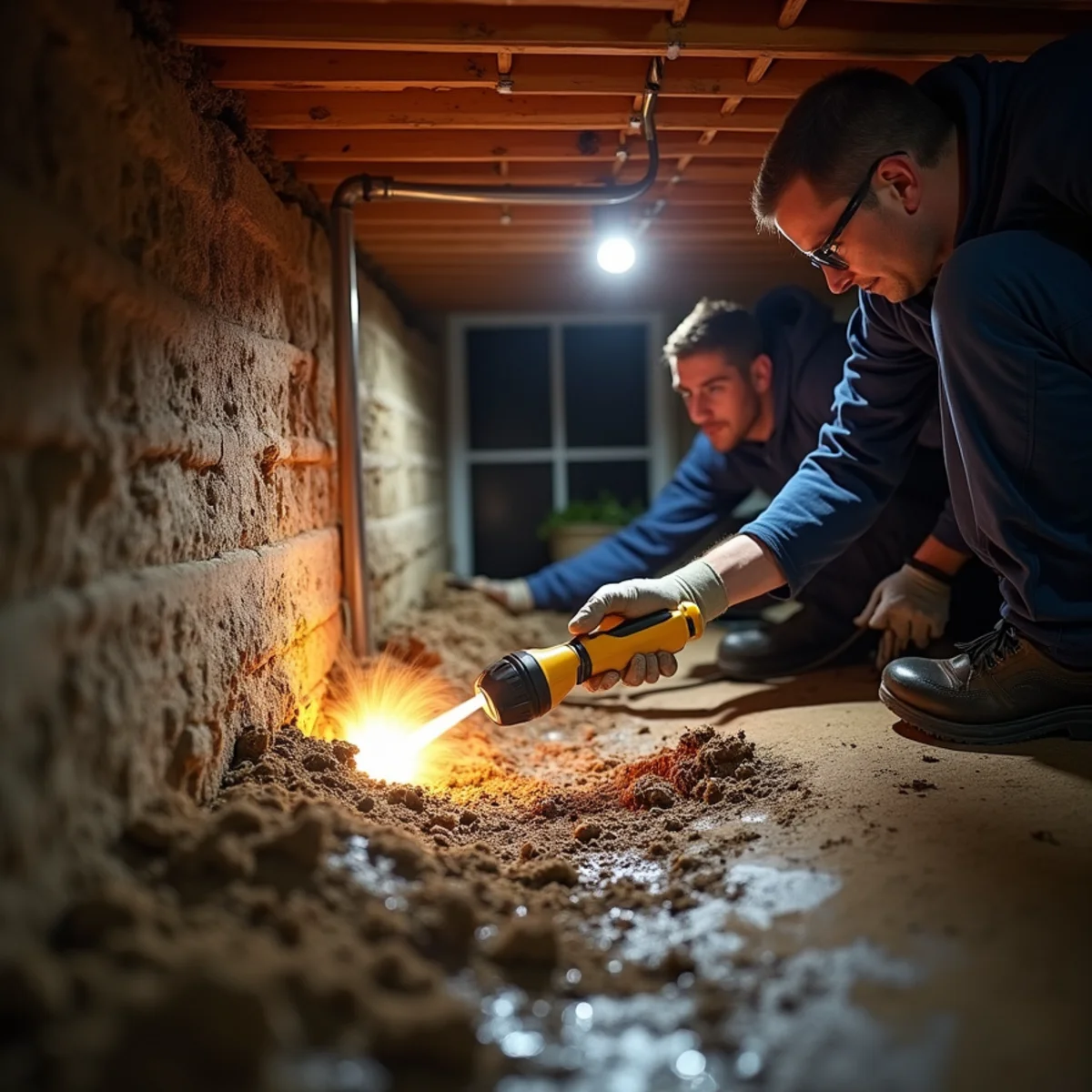
The crawl space — Standing water, damp soil, torn vapour barrier, sagging or dark insulation. Twice a year with a flashlight.
The attic, after the first heavy rain — Damp or compressed insulation and dark tracks on the sheathing mark roof entry points precisely.
Closets on exterior walls — Poor air circulation plus a cool exterior wall is where concealed growth shows up first.
Around windows and skylights — Staining at the head or corners of the interior trim indicates flashing or seal failure above.
What the equipment actually does
It is worth being honest about the tools, because they get oversold in marketing.
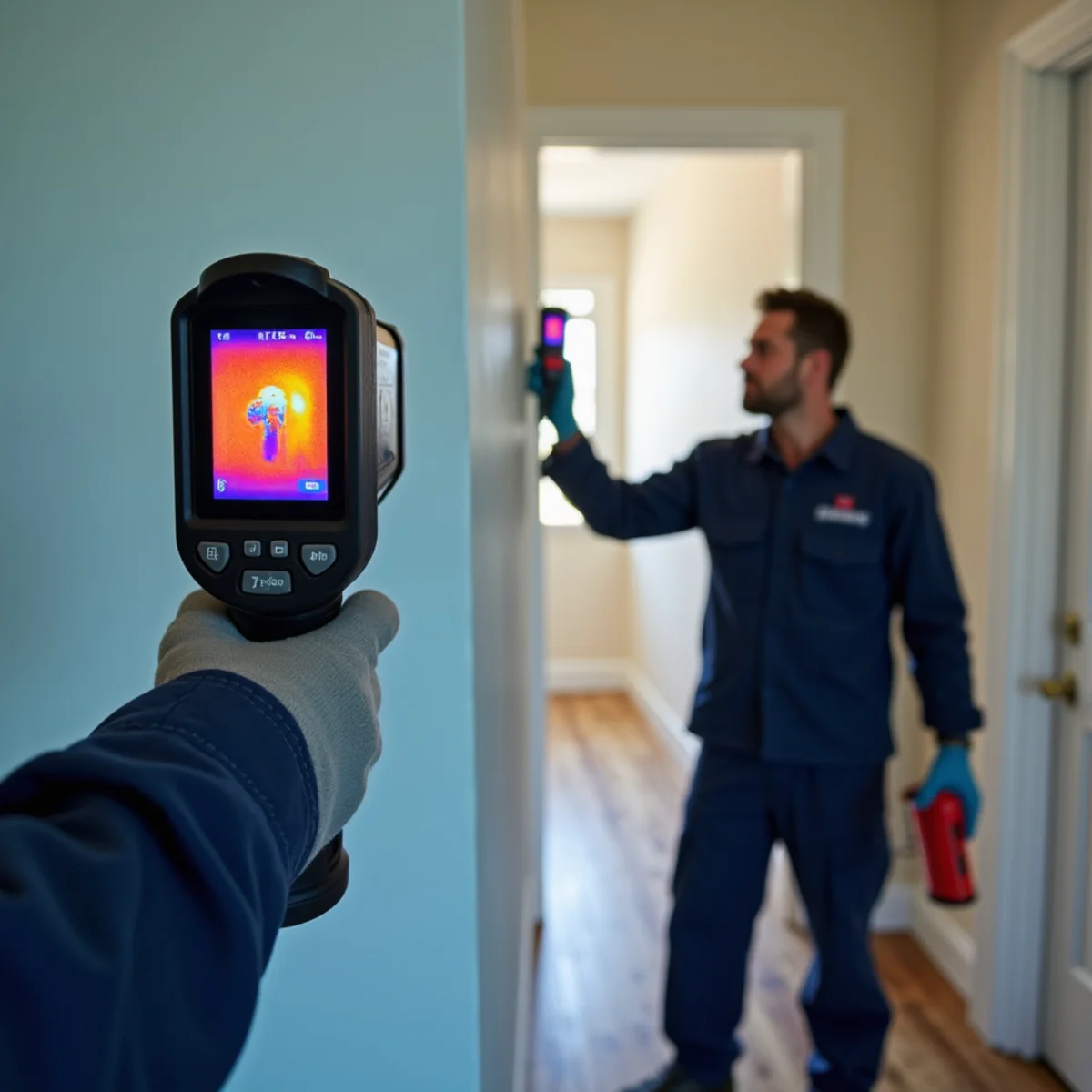
Thermal imaging does not detect moisture. It detects surface temperature differences, and wet material is usually cooler because evaporation removes heat. That makes it an excellent search tool and a poor confirmation tool — cold spots also come from missing insulation, air leaks, plumbing runs and framing members. Anyone showing you a thermal image as proof of a leak without a meter reading beside it is skipping the step that matters.
Moisture meters are the confirmation. Pinless meters read moisture content through the surface without damage, which is ideal for scanning large areas quickly. Pin meters read between two probes at a set depth, which tells you whether the wet layer is at the surface or deeper in the assembly.
Hygrometers put the room in context. A wall reading means something different at 35% relative humidity than at 70%, which is why we log temperature, relative humidity and dew point alongside material readings.
A borescope through a quarter-inch hole often replaces an exploratory cut — the cheapest decision in the whole process.
How to read a moisture report
Three concepts make any report readable, and knowing them lets you evaluate a contractor as well as a house.
Moisture content is the percentage of water by weight in a material. Wood framing sits comfortably around 8 to 12% in this climate; readings in the high teens and above indicate active moisture. Drywall and masonry are measured on relative scales rather than a true percentage.
Dry standard is the reading that unaffected material of the same type gives you in the same building. That is the real target — which is why we take control readings in a dry room rather than comparing your house to a textbook number.
Relative humidity and dew point describe the air. Below roughly 50% relative humidity, materials give up moisture readily. Above 60%, the air itself becomes part of the problem — which is why dehumidification rather than fans is what actually dries a structure.
When to get a professional survey
A paid moisture survey earns its cost in a few specific situations.
You smell mold but cannot find it. Imaging and mapping narrow the search without exploratory demolition, which is both cheaper and less destructive than opening walls to look.
You are buying a house. A standard home inspection is broad and visual; it is not a moisture survey. The recurring findings on the Peninsula are consistent — fresh paint on one ceiling section, a bathroom remodel finished over a wet subfloor, sagging crawl space insulation, efflorescence on a garage slab, a slab-leak repair with no documentation of the drying that followed. None of those are automatic reasons to walk away, but they are reasons to negotiate with evidence before the contingency period closes.
Another contractor has quoted significant demolition. An independent moisture map before agreeing to open three rooms is a reasonable and inexpensive second opinion.
And after a repair, to verify the structure actually reached dry standard before flooring or drywall goes back. Our water damage inspection page covers what a survey includes and what you receive.
Two habits that catch problems years early
The meter check: once a month, close every fixture in the house and look at the water meter. If it is still turning, water is escaping somewhere. Two minutes, and it is the single best early warning for a slab leak.
The seasonal walkthrough: twice a year, look under every sink, behind the fridge, at the water heater base, in the crawl space and in the attic. Fifteen minutes, and it catches the slow failures that otherwise get found by a cupped floor or a musty smell eighteen months later.
24/7 Emergency Response
Dealing with this in Redwood City right now?
We answer 24/7 and can usually be on site within the hour. Extraction, verified drying and the rebuild, documented for your insurer.
- IICRC-certified technicians
- Licensed, bonded & insured
- Direct insurance billing
- 24/7 live answer — no phone trees
550 Allerton St, Redwood City, CA 94063 · Emergency dispatch answered 24/7, including holidays