Problem-solving
Wet Basement in Redwood City: Water Damage or a Drainage Problem?
A basement that is wet once has had an accident. A basement that is wet every winter has a design problem, and drying it again will not fix that.
The question that decides everything: once, or every winter?
Before anyone quotes you for anything, answer this one honestly. Has the basement been wet once, after something identifiable happened? Or does it get damp, musty or wet most winters, with no single event you can point to?
Those are two different problems with two different trades attached, and the most expensive mistake homeowners make here is buying the wrong one. Paying a restoration crew to dry a basement that floods every January means paying again next January. Paying a waterproofing contractor to excavate and install a drain for a one-off water heater failure means spending five figures on a problem a dehumidifier and a plumber would have solved.
We do the first kind of work. We will tell you plainly when you have the second kind, and we are not the company to call for it.
The five things that actually wet a Peninsula basement
A plumbing or appliance failure above it — Water finds the lowest point in a building, so a failure two floors up frequently presents as a wet basement. This is water damage, it is usually covered by insurance as a sudden event, and it is the kind of job we are dispatched to most.
Storm water crossing a threshold — Sheet runoff down a driveway or a path that slopes back toward the house comes in over the door line rather than through a crack. Hillside Redwood City — Farm Hill, Emerald Lake Hills, the Belmont side — produces most of these. It is contaminated outside water, so porous material it touched comes out rather than being dried.
Hydrostatic pressure through the slab or walls — Weeks of saturated ground push moisture through concrete continuously. The tell is that it is not a leak you can point at — it is a damp band at the base of a wall, or efflorescence, appearing every wet season and drying out by May.
A high water table under the floor — On bayfill and near-sea-level ground — Redwood Shores, Foster City, the Seaport fringe — the water table sits close under the slab. Concrete there gives up moisture slowly and draws it back from below, which is why drying schedules on that ground run roughly twice as long as they do on a hillside.
Condensation, not intrusion at all — Warm humid air meeting a cool below-grade wall produces water on the surface with no leak anywhere. It looks identical to seepage and is fixed completely differently — ventilation and dew-point control rather than excavation. This one gets misdiagnosed constantly, and expensively.
What you can check yourself this weekend
Four checks, no tools beyond a torch and a roll of tape, and between them they separate most of the five causes above.
Tape a square of plastic sheet to the wall — Tape all four edges of a piece of plastic about a foot square flat against the damp wall and leave it 48 hours. Water on the room side of the plastic is condensation. Water on the wall side is moisture coming through the structure. This single test tells you which half of the problem you have.
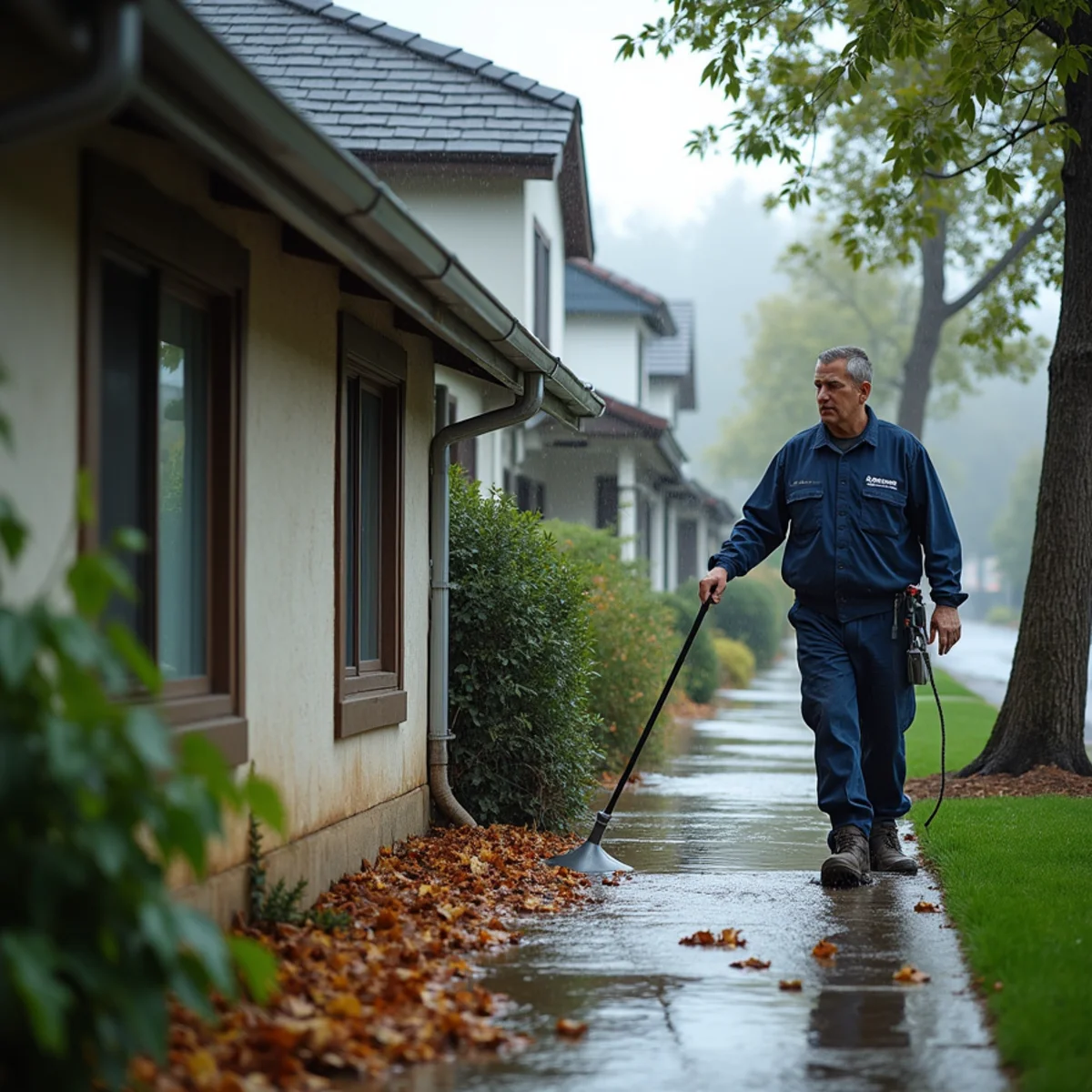
Walk the perimeter during rain, not after — Where does the water actually go when it leaves the roof? A downspout discharging a foot from the wall, a bed built up above the damp-proof course, a driveway pitched toward the garage — these cause more wet basements on the Peninsula than foundation failure does, and they are cheap to correct.
Read the meter with everything shut off — Close every tap and appliance and check the water meter. If the dial still turns, you have a supply leak, and that is a plumbing job today rather than a drainage project in spring.
Note whether it tracks the weather — Dampness that appears two or three days after heavy rain and fades in a fortnight is ground water. Dampness that appears regardless of weather is plumbing, condensation, or something above it.
Which trade you actually need
This is the part most pages on this subject avoid, because the honest answer sometimes sends you elsewhere.
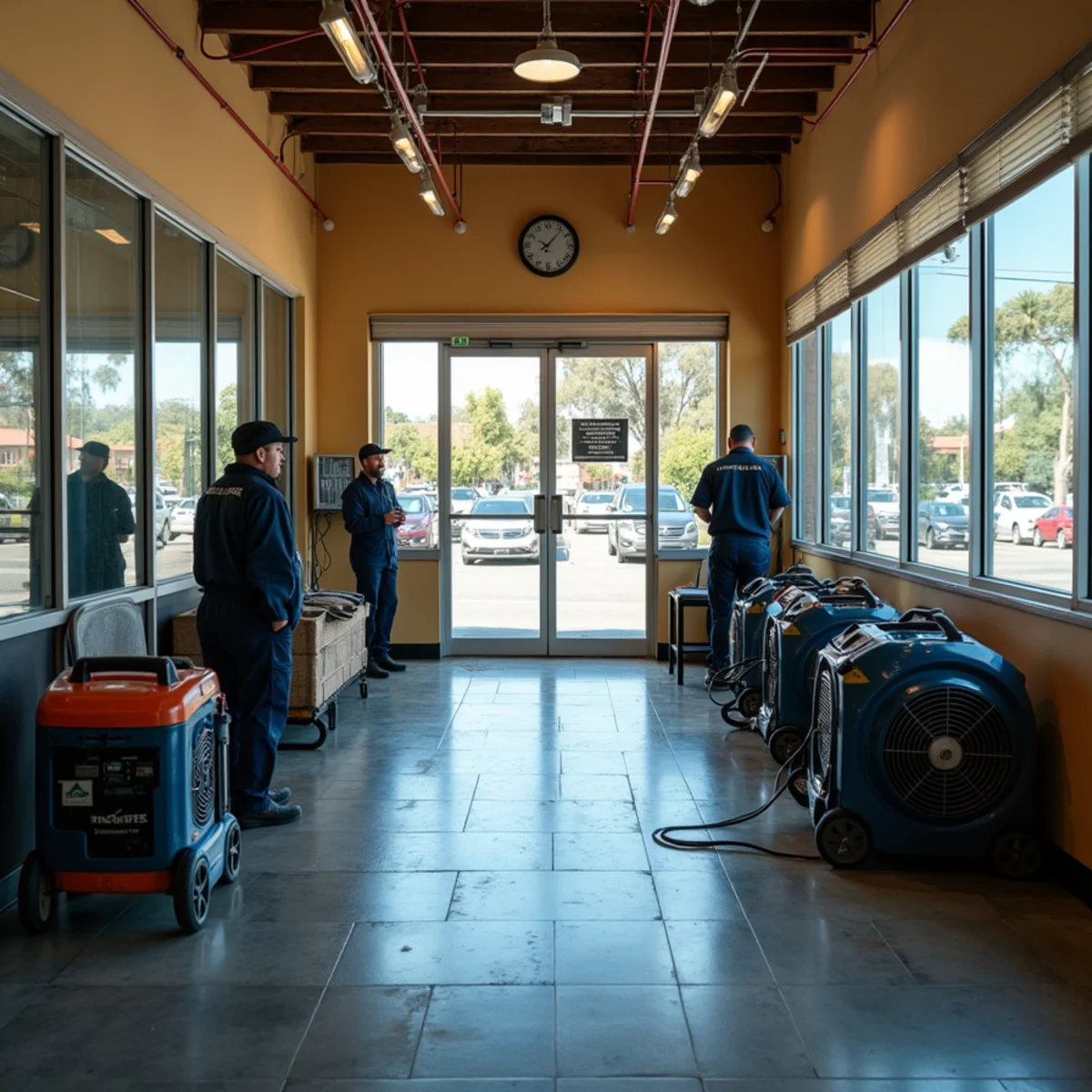
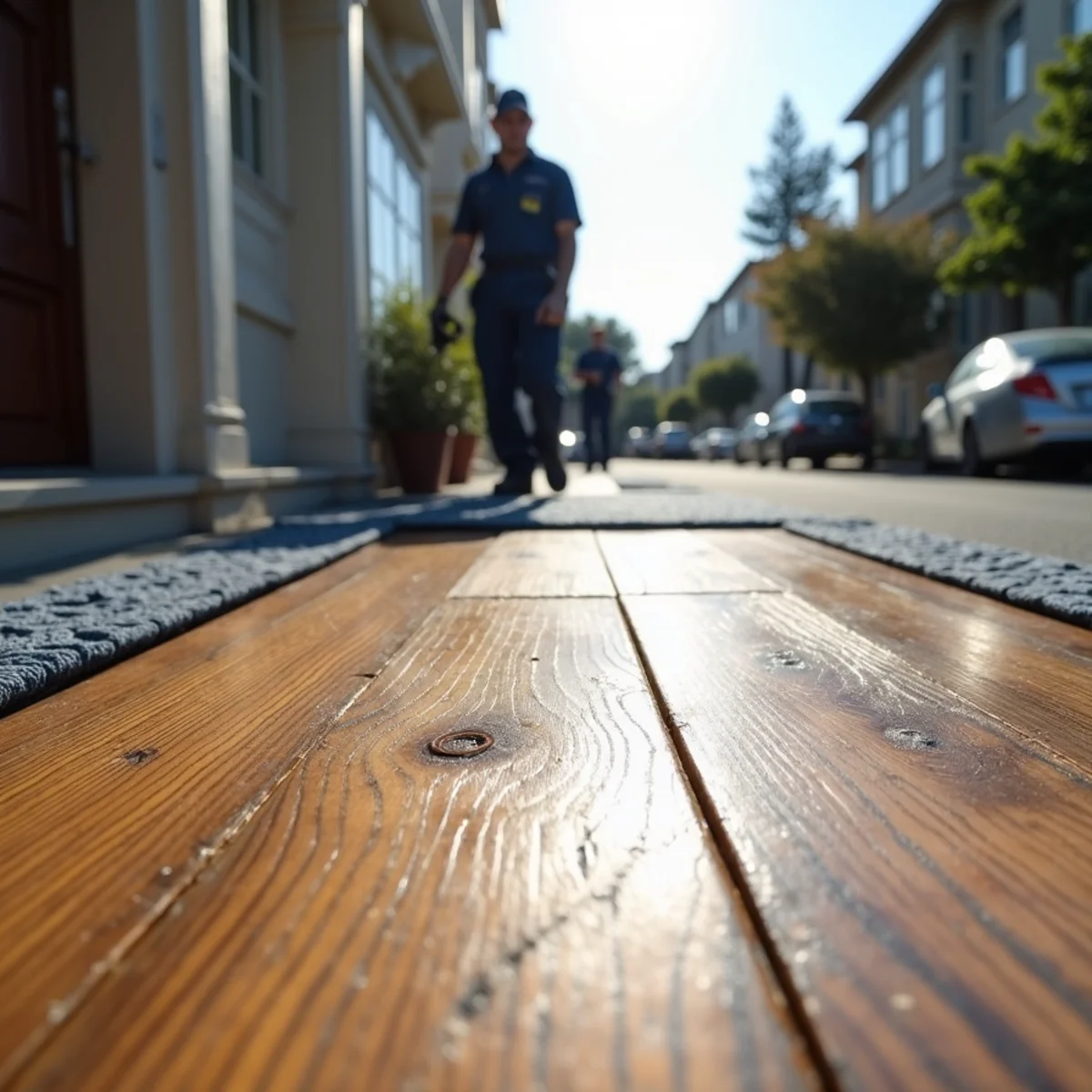
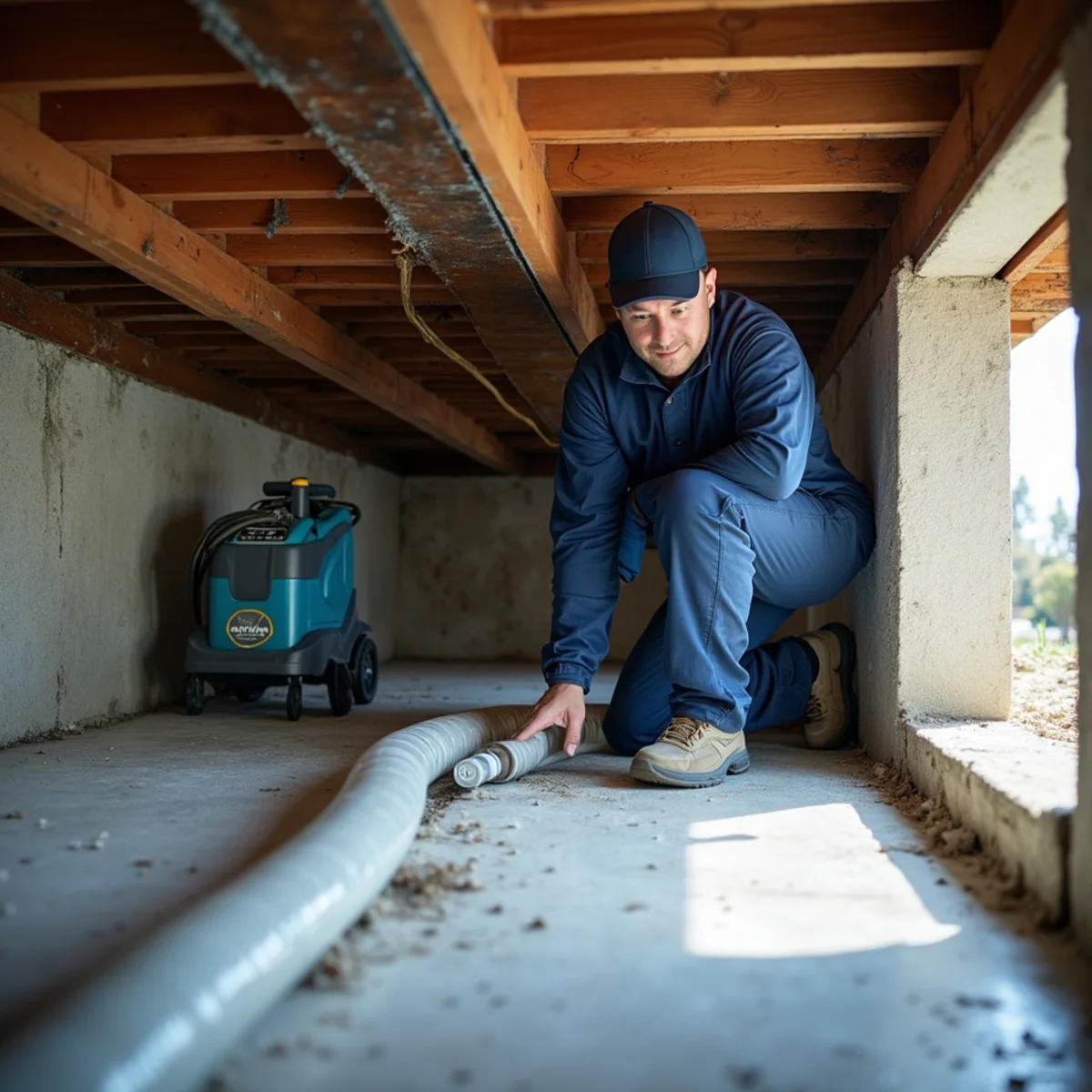
Call us when water has arrived as an event and material is wet now: extraction, structural drying against a documented dry standard, removal of porous material that took contaminated water, and treatment of any growth that has started. That is basement water damage work, and we handle it end to end including the rebuild.
Call a plumber first if the meter test says you are losing supply water. Drying a basement while the leak runs is money spent twice, and we will tell you that on the phone rather than send a crew.
Call a waterproofing or drainage contractor for chronic ground-water intrusion that returns every season — exterior excavation, French drains, sump systems, foundation crack injection, regrading. We do not do that work and we do not subcontract it, so there is nothing in it for us to pretend otherwise.
Call a structural engineer before anyone else if you can see horizontal cracking, bowing or displacement in a foundation wall. That is not a moisture question.
If you genuinely cannot tell which category you are in, a moisture inspection settles it with meter readings and a written report that is yours to keep — including when the report says you do not need us.
Why damp basements turn into mould calls
The reason a persistently damp basement is worth taking seriously even when nothing is visibly flooding: mould begins colonising damp organic material within roughly 24 to 48 hours, and a basement that sits at high humidity all winter never gets below that threshold.
What grows is usually out of sight — the back of stored cardboard, the underside of carpet pad, framing behind finished walls, the paper face of drywall near the floor. The first sign for most households is smell rather than sight, and by then the growth is established in material that has to come out rather than be cleaned.
That is why we treat humidity control as part of the job rather than an afterthought, and why mould removal in a basement is pointless unless the moisture source is corrected at the same time. Clean the growth, leave the water, and you have bought the same job again in about six weeks.
What it costs to find out
Diagnosis and remediation are priced separately, and you should not be asked to commit to the second before anyone has done the first.
During an active loss, assessing the property is part of the emergency response — we are not going to meter your house while water is running and hand you a bill for looking. A standalone investigative moisture survey, which is what a chronic damp problem needs, is a paid service with a written report, and if it leads directly into mitigation work we credit that fee against the job.
If drying is needed, mitigation runs roughly $3 to $4 per square foot for clean water, $4 to $7 for gray water and $7 to $7.50 for Category 3. Below-grade work sits at the longer end of every schedule because the ground is working against you — plan for seven to ten days of equipment on a slab rather than the three to five a ground-floor room would take. Most complete jobs land between $1,384 and $6,387.
24/7 Emergency Response
Dealing with this in Redwood City right now?
We answer 24/7 and can usually be on site within the hour. Extraction, verified drying and the rebuild, documented for your insurer.
- IICRC-certified technicians
- Licensed, bonded & insured
- Direct insurance billing
- 24/7 live answer — no phone trees
550 Allerton St, Redwood City, CA 94063 · Emergency dispatch answered 24/7, including holidays